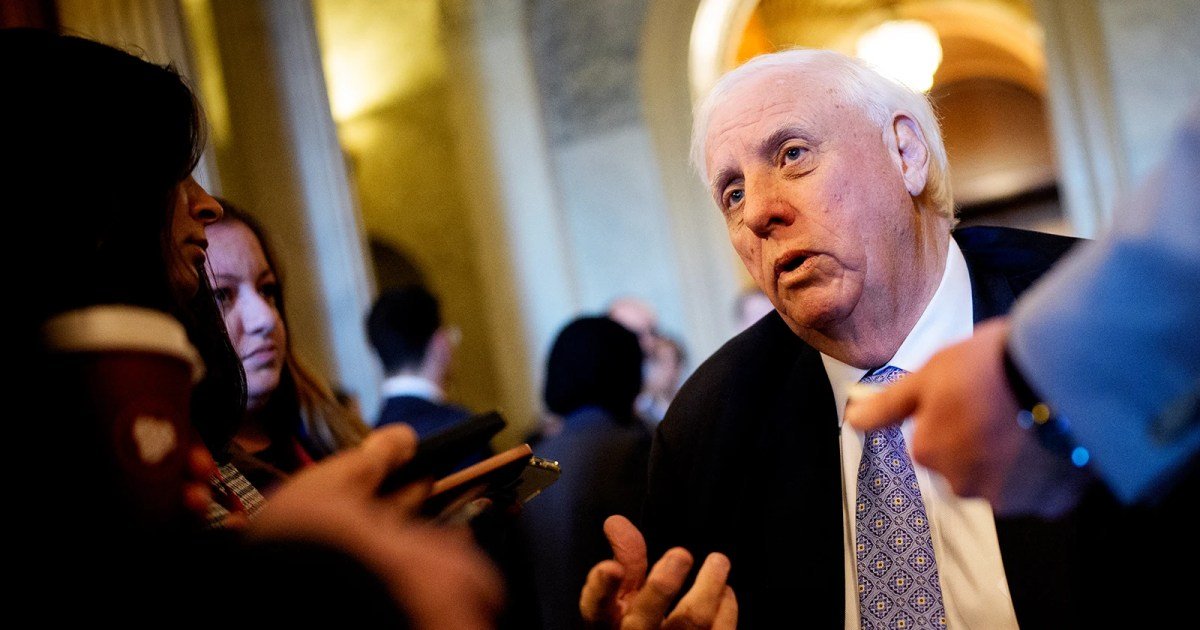

Being stuck in Washington during Congress’ August recess can’t be fun. I imagine being on call to chair the House and Senate’s largely unattended sessions every few days must feel like being a six-year-old trapped inside while their classmates enjoy sunny day adventures. If a report Wednesday in Politico is any indication, the job is even worse for GOP senators this year, as right-wing online commentators lob a torrent of abuse at the Republicans assigned to the chair.
The jeering masses accuse the GOP senators of blocking the MAGA agenda by gaveling these brief “pro forma” sessions in and out — and in a way, they’re right. By not fully recessing, the Senate is blocking President Donald Trump from making a slew of potential recess appointments without its consent. But acting as a roadblock is exactly what Republicans a decade ago wanted to see happen, making this a delicious example of needing to be careful what you wish for.
After winning the 2024 election, then-president elect Trump insisted that Senate Republicans renew the practice of allowing him to temporarily name officials without their consent. Article II of the Constitution mandates that all presidential appointments must be confirmed by the Senate unless Congress passes a law allowing otherwise. There’s an important exception though: “The President shall have Power to fill up all Vacancies that may happen during the Recess of the Senate, by granting Commissions which shall expire at the End of their next Session.”
Senate Majority Leader John Thune, R-S.D., has demurred on Trump’s demand. But MAGA loyalists haven’t forgotten, leading to the current MAGA vitriol toward Sen. Jim Justice, R-W.Va., and the 10 others who have been tapped to lead these sessions before the break ends in September. The backlash has been great enough that, according to Politico, there’s been hesitation to take on the role:
“Some GOP senators, rather than laugh off a huge misunderstanding, have told colleagues in recent weeks they don’t want to be included in the conference’s rotation for presiding over the chamber because it will result in being flamed on the internet, according to two people granted anonymity to disclose private conversations.”
Recess appointments were much more important when the Constitution was ratified. Congress initially met much less frequently, with larger gaps in between sessions, making it a practical matter to not have presidents wait months before a nominee could even be considered.
By the late 20th century, with Congress meeting year-round and the number of executive nominees having grown exponentially, recess appointments remained a relatively rare and uncontroversial deviation from the normal confirmation process. That view shifted when President George W. Bush controversially installed John Bolton as U.S. Ambassador to the United Nations in 2005 despite bipartisan opposition in the Senate. From then on, these appointments were seen more skeptically as a temporary “break glass in case of emergency” for stalled nominees.
By the end of his second term, Bush had made over 170 recess appointments, more than President Bill Clinton’s 140 but fewer than the 240 named under President Ronald Reagan. But in late 2007, Senate Democrats seized on the idea of technically convening in session every three days despite doing no work in that time, testing the limits of what constitutes a “recess.” The practice of holding pro forma sessions became much more common after President Barack Obama took office amid the Senate’s broader transformation into the graveyard of his agenda.

Hayes Brown is a writer and editor for MS NOW. He focuses on policymaking at the federal level, including Congress and the White House.