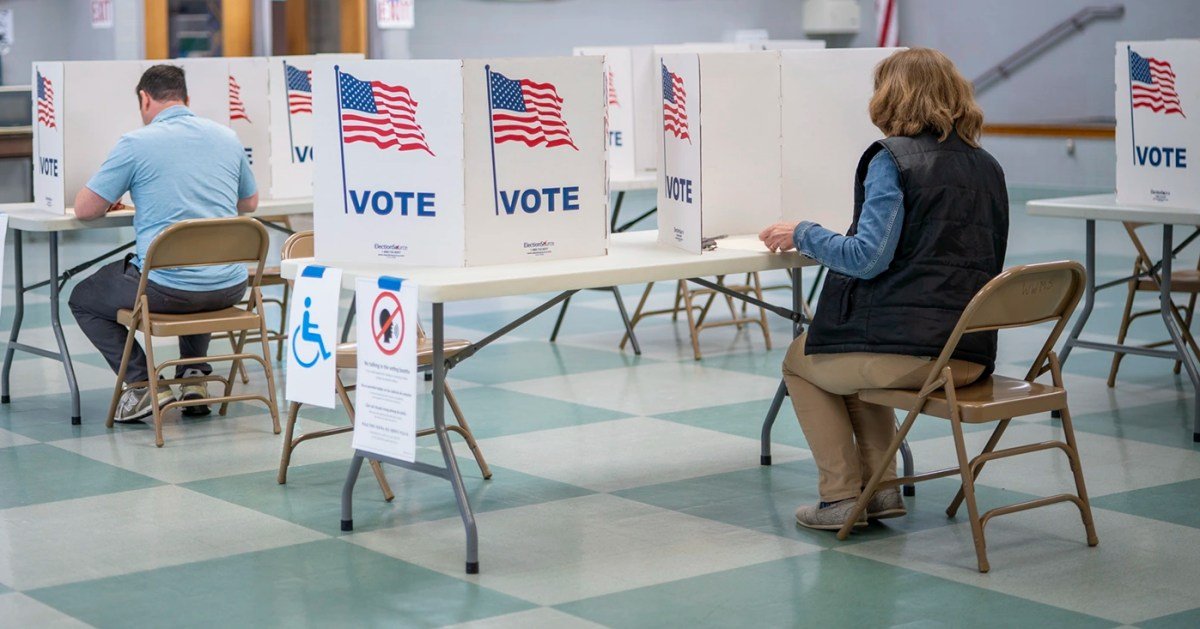

In the Supreme Court’s latest action that helps Republicans ahead of the midterms, the justices rejected Virginia Democrats’ emergency bid to save the state’s redistricting effort that voters approved last month.
Friday’s order follows the GOP-appointed majority’s recent Voting Rights Act ruling in Louisiana v. Callais, which prompted Republican-led states to try to make their maps redder ahead of November’s elections. Earlier this week, the high court majority granted emergency relief to Alabama Republicans who cited Callais as justification to use a congressional map that was previously deemed discriminatory.
The justices didn’t explain their decision in their unsigned order Friday, as is typical for emergency appeals. None of the justices noted any dissent.
The rejection of Virginia’s appeal is another court win for Republicans in this election season because the state’s voters had approved a process for new congressional districts that were poised to deliver more seats to Democrats. At President Donald Trump’s urging, Texas set off a wave of mid-decade redistricting last year that led other states, including Virginia, to follow suit. In prior orders affecting congressional maps, the Supreme Court approved the Texas effort as well as a Democratic countermeasure in California while also helping New York Republicans hold onto a seat.
The GOP-appointed majority said in a 2019 ruling that federal courts can’t do anything about partisan gerrymandering. Combined with Callais, that set the stage for Republicans to erase districts across the South that have been led by Black representatives and supported by Black voters, under the legal guise of partisanship rather than race. The Callais ruling makes it even more difficult to prove that map-makers are motivated by improper racial considerations rather than the partisan ones that the high court majority has effectively approved.
The Virginia rejection was expected because, although the Supreme Court can hear appeals from state high courts, this case posed a challenge for Virginia officials. That’s because the state court ruling they challenged was based largely on Virginia jurists’ interpretation of their state’s constitution, and the Supreme Court gets involved when there are federal issues to resolve. The Virginia case didn’t squarely call into question the Voting Rights Act or other federal matters of the sort the justices have been ruling on in election cases.
Still, in their emergency appeal, Virginia Democrats maintained that their case presented federal issues warranting the justices’ attention. The NAACP supported that position in an amicus brief, writing that invalidating Virginians’ votes “constitutes a deprivation of constitutional due process that requires this Court’s immediate intervention.”
Opposing the application, state Republicans argued, among other things, that the state high court’s ruling rested on “pure state-law grounds” and so “no federal issue is present” for the justices to take up.
The meaning of ‘election’
In the state court ruling that struck down the measure, Virginia’s justices split 4-3 in deciding that the process that put it on the ballot had violated Virginia’s Constitution.
Recommended
Jordan Rubin is the Deadline: Legal Blog writer. He was a prosecutor for the New York County District Attorney’s Office in Manhattan and is the author of “Bizarro,” a book about the secret war on synthetic drugs. Before he joined MS NOW, he was a legal reporter for Bloomberg Law.
Latest Post