
Motor neurone disease (MND) is a rare condition, but it can affect any adult of any age, although typically it’s likely to affect people over 50.
Up to 5,000 people in the UK at any one time will have MND. While there is growing awareness of MND, there is much that is not widely understood beyond the professionals working within research, clinical and medical environments.
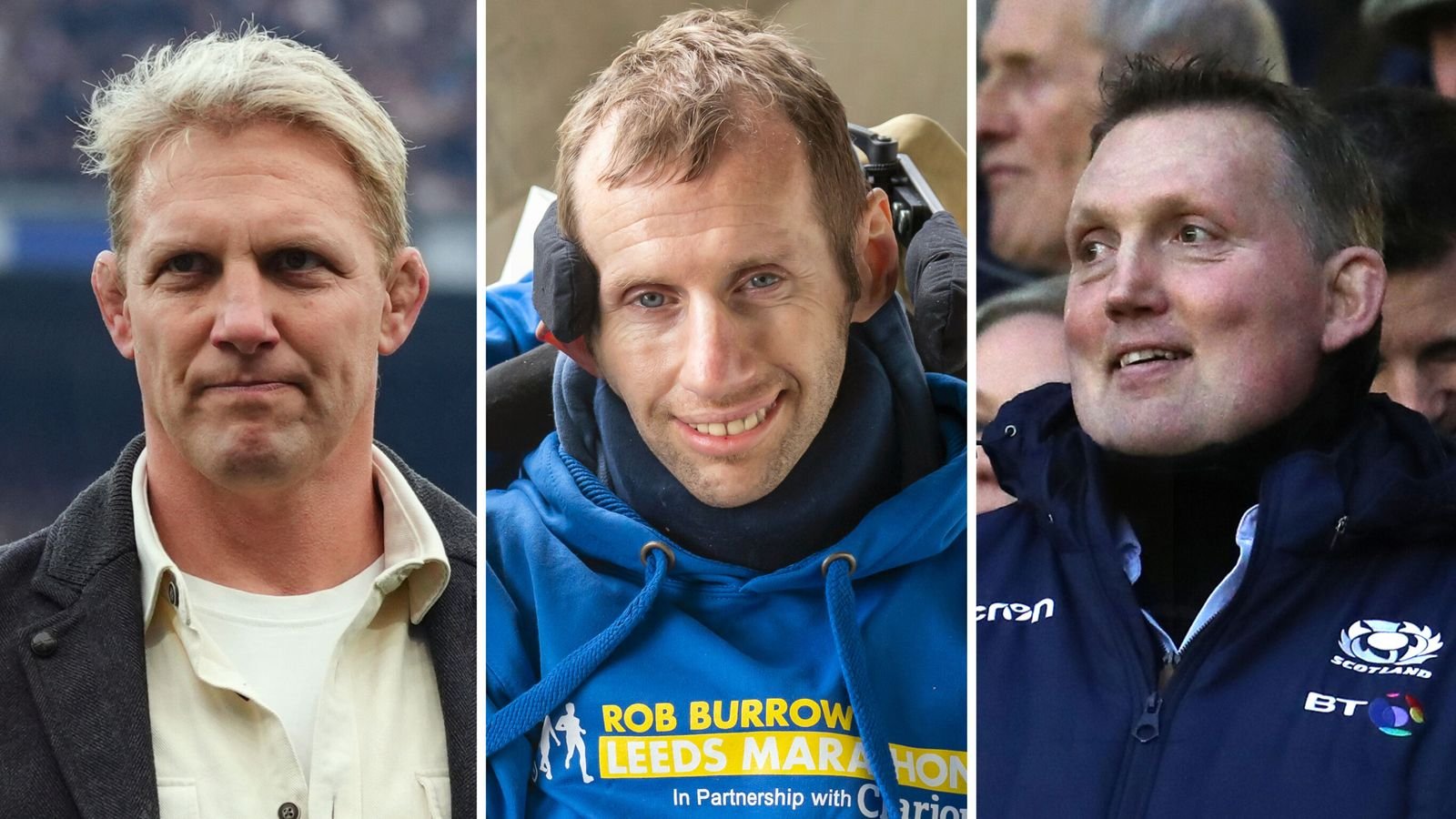
Within sport, MND has in recent years affected some high-profile sports stars, such as rugby legends Rob Burrow, Doddie Weir and Joost van der Westhuizen, who sadly lost their lives to the disease.
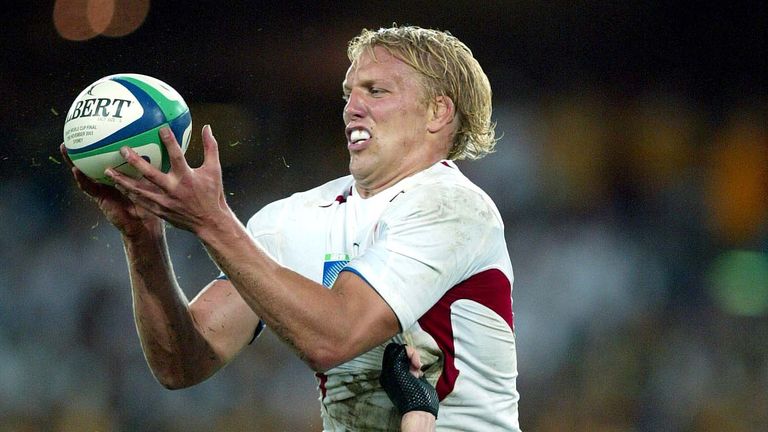
Former England rugby union captain Lewis Moody was diagnosed with MND in 2025. His Leicester team-mate Ed Slater received his diagnosis of MND in 2022.
Footballers have also been struck down with MND. Former Liverpool and Bolton defender Stephen Darby retired from the game in 2018 after his diagnosis, while Marcus Stewart, who played in the Premier League for Ipswich and Sunderland in the early to mid-2000s, announced he had MND in 2022.
Senegal International Papa Bouba Diop, who played most of his club career in England with Fulham, Portsmouth, West Ham and Birmingham City, lost his battle with MND in 2020 at the age of just 42. England and Gloucestershire cricketer David ‘Syd’ Lawrence died from MND in 2025, just a year after receiving his diagnosis.
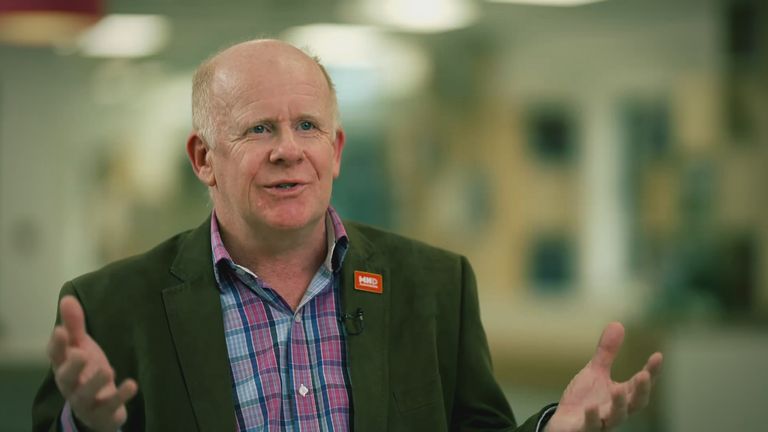
Dr Brian Dickie, one of the leading figures on MND in the UK, explains what the disease is and discusses its relation to sport
So, what is MND? How does it affect people who are diagnosed? Is there a link between the disease and sport? What is the current understanding? And what hope is there for controlling the disease and perhaps one day finding a cure?
Dr Brian Dickie MBE is one of the leading figures on MND in the UK, having graduated with a PhD in Neuropharmacology before taking up research fellowships and teaching roles at the University of Oxford. In the late 1990s, he joined the MND Association and is their current chief scientist. I sat down with Dr Dickie at the MND Association’s Headquarters, and our conversation went as follows.
What is motor neurone disease?
Sky’s Jacquie Beltrao explains Lewis Moody’s MND diagnosis.
Dr Dickie: “In order to understand Motor Neurone Disease, we probably have to start by talking about motor neurons. Motor neurons are nerve cells which effectively connect the brain to the muscles. They help us to convert thought into movement. They are incredibly long, incredibly thin – they’re microscopically thin – but they can be up to a meter in length. So, they’re incredibly physically fragile, and basically, they’re like telegraph wires, almost.
“They carry electrical signals from the brain down the spine and out to the muscles, and they help us to convert that thought into action, and, of course, in MND, the problem is that the motor nerves are dying, they’re degenerating and so the lines are down. The signals can’t get through.
“A person can think about making that movement, but they really struggle to get the commands down to their muscles. So, what we see occurring with MND is progressive muscle weakness, paralysis and ultimately death. About 50 per cent of people will die within two years of diagnosis.”
How does it affect people?
Dr Dickie: “We often say that no two cases of MND are the same, but roughly, in about a third of cases, it starts by affecting the muscles in the lower limbs, a third in the upper limbs, and a third in what we call the bulbar muscles, which are the muscles involved in speech and swallowing. So, you can imagine that the symptoms and the disease progression can vary tremendously depending on what particular muscle groups are affected.
“The same goes for the speed of progression of the disease, but often it’s rapidly progressive within one, two or three years, but of course, some people live with it for much, much longer. Stephen Hawking was perhaps the best case in point because he lived with MND for around 55 years.”
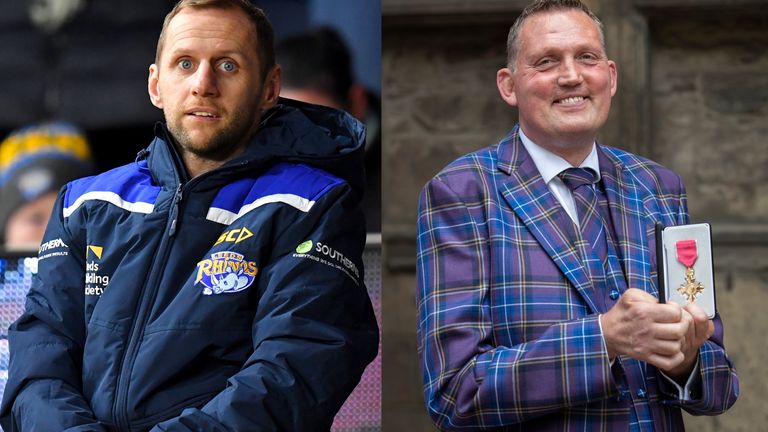
Within sport MND has in recent years affected some high profile sports stars, such as rugby legends Rob Burrow and Doddie Weir
How do you know if you have MND, and when do symptoms start?
Dr Dickie: “We don’t know when this disease actually starts, but we believe it starts years, possibly even decades, before the first physical symptoms of the disease appear. One of the reasons for that is that the brain is incredibly good at compensating for anything that’s going wrong.
“So, it keeps going, it keeps going, it keeps going, it keeps going until a threshold is reached, and it’s only at that point that the system can’t cope anymore, and it’s at that point that the first symptoms of the disease appear.
“We then have an additional delay, which is rather frustrating in diagnostic terms because it’s still taking a year on average from somebody saying, ‘perhaps I need to go to the GP about this, you know I’m tripping up, I’m not able to grip things as well as I could in the past’ and actually being given a diagnosis by the neurologist and in a disease that will kill 50 per cent of people within two years of symptoms onset that could be a critical therapeutic window that we’re missing at the moment.
“A little bit like cancer, get in early, treat early. If we could do the same with MND, we might actually be able to develop more effective treatments.”
- To find out more about what help is available and the work of the MND Association, please visit www.mndassociation.org or call the Connect Helpline on 0808 802 6262
What if – if any – link is there between MND and sport?
Dr Dickie: “If there was a single cause of MND, we’d have found it a long time ago. It’s what we call a multifactorial disease. In other words, there are going to be numerous different factors involved in initiating the disease and also in the speed of progression.
“To use an analogy, it’s a little bit like a set of balancing scales, like the scales of justice. Something has to tilt the balance in favour of the disease occurring. Some of these factors will be genetic; you inherit them from your parents, but they’re a little bit like grains of sand on the scales.
“They sit there, but the scales don’t move, so perhaps environmental factors are involved as well, and we still really don’t understand those. We’re starting to get some clues, but we don’t understand what the environmental factors are. The chances are that there have to be certain events occurring at certain points in a person’s life that finally tilt the balance many, many years later.
“Now we do know in some cases the disease does run in families. In about 10 per cent to 15 per cent of cases, there’s a family history, so in that case, there’s probably a stronger genetic component. It doesn’t absolutely ensure that the scales tilt, but it primes the motor neurons to degenerate later in life. It makes it more likely.
“In terms of the apparent increase in sportsmen developing MND later in life, I’d say that the jury is out. There’s certainly an issue there that needs to be explored, but there’s probably not a single answer to it. So, for example, a lot of interest is focused on rugby and football because of the high-impact nature of those particular sports, but we also have evidence from cross-country skiers in Scandinavia that indicates they actually have a slightly increased risk of developing MND compared to the general public and that maybe points more to high-intensity exercise.
“Linked to that, people with MND seem to exhibit hypermetabolism, so in other words, their cells are burning energy at a slightly higher rate than the general population. It’s not huge, it’s about 10 per cent, but if you imagine that you’re overrevving your car engine, it’s not a problem at the time as your car’s just as nippy as ever, but if you’re doing that for tens of thousands of miles, then it could cause problems. We just don’t know at the moment.”

Will Greenwood reacts to the news that his 2003 Rugby World Cup-winning team-mate Lewis Moody has been diagnosed with motor neurone disease.
How could sports authorities help?
Dr Dickie: “I’ll start by trying to explain the challenges in identifying the environmental and lifestyle factors that might tilt the balance, because these are events that might be happening decades prior to the disease. So, asking people about what they ate, what they did and how much activity they did decades before is obviously fraught with a lot of danger. What we do need if we’re going to answer questions such as, ‘is there a role for high-intensity exercise in increasing the risk of MND?’
“And of course, exercise, by and large, is good for us. It reduces the risk of a whole range of other conditions, but could it be one of these grains of sand on the scales that helps tilt the balance later in life? We really need good medical records. Now there are a couple of ways in which we might be able to approach that. One is by working with the sporting bodies across different sports, both high-impact, high-intensity and maybe lower-intensity sports and looking at the incidence of disease later in life.
“One of the challenges is that although professional bodies can keep very good records during a person’s sporting career, they don’t keep the records that occur later in life, and of course, this is a disease that can occur years or decades after a person has retired from their sport.
“So, there are some gaps there, but there are gaps that could probably be addressed if we could get that information together and work with many of the sporting bodies.
“The second way is through big initiatives such as the UK Biobank or Our Future Health, where, in the case of Biobank, half a million people in the general public have signed up, and they are being followed throughout their lives. They’ve given blood samples, and they answer questionnaires.
“So, we build up this pattern of life events that occur years before they develop these age-related diseases, whether they’re Alzheimer’s disease, Parkinson’s disease, cancer or indeed Motor Neurone Disease.”

Former Liverpool, Bradford and Bolton defender Stephen Darby retired from the game in 2018 after his MND diagnosis
What is the latest research?
Dr Dickie: “MND is a complex disease. It’s a rare disease, so it maybe doesn’t quite get the attention that more common conditions do. However, I have seen a huge change over the past two to three decades. I first got involved in MND research about 30 years ago, and it was definitely a scientific backwater then, a Cinderella disease.
“There was very little activity going on worldwide, but since then, and particularly in the past 20 years, the growth in scientific understanding has grown exponentially, and we’ve really got a very collaborative international community. They’re not operating in silos; they operate together, and in the rare disease arena, it is absolutely vital that we share our knowledge and our expertise.
“I think it’s really exciting that this has moved MND from this scientific backwater really to the forefront now of neurodegenerative disease research alongside Alzheimer’s, alongside Parkinson’s disease. Hopefully, actually to the forefront of treatment because the research community is starting to change the scientific question which 30 years ago was, ‘what on earth is going on here?’ to, ‘OK, what can we do about it?’
“I often get asked by people with MND, ‘where are we? How long until an effective treatment or a cure?’ I can’t give a straight answer to that question. What I can say is that we might not see the light at the end of the tunnel yet, but the train is heading in the right direction, and it’s picking up speed.
“There has been a vast increase in scientific knowledge about this disease, and I think, excitingly, that is attracting the attention of the biotechnology companies and the drug companies, because they’re the ones that can take this knowledge that’s coming out of the universities across the world and develop effective treatments.
“It’s a really exciting time in MND research because we’re starting to move into what’s called translational science, which is really all about drug discovery, drug development, and hopefully developing effective treatments for this disease, and indeed we’re starting to see the first green shoots.
“For example, there’s a drug called Tofersen, which is currently being reviewed by the UK drug regulators, and it is only going to be used for a rare genetic form of the disease, which is about 2 per cent of all cases of MND. But certainly, in some patients who have been taking this drug in clinical trials, it has had quite a pronounced effect, and in some it has even stabilised their disease over many years.
“So, we believe that if it works for one form, it is proof of principle that similar strategies – they will have to be different – could work for other forms and indeed all forms of the disease as well. So, this proof of principle that you can keep sick motor neurons alive in an ageing brain, in an ageing body, is an absolute breakthrough, and I think it’s one that really does provide hope for the future.”
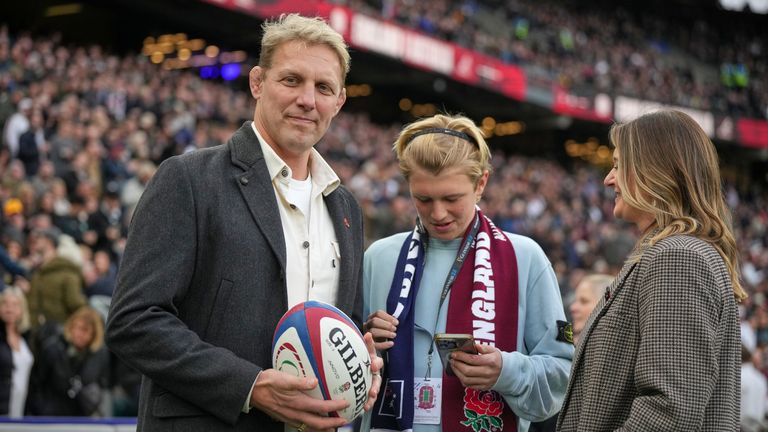
Moody (left) is set to cycle 500 miles from Newcastle to Twickenham to raise funds for Motor Neurone Disease foundation
How have sportsmen and women with MND helped increase awareness of the disease?
Dr Dickie: “Public awareness of any disease is absolutely essential, especially for rare diseases like MND. It encourages the general public to donate money to research programs that hopefully will deliver effective treatments. It also, I think, is encouraging for people diagnosed with this disease and their families to know that there is public awareness about this, and this can reduce some of the stigma that can be attached with being diagnosed with a condition such as MND.
“It also, we hope, would increase the number of people who may have some initial symptoms of the disease to maybe go to their GP a little bit faster and for GPs to refer those people if appropriate. That way, we could speed up this diagnostic delay, which I think is one of the barriers to developing effective treatments for MND.
“Increased awareness is absolutely important, and I think I’ve seen such a change in MND over the past 10-15 years. I think it really started with the Ice Bucket Challenge, where suddenly this disease came right to the forefront of media attention, and since then, of course, with Doddie Weir, Rob Burrow, Stephen Darby and Lewis Moody, we’ve managed to build on that and increase the awareness.
“Although we have a vision of a world free of MND, before we get there, perhaps we need a world full of MND, and by that, I mean that the public is aware of it. The medical profession is aware of it, governments and policy makers are aware of it and hopefully, through treatments, people will live longer with this disease, and we can turn this into a disease that you live with rather than a disease that you die of.”
For more information:
Every day, the MND Association supports people affected by Motor Neurone Disease, campaigns for better care and funds ground-breaking research. Because with MND, every day matters. Last year alone, the MND Association funded 53 new research grants totalling £14.9m, paid out over £4m in grants to support those living with the disease and answered 5,252 calls to their Connect Helpline.
To find out more about what help is available and the work of the MND Association, please visit www.mndassociation.org or call the Connect Helpline on 0808 802 6262