
Warsh will lead the central bank at a time when its independence has come under scrutiny amid political pressure.
Published On 22 May 202622 May 2026
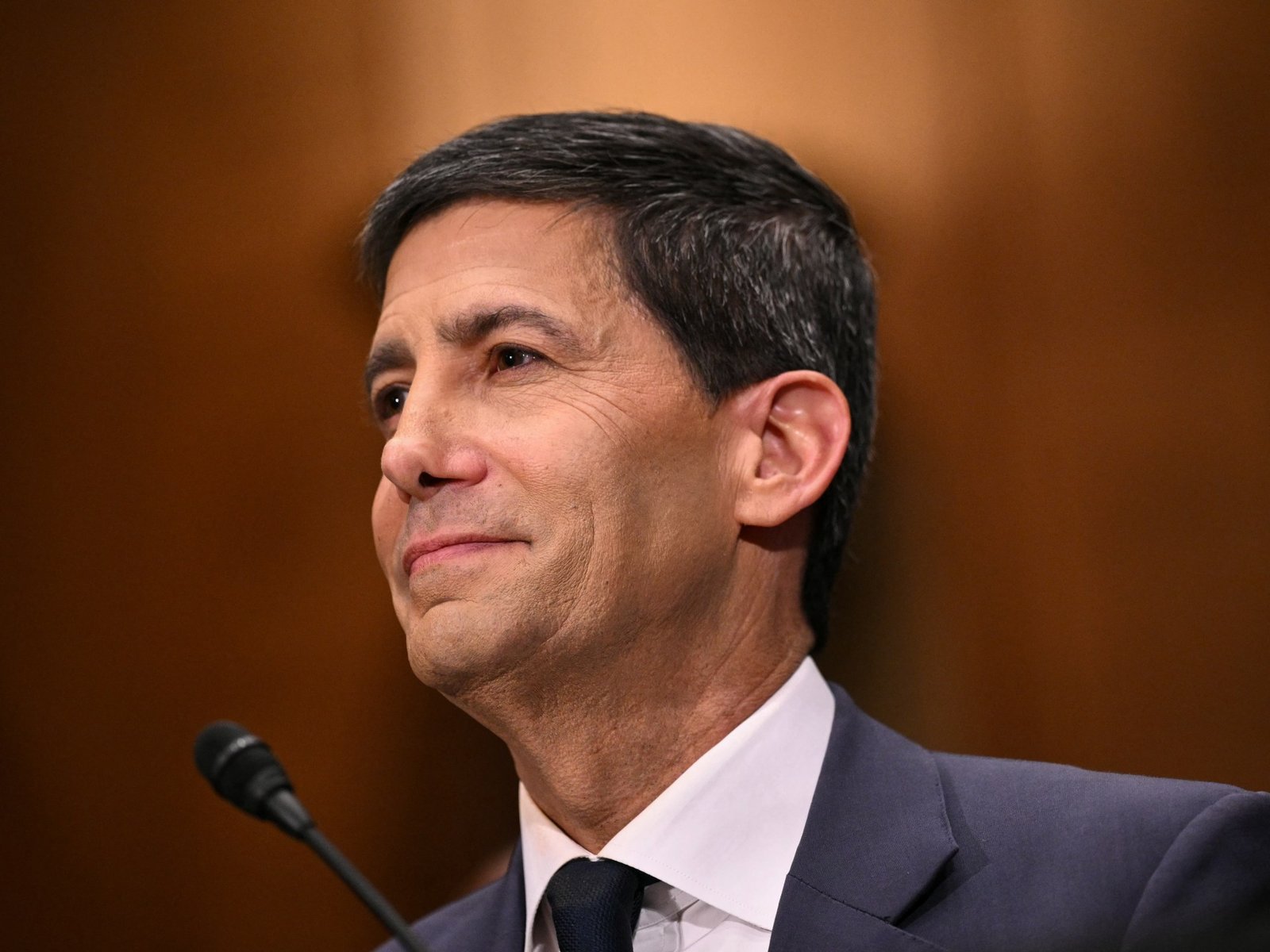
Kevin Warsh has been sworn in as the new chair of the United States Federal Reserve Board of Governors, succeeding Jerome Powell, who has held the position since 2018.
Warsh took the oath of office on Friday, following a contentious nomination period, with the Senate voting along party lines on both his confirmation to the Board of Governors and as chairman. Only Pennsylvania Senator John Fetterman broke with his Democratic colleagues to advance his nomination.
Recommended Stories
list of 4 itemsend of list
Warsh, 56, will lead the central bank at a time when its independence has come under scrutiny amid political pressure on the historically non-partisan institution.
US President Donald Trump, aware of that critique, in his opening remarks said, “I want Kevin to be totally independent and do a great job. Don’t look at me and don’t look at anybody. Just do your own job”.
During his confirmation hearing before the Senate Banking Committee, ahead of a vote by the full Senate, Democratic Senator Elizabeth Warren accused Warsh of being a “sock puppet” for Trump. Warsh denied the allegations and said he would remain independent in his monetary policy decisions.
When Joe Biden was president, Warsh advocated against cutting interest rates, but changed his tune when Trump took office. In December 2025, Trump said that he would only appoint someone to lead the central bank who agreed with him on cutting rates.
Regardless, Warsh cannot unilaterally make policy decisions. He is one of 12 voting members.
The first policy meeting Warsh will lead will be on June 16-17.
Inflationary pressures
Pressure from the White House to cut rates comes amid rising inflation in the US economy.
Consumer prices increased 0.6 percent in April after a 0.9 percent rise in March, according to the most recent Consumer Price Index report released by the Labor Department’s Bureau of Labor Statistics earlier this month.
On an annual basis, prices were also higher, rising 3.8 percent compared with the same month in 2025, marking the largest increase in three years. The largest surge has been in energy prices, which have risen 17.9 percent over the last year.
US consumers are feeling the strain at the pump. The average price for a gallon of petrol (3.78 litres) is $4.56, according to the American Automobile Association (AAA), which tracks daily petrol prices. That is up from $2.98 per gallon on February 28, when the US and Israel first struck Iran.
After he was sworn in, Warsh said he was “not naive” about the challenges facing the US economy, and that inflation can be lower and growth strong.
Surging prices could put pressure on the central bank not to cut rates. Analysts from JPMorgan Chase forecasted last month that rates will likely remain unchanged until mid-2027 and anticipated then that rates could rise rather than be cut.
“With inflation having run significantly above 2 percent over the past five years, with further increases in inflation likely to occur as a result of the conflict in the Middle East, and with emergent price pressures in a few categories that appeared unrelated to tariffs or energy prices, the staff viewed the possibility that inflation would be more persistent than anticipated as a salient risk,” the central bank said in the newly released minutes of its April policy meeting.
CME Group’s FedWatch tool, which tracks the likelihood of monetary policy decisions, says there is a 97 percent chance that rates will remain unchanged at the next policy meeting.