
Hospice fraud.
Why do those two words appear in tandem so frequently?
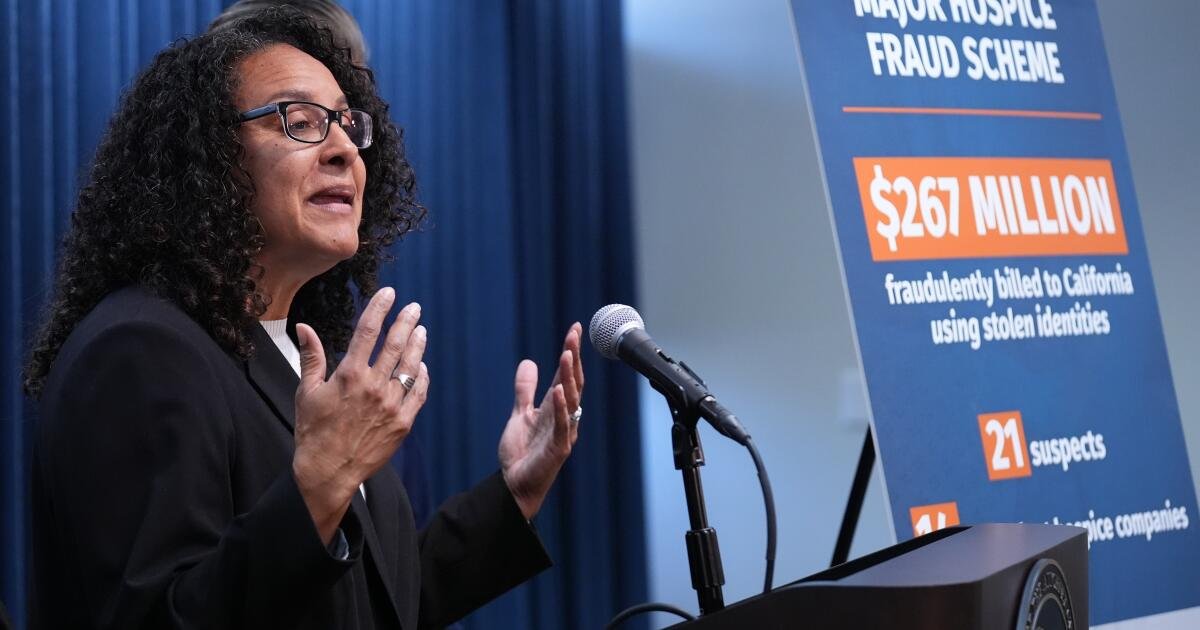
The short answer is money. The population of older adults is surging, a river of tax dollars is available to cover the cost of care, and legions of scammers and profiteers have lined the banks to pan for gold with schemes that include stolen identities and billings for patients who aren’t really on their deathbeds.
Another explanation for the long-running, multibillion-dollar boondoggle is that despite exposes such as the one in 2020 by the late L.A. Times investigative reporter Kim Christensen and then-colleague Ben Poston, California’s promised reforms are still, inexplicably, a work in progress.
The Trump administration has singled out California for its failures, as reported by my colleagues Richard Winton and Hannah Fry, while also targeting other states. And meanwhile, Trump’s team and California officials are pointing fingers at each other for not doing their jobs as both sides announce arrests of multiple fraudsters.
“California is the clearest current warning sign, but this is not simply a California problem. It is a federal Medicare program-integrity problem and a state-federal oversight problem,” Sheila Clark, president and chief executive officer of the California Hospice and Palliative Care Assn., testified at a congressional hearing a few days ago.
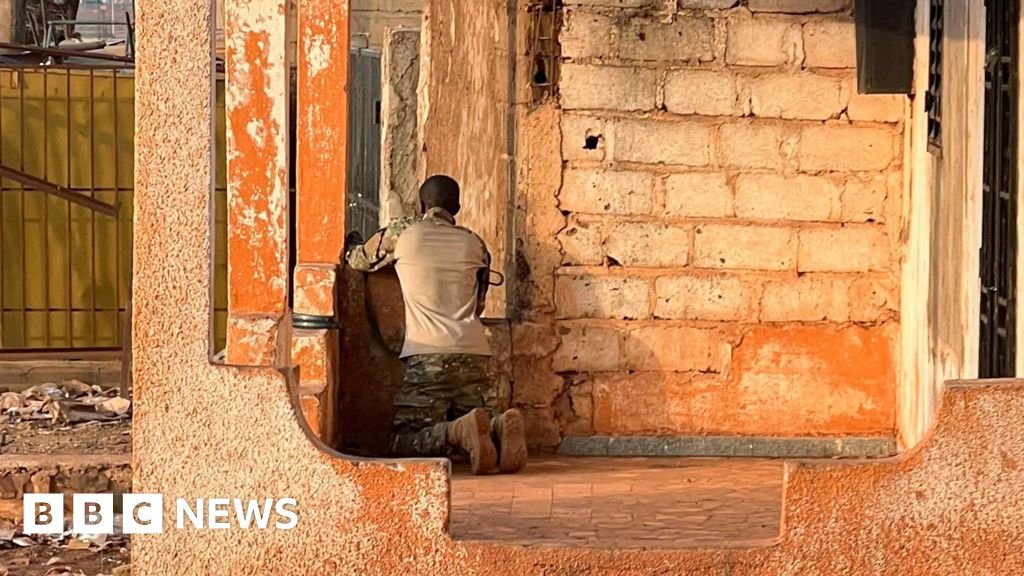
Body camera footage shows law enforcement with the California Department of Justice raiding homes in connection with a suspected hospice fraud case.
(California Department of Justice)
Another witness at the same hearing said she was denied Medicare coverage for a pickleball injury because she was an unwitting victim of stolen identity and had been enrolled in hospice coverage by scammers.
Clark, who was still fuming when I spoke to her after her testimony, was one of several people I reached out to with a question I’ve often gotten from readers since writing several years ago about hospice care problems both my parents dealt with.
When hospice is the best course of care, as it often is, how can consumers avoid scams and make smart choices in deciding among hundreds of hospice care options?
You should know, first of all, that hospice is often the right choice and the best choice, as hard as it can be to accept that reality. And your chance of finding the right fit will improve if you ask a lot of questions of your primary care physician, said Santa Clarita geriatrician Dr. Gene Dorio, who relies on advice from a hospice and palliative care colleague for recommendations that fit the needs of his patients.
You should also ask questions to make sure hospice is the right choice, Dorio said. Hospitals, insurance companies and doctors have been known to prematurely dump patients into hospice for financial reasons, Dorio said. In some cases, patients don’t get the care they need and pay with their lives.
In a twist on that narrative, Dorio said he was once asked by a hospice operator to examine a patient who had arrived with a diagnosis of bladder cancer. Dorio said he found no evidence of cancer and the patient was sent back to regular care.
Clark noted that her agency’s website offers a number of guidelines, whether your loved one will be at a hospice facility or receive care at home, as the vast majority of hospice patients do. Clark’s site lists several questions to ask of a hospice care provider, such as:
Do they have a relationship with your personal physician? What is expected of the family caregiver? What members of the hospice team will you see and how often?

Body camera footage shows law enforcement with the California Department of Justice raiding a location in connection with a suspected hospice fraud case.
(California Department of Justice)
Clark’s website also has links to California Department of Health and Medicare databases that offer basic information and some comparisons between various hospice companies. You can find details of complaint investigations on the state website, and star ratings, from 1 to 5, on the federal site, which includes reviews by consumers.
But navigating the sites can be tricky, and with many of the companies listed, information is limited, dated or nonexistent for several reasons, including exemptions and noncompliance. The smaller companies don’t have star ratings.
Sorting through wonky government websites in a moment of crisis is not a pleasant undertaking, so it’s best to begin exploring options before the end approaches, if you can.
“Somehow the general public doesn’t quite seem to understand that there are different hospices,” said Jennifer Moore Ballentine, chief executive of Coalition for Compassionate Care of California. “Everyone understands the differences in gas stations and grocery stores and phones and football teams, but somehow hospice, in the public’s mind, is monolithic.”
Several decades ago, hospice was a community-based and faith-based nonprofit industry. Compassion was the chief currency, with noble attempts to make people as comfortable and pain-free as possible in their final days.
Over time, currency became the chief currency. Hospice was transformed into a largely corporatized, multibillion-dollar for-profit behemoth. The greatest regulatory failure was that startups were not carefully screened before they began gold-digging, and oversight was minimal.
It’s as if ageism was a factor in this evolution. We’re talking about old people, and they’re supposed to die anyway, so let’s scam Medicare and Medicaid and squeeze what we can out of grandma and grandpa before they’re gone.
There are good and bad nonprofits and good and bad for-profits, but industry analysts have told me for years that generally speaking, nonprofits are more reliable than for-profits, which can be inclined to skimp on staffing.
Ballentine offered several ideas for picking a good one.
“My first criterion is: Has the hospice been around for longer than 15 years?” If so, Ballentine said, “it’s unlikely to be one of the scammers.”
If you know someone who’s had a good experience with a hospice company, that’s a good start, Ballentine said. If possible, she added, “go visit the hospice office, because if it’s a scammer, there won’t be an office. Get a feel for the organization. How well resourced is it?”
Susan Enguidanos, an associate professor of gerontology at USC, researches and teaches end-of-life care. She has a class in which students are assigned to pick two hospices and do a comparison.
They use Medicare’s Care-Compare website and find that “it’s super difficult to use … and not all hospices will be listed there,” Enguidanos said.
And then they try Google and Yelp.
“You can learn so much from the comments,” Enguidanos said.
Google and Yelp comments are obviously subjective, regardless of what’s being rated. But if you see a lot of 2.5 ratings, Enguidanos said, that’s a hospice company you’re unlikely to choose.
“The biggest complaint,” she said of consumer comments on Google and Yelp, was that hospice staff didn’t show up as much as expected. “They said they would come,” Enguidanos said, paraphrasing a typical response, “and they just didn’t show up.”

Grace Lopez, left, with daughter Debbie, before she was discharged from a hospital to hospice in January 2019.
(Steve Lopez / Los Angeles Times)
That was our experience with my mother in 2020. She was discharged from a hospital to hospice, and we were told a nurse would be there with her pain meds. The nurse wasn’t there, and we were told it would be awhile, because the nurse was tending to another patient.
My mother endured hours of pain. We fired that hospice agency and hired another, which immediately sent a nurse who had the perfect blend of medical expertise and compassionate bedside manner.
My mother died peacefully, and pain-free. And the hospice nurse attended her funeral.
steve.lopez@latimes.com