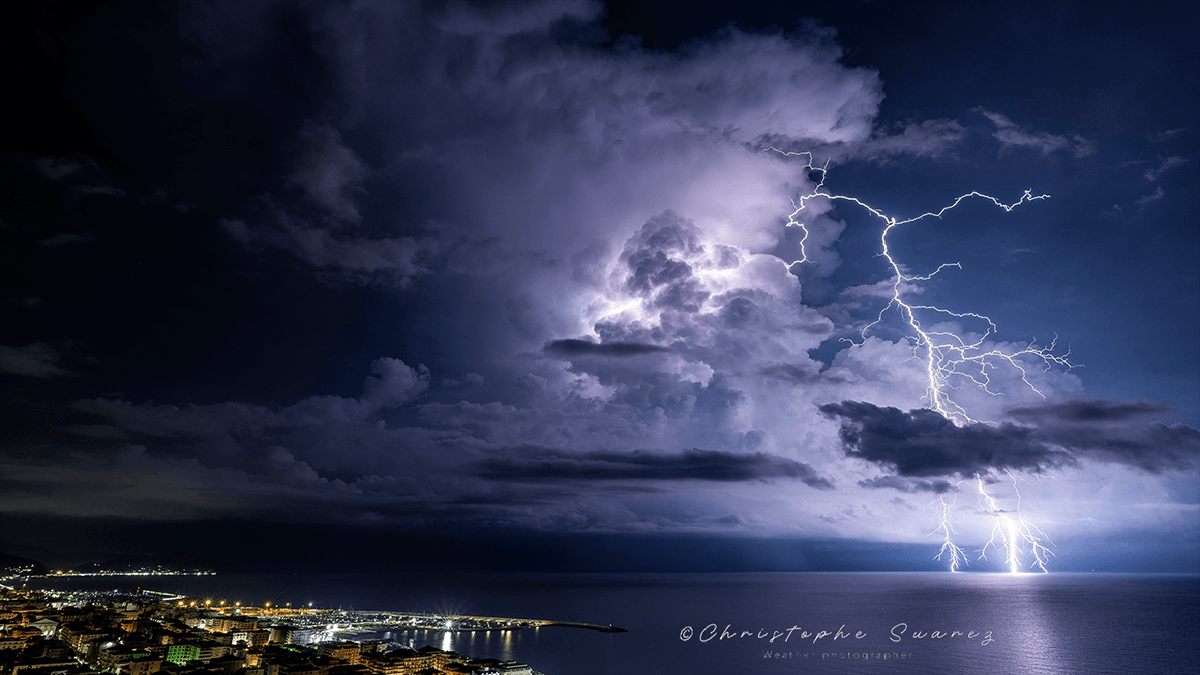

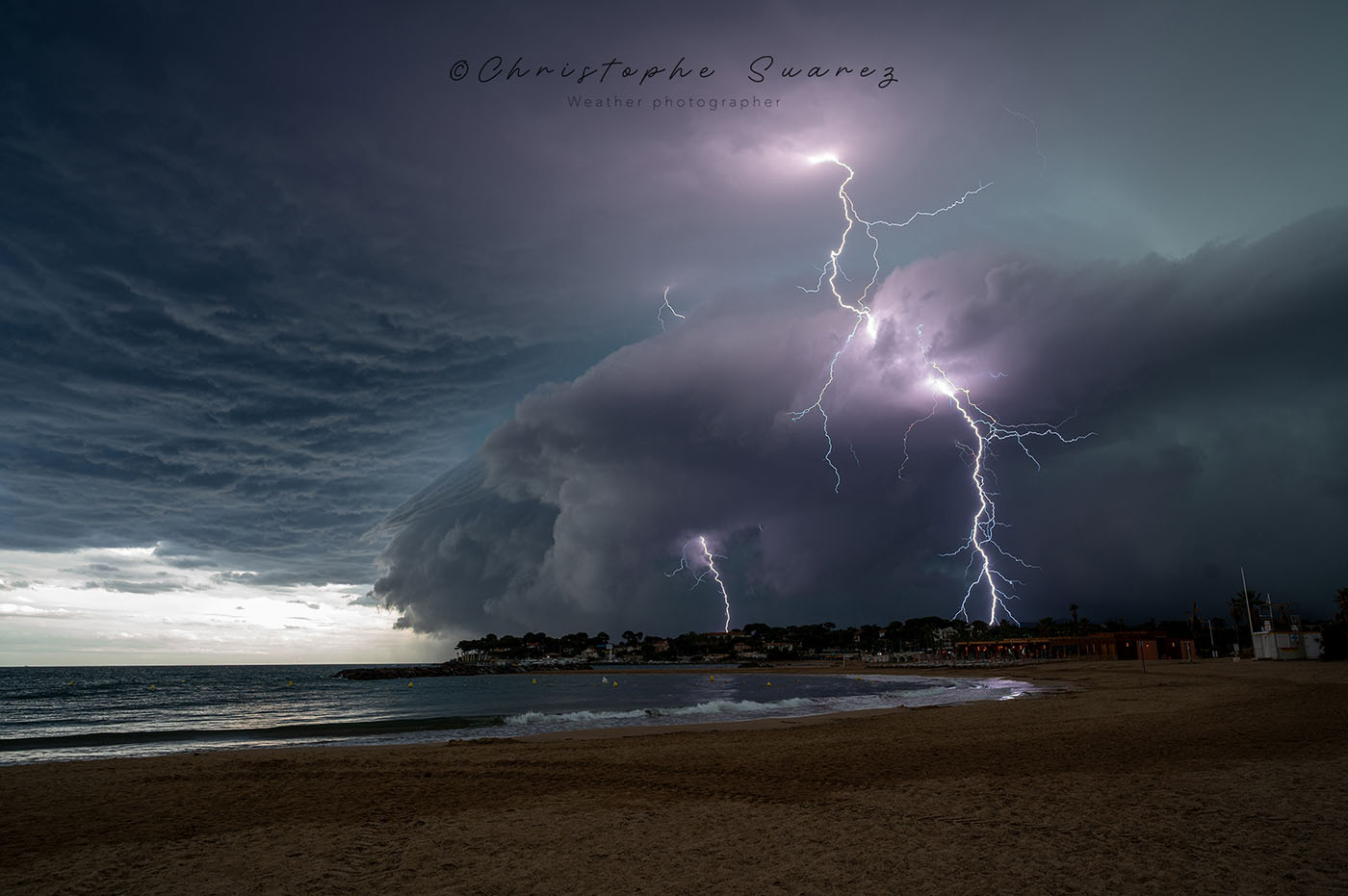
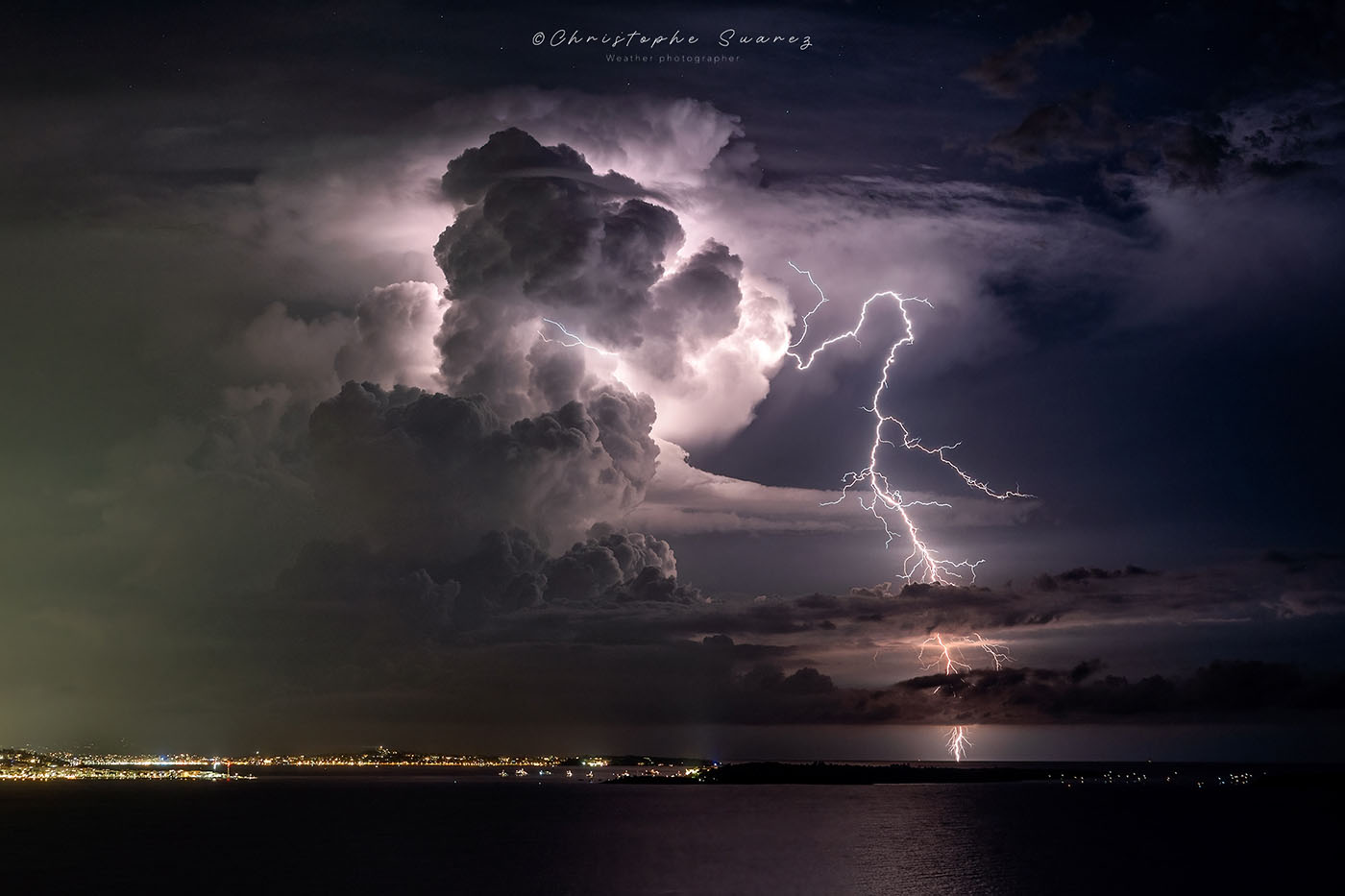
The Pursuit of Power — Severe Weather Calendar 2026 showcases Europe’s leading storm chasers through their most powerful weather imagery. The tenth month, October 2026, features storm chaser Christophe Suarez with a photo of a positive cloud-to-ground lightning bolt that lights up the sky near Chiavari, Italy.
The interview series for featured photographs in each monthly edition of the calendar offers a closer look into the photographer behind the scenes, his approach to photography, his passion, and his striking storm images.
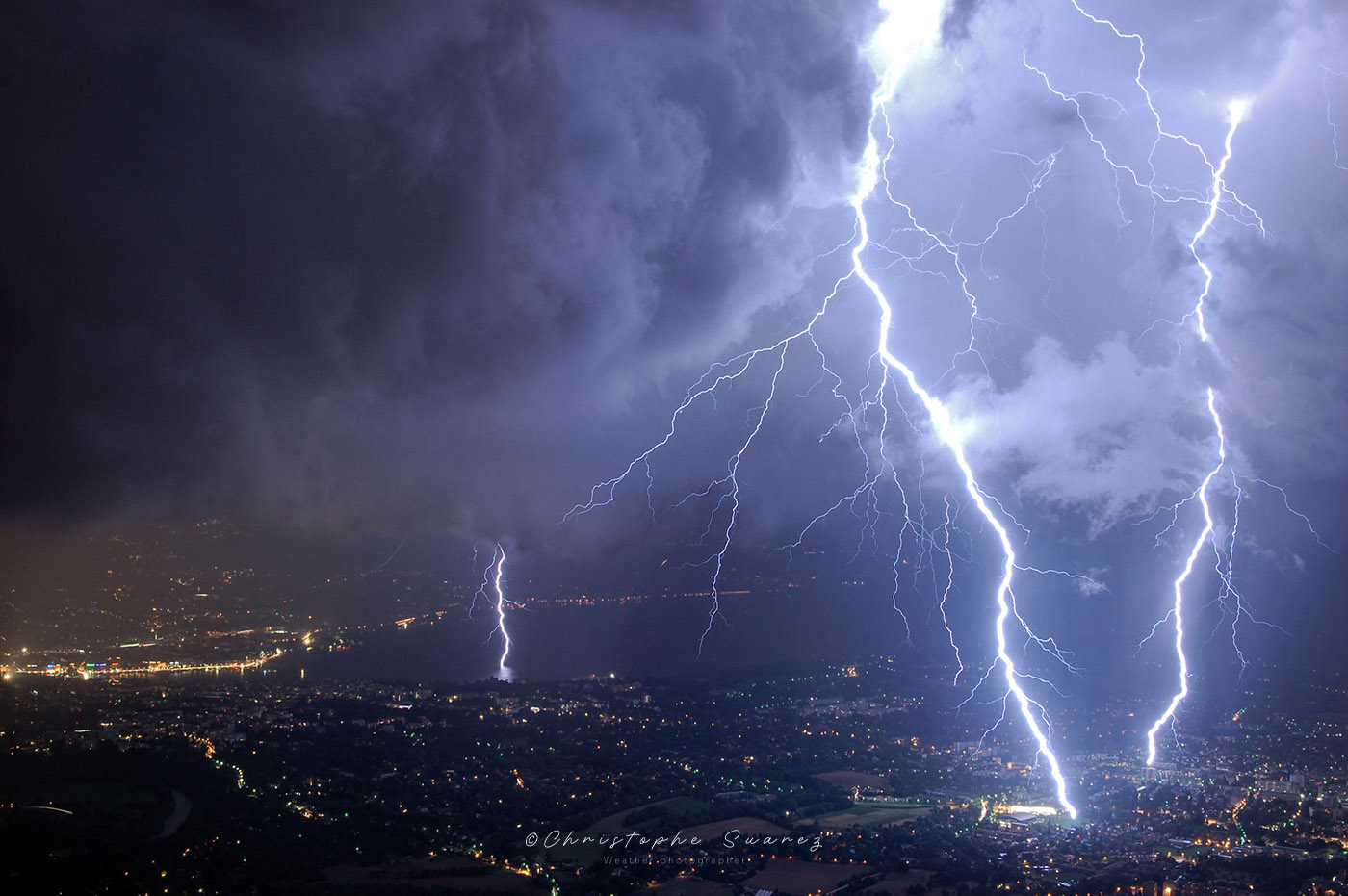
Don’t forget to follow Christophe’s social channels and support his work — you’ll find all the links at the bottom of the interview.
About the Photographer – Introduction: Christophe Suarez
Let’s start simple — who are you? How old are you, and where in Europe do you call home?
Hello, I turned 60 last year. I was born near Lyon to a Spanish father and a French mother. I lived in Lyon until 2001, then moved to Haute-Savoie, in the Alps, near Geneva.
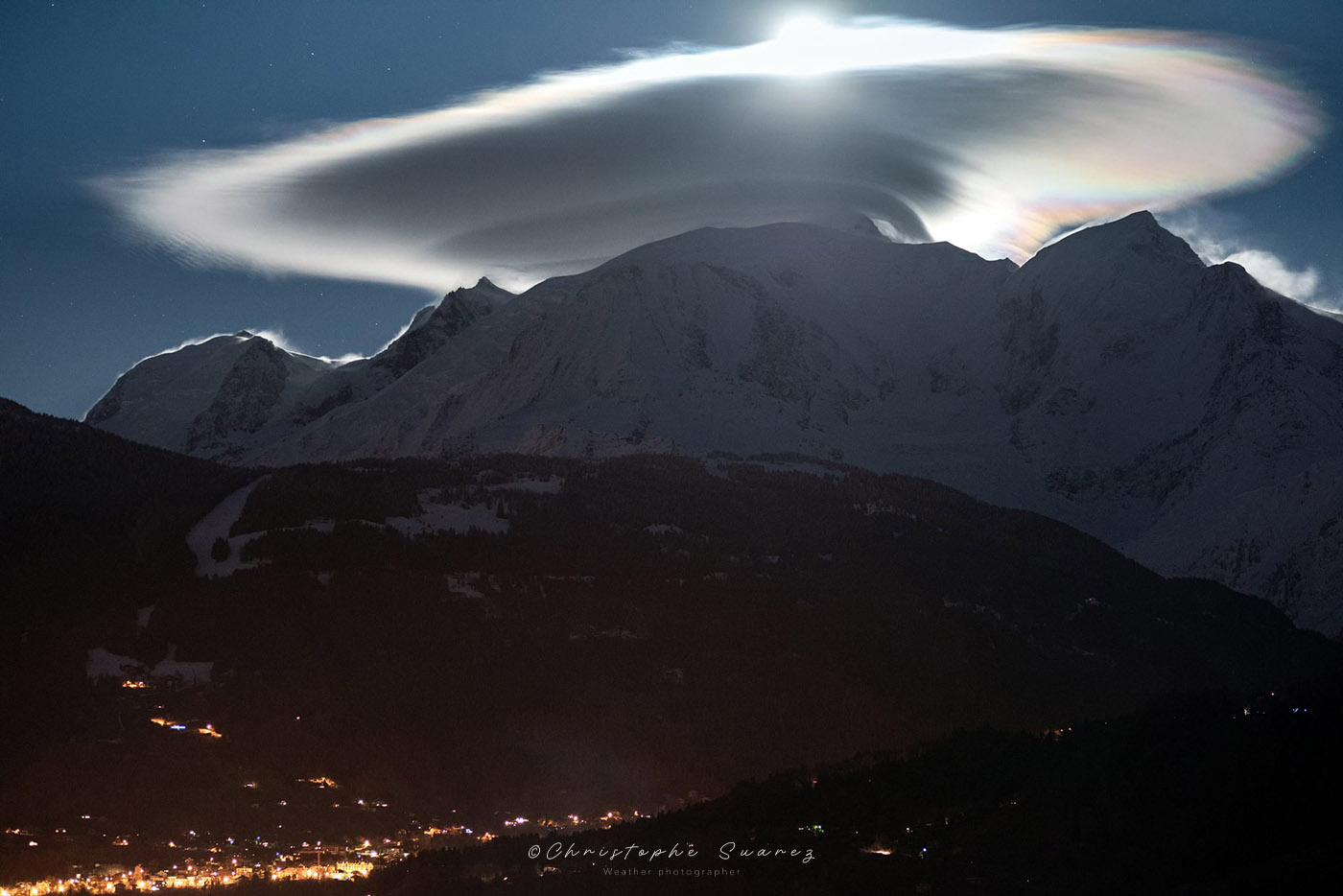
For the past few years, I’ve been living in the south of France, about half an hour from Cannes.
When did your passion for storms and photography begin? Was there a specific moment that pulled you into chasing?
As far back as I can remember, I have always been fascinated by the elements. One particular moment sealed my destiny and my relationship with lightning. I must have been nine years old, walking back up from the village with my grandmother. Every summer in Spain, we stayed in a house on a hillside, about fifteen minutes from the village. The atmosphere was stormy.
Suddenly, a lightning bolt struck just tens of meters in front of us, and I was terrified. I ran back down to the village and took shelter under the porch of an alleyway. My grandmother just kept walking. Scared but also a bit defiant, I wanted to relive that moment, that intense emotion—perhaps to say to the elements: I am here, and I am not afraid of you. The truth is: lightning both terrifies and fascinates me.
When it comes to the elements, I am contemplative by nature. I love to let the wind carry me, to feel the rain on my face, to watch the sky light up during a stormy night. In my youth, I experienced several storms at sea and always made sure to be on deck, facing the elements.
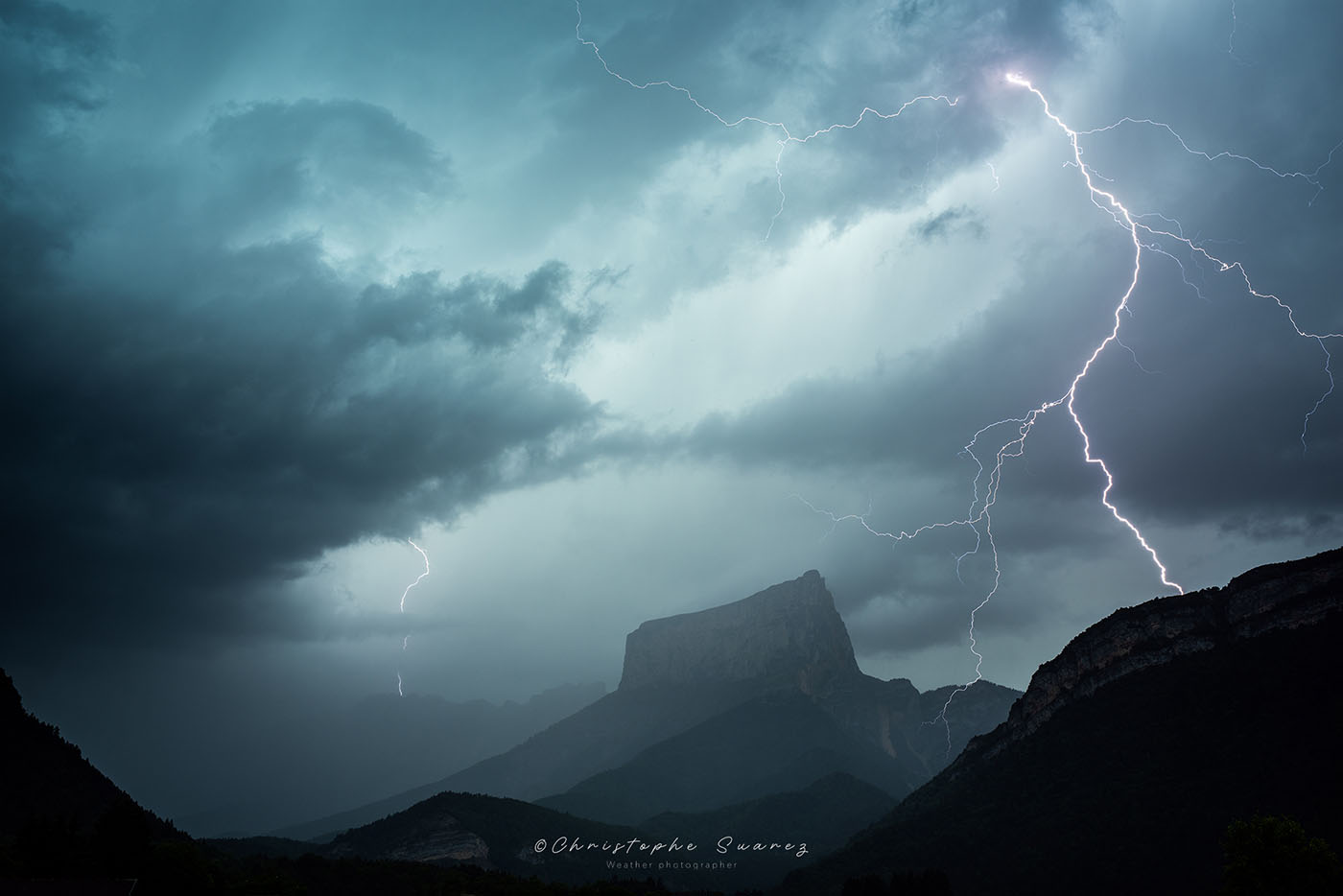
In the 1990s, I traveled extensively for humanitarian work. I wanted to chase storms, but I didn’t know where to begin and didn’t have much time for it. So I took a few photos with my film cameras, but I would forget the rolls in a drawer because what I loved most was living the moment.
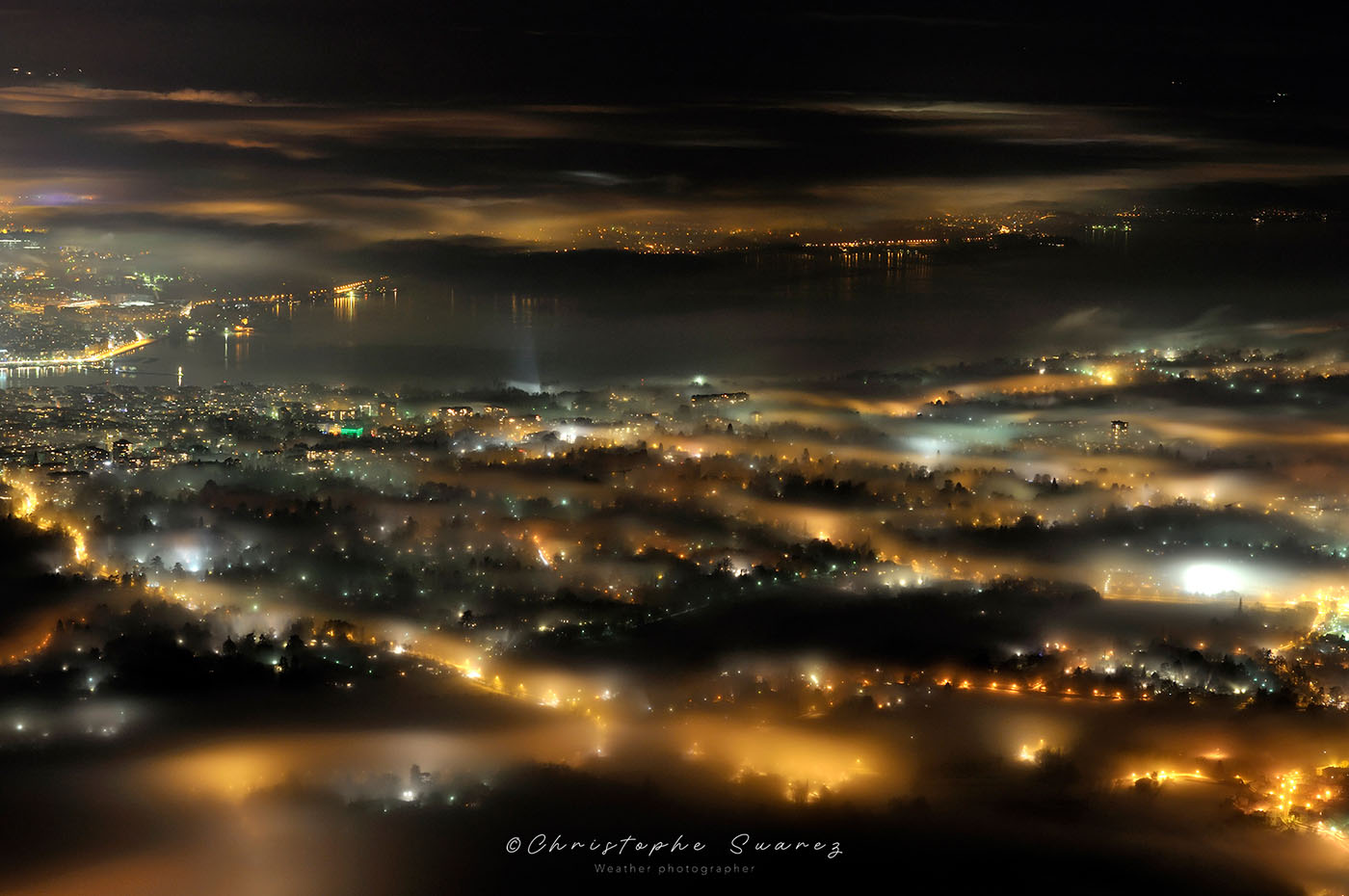
In 2001, I moved near Geneva, where I worked for the International Red Cross. There, I discovered the context of Alpine storms and the storms of the Geneva basin.
What really changed everything was in 2003, with the arrival of digital photography. I immediately realized I finally had the tool to photograph storms endlessly and refine my technique. At the time, I found some information online, but it was quite sparse. So I decided to create a group, and then a community called “Storm Chasers” (“Chasseurs d’orages”). I am quite proud to see that this community has inspired many people to take up storm chasing, mainly in France.
Gear & Chasing Setup
What’s inside your camera bag and chase vehicle today? Any must-have gear you never leave home without?
I took one of my first epic series of storm photos above Geneva using a 6-megapixel camera. They were JPEG shots. Some of those images traveled the world. One of them was even displayed for six months in front of the University of Geneva’s science faculty and on Swiss television, printed at 5 by 3 meters. Needless to say, equipment matters, but it’s just one piece of the puzzle. I often tell the enthusiasts I meet that luck favors those who are out in the field. If you’re not outside, the best gear in the world won’t do you any good.
I accidentally fell into the Nikon brand in 2005 and haven’t let go since. I’ve owned some legendary Nikon bodies, like the D200, D300, D810, and D850. Today, I remain loyal to the Z6—I have three of them: two originals and one refiltered with an Astronomik L2 filter. I know this camera inside out. It has an extraordinary ISO performance for a 24MP sensor. I also have two A7S bodies, one of which is also astro-refiltered.
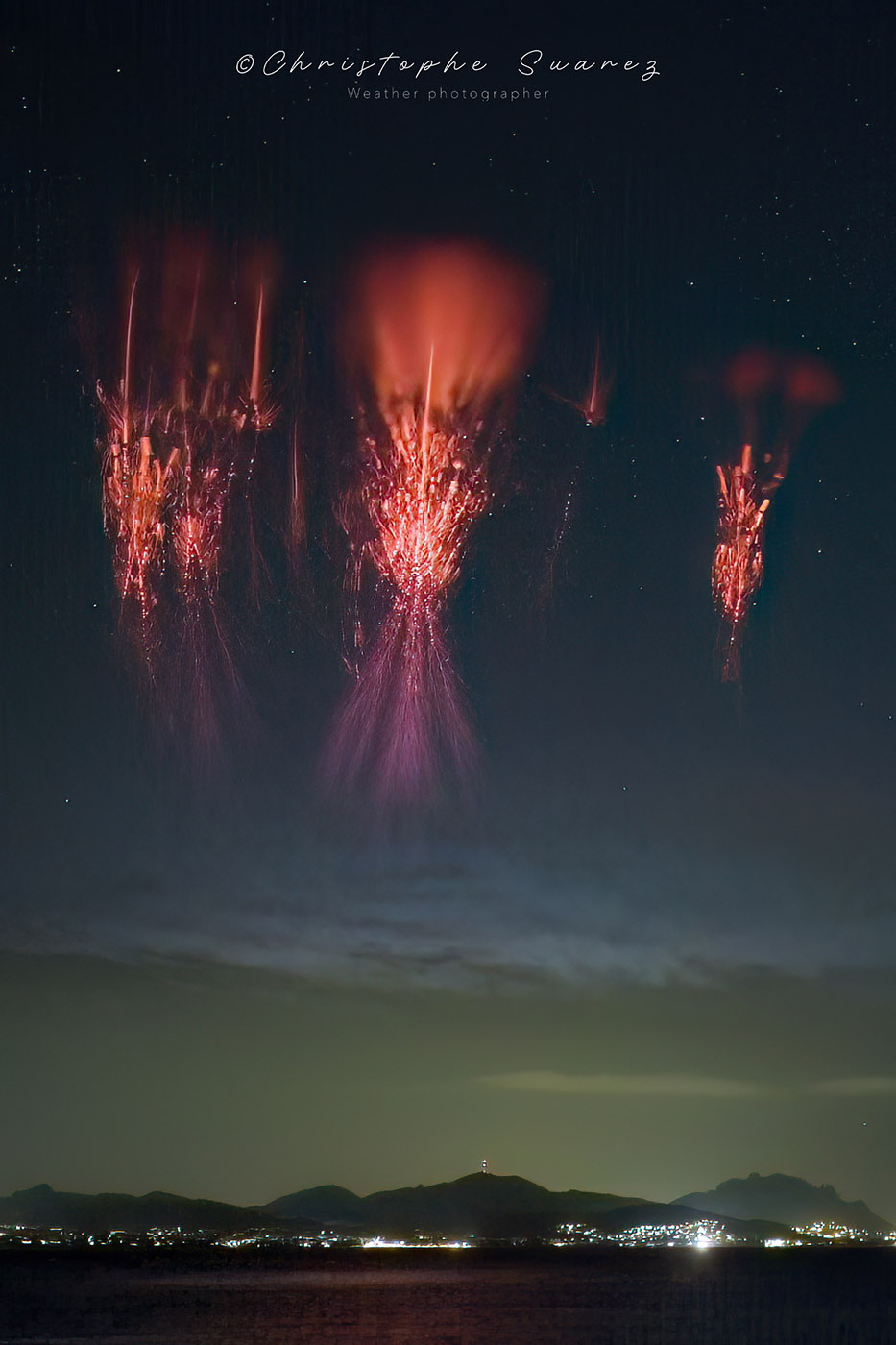
When I head out to chase storms, I take my two stock Z6 and the following lenses: fisheye, 16mm f/1.8, 24mm f/1.8, 50mm f/1.8, and 100mm f/2. If I’m going after red sprites, my setup is: the refiltered Z6 and the refiltered A7S, with 40mm f/1.4, 85mm f/1.2, and 135mm f/2 lenses.
Having good cameras and lenses is great, but the real magic is in the details—and I’ve never neglected my tripods and accessories. An unstable tripod is the best way to end up with soft photos. Many people look for flaws in their lenses or camera bodies, but the truth is simpler: invest in a good tripod, and you’ll always be rewarded.
What part of storm chasing gives you the biggest adrenaline rush or emotional high?
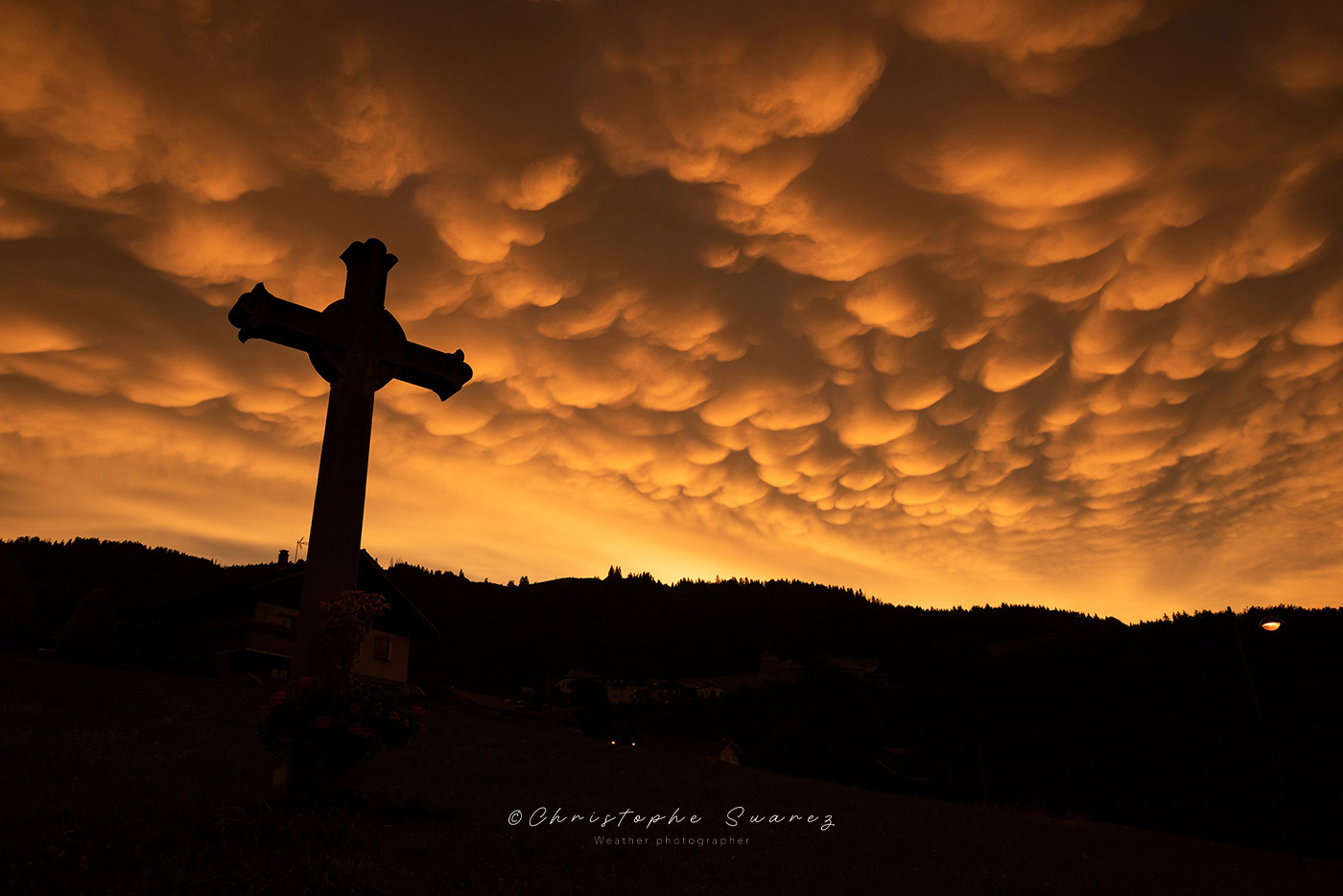
As you can imagine, I’ve always been fascinated by lightning. Over the years, my interest has expanded to all the phenomena associated with thunderstorms: the flanks of a cumulonimbus cloud draped with mammatus at sunset, swirling vortices, transient luminous events—especially red sprites—and more.
What excites me most about storms today is the isolated cells, those little balls of energy that sometimes produce stunning cloud-to-ground and intracloud lightning. Then there are the sprites and, more generally, the phenomena that occur above and around thunderstorms.
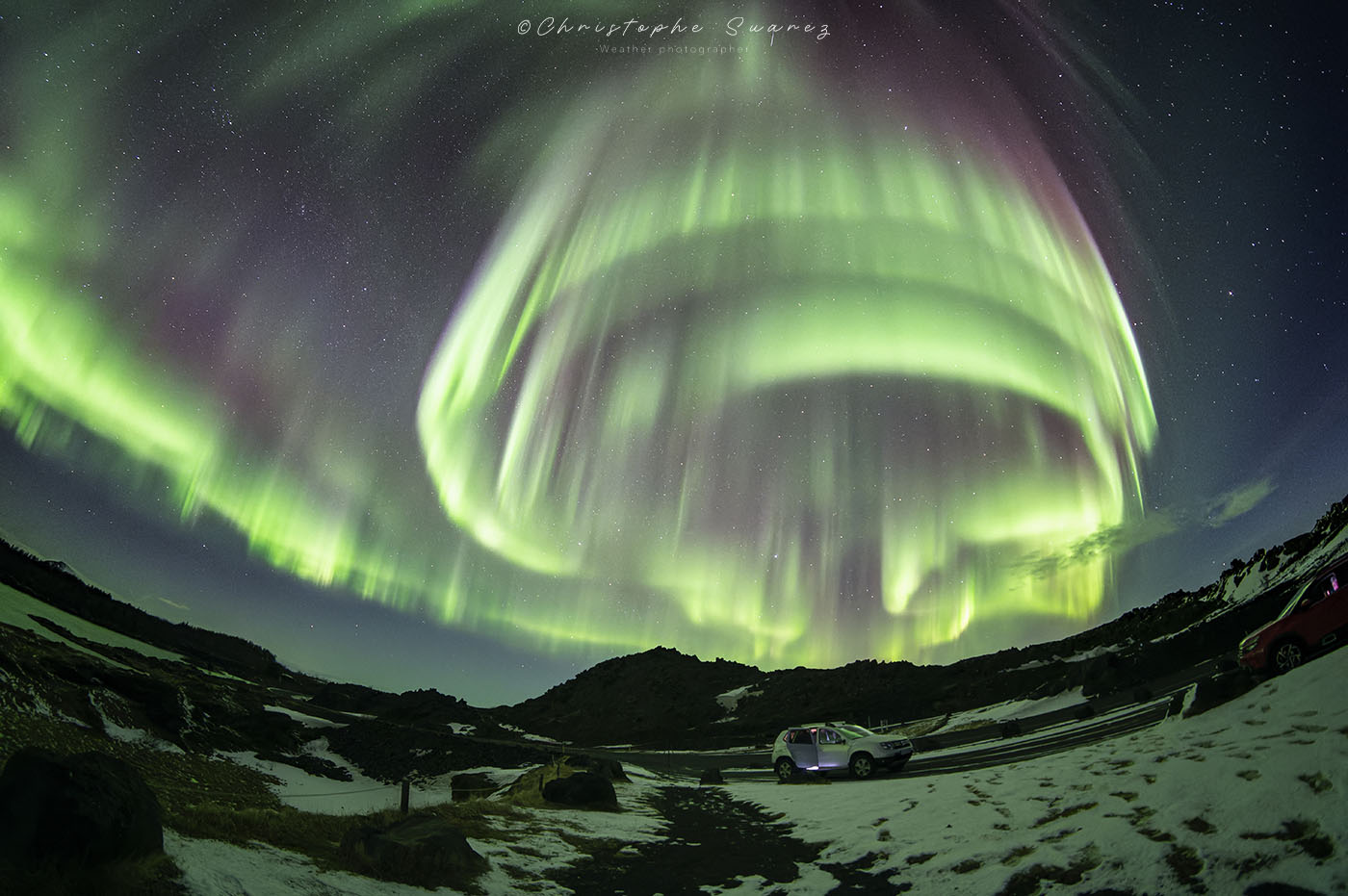
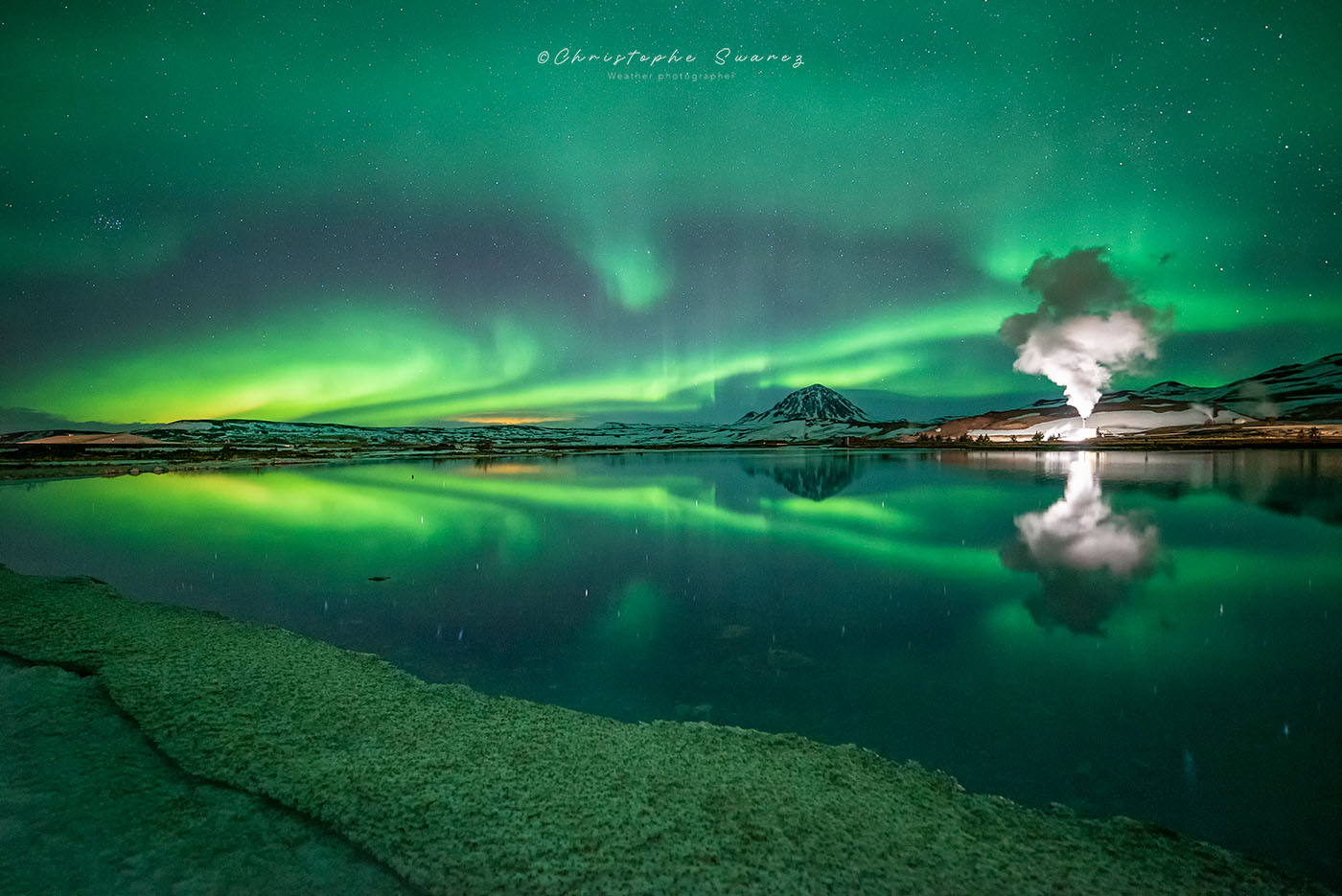
Other hunts that captivate me include chasing the aurora borealis. The first time I witnessed an auroral outburst, I cried with joy. It’s very different from storm chasing. Thunderstorms thrill me, while auroras fill me with a mix of excitement and inner peace. Under the auroras, I feel in communion with the cosmos.
What I love most is being out in the field. The prep work—checking models—and the post-processing on the computer excite me far less. I don’t often chase storms the American way. In Europe, with the traffic, it’s stressful and even dangerous. No, I prefer to pick a target and stick to it as much as possible. There’s nothing worse than choosing a spot, then moving for some silly reason, only to see a beautiful isolated cell develop exactly where I should have stayed.
The Chase Experience
The photo we selected for the calendar is genuinely inspiring. What was the atmosphere like around you — the mood, the light, the energy of the storm — and what went through your mind as you pressed the shutter?
Well, this image perfectly illustrates what I was just saying before. That evening, I had a clear plan in mind. After checking the models, my wife and I decided to head to Liguria, between Rapallo and Chiavari. We made a quick stop at a well-known spot near Genoa, where we ran into about twenty French storm chasers. On stormy evenings in Liguria, there are often more French than Italians on the roads—it’s quite something!
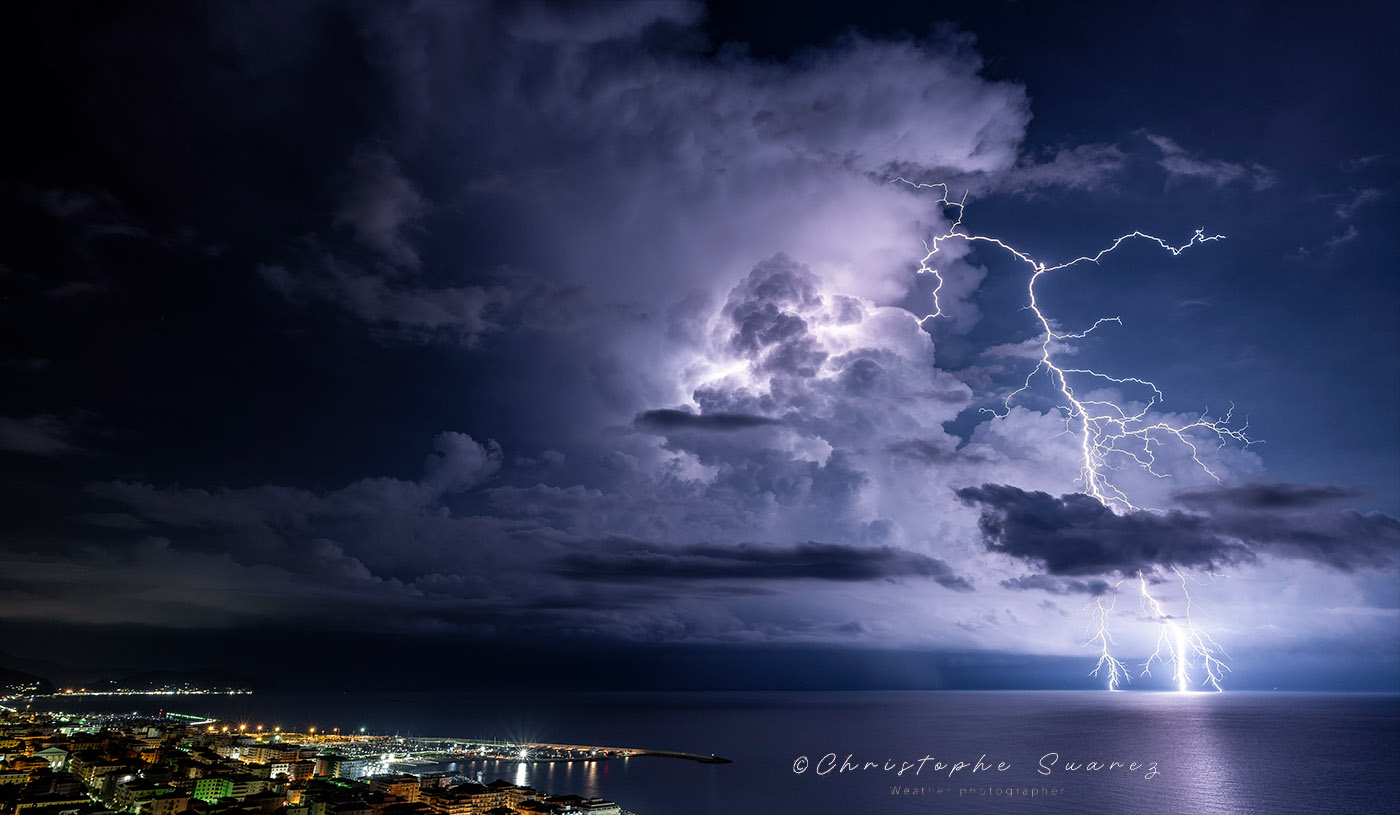
Later that evening, storms were firing up near Savona. We decided to go in the opposite direction from our fellow chasers, sticking to the target we had set for ourselves. That night turned out to be the night of isolated storms in Liguria. There were several, all highly photogenic, but the real fireworks began off Chiavari. A very electric cell unleashed about twenty breathtaking out-of-the-blue lightning bolts in a crystal-clear sky.
I was especially happy to share that moment with Kate, as it was her first time experiencing something like this.
How far has this passion taken you? In how many countries have you chased or photographed storms so far?
I’m rooted in my continent. I’ve never traveled outside Europe to chase storms because I believe we have everything we need right here. Of course, you’re more likely to encounter a tornadic supercell in Tornado Alley than in France—but that only makes the challenge more interesting. In recent years, some storm photos taken in Europe have rivaled the most spectacular American storms. I also find it more rewarding to explore uncharted territory rather than follow well-trodden paths.
Whenever I can, I love chasing storms in Italy. I’ve also been to Slovenia, Croatia, and Spain. As for the northern lights, my favorite destination is Iceland. To be honest, I don’t feel the need to chase storms any farther afield—for now.
Tell us about your chase vehicle — is it a normal car, or have you turned it into a lightning-hunting machine? Do you chase solo or with partners?
My car is the perfect little workhorse for tough roads. I got it when I was living in the Alps—it’s a Panda 4×4. It’s clocked nearly 300,000 kilometers and has never let me down. Plus, I’ve squeezed through Italian village streets that would make any SUV owner break a sweat. To fit all my luggage and a ton of gear, I took out the back seats.
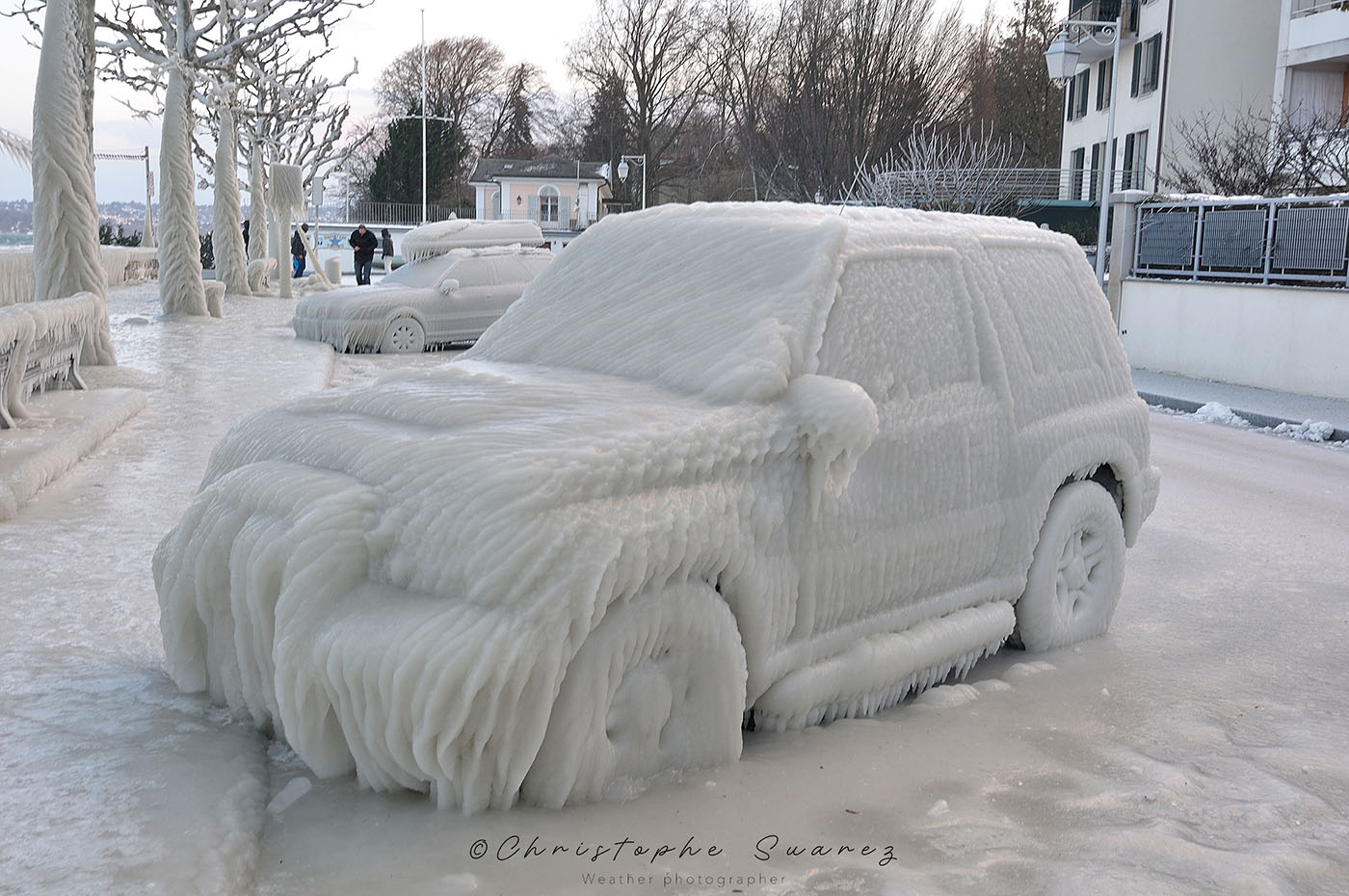
These days, I often chase storms with my wife. No more than two of us, though—the trunk isn’t big enough! 😀
Describe your ultimate dream chase: location, storm structure, light, terrain — the perfect scene.
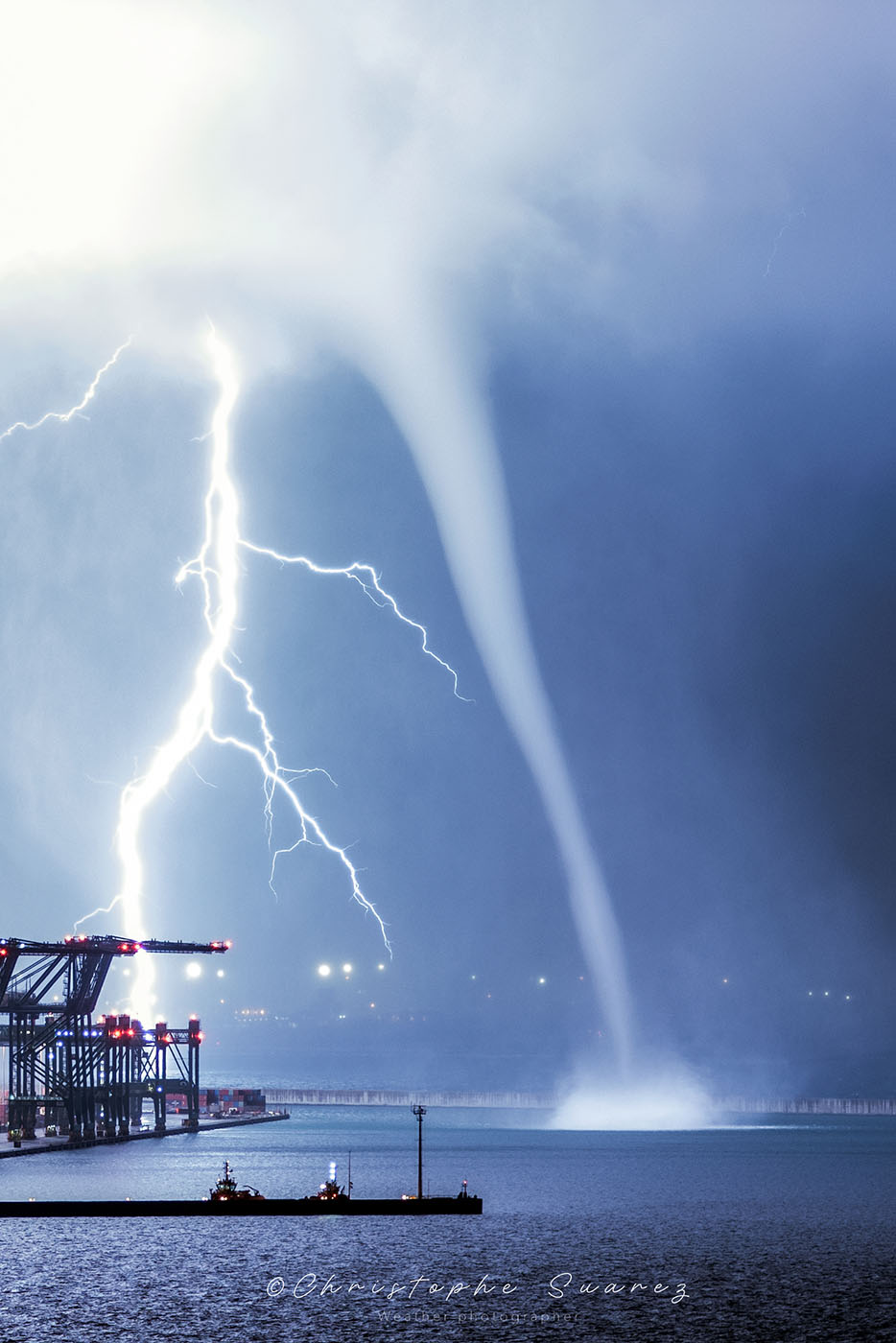
My ideal scene? A towering cumulonimbus under the aurora borealis, with a waterspout below, an extra-cloud lightning bolt, and a jellyfish sprite above. Am I being too demanding? Before, I thought it was just a dream. But with this incredible solar cycle, I believe anything is possible—even if it would be easier to capture in the USA…
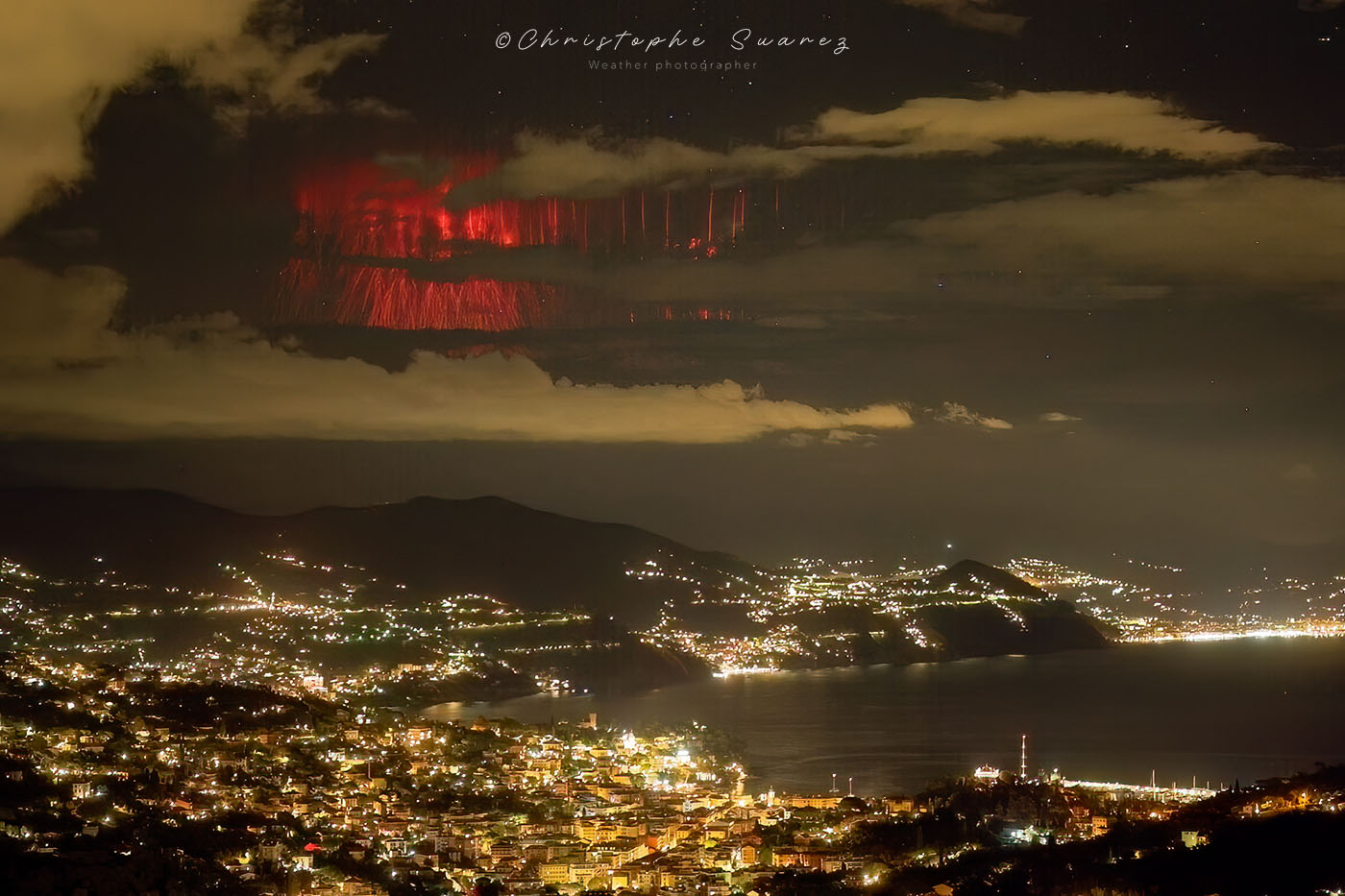
One thing is certain: now, in all my dreams, there’s a hint of aurora borealis and a transient luminous event.
Be honest: a powerful supercell forms 20 km away… right as a boring work meeting is about to start. What happens next?
I’ve never let storm chasing take priority over my work—but I have cursed the occasional meeting. That’s my official answer!
Inspiration & Milestones
Which storm chasers or photographers have inspired your journey? Anyone you look up to, even today?
There are many who have influenced me. Some have helped me develop my skills —directly or indirectly—I’d like to thank Dean Gill and Alex Hermant here. Other chasers, French or American, have simply inspired me with their work and images. Pierre-Paul Feyte, Warren Faidley, and Mike Hollingshead are among them. I’m also deeply inspired by other photographers, like RAX, whose photos speak directly to my soul.
And then, enough about the old guard—there’s a new generation of young chasers, some just kids, brimming with talent and the fearlessness of youth. When I see their images, I realize they’re already far ahead of where I was when I started. They’re often a source of inspiration and even motivation to keep pursuing my quest for stormy atmospheres.
I can’t finish without mentioning the national communities across Europe, which inspire me so much. There are the Italians with their thunderous storms, the Slovenians with their fantastic supercells and isolated cells, the Croatians with their island stormscapes, the Greeks who are masters of waterspout and red sprite photography, the Dutch with their auroral scenes, and American-style chasing in Europe. I’ve recently discovered vibrant communities in Spain and Romania, and all the others I haven’t named. In short, Europe is a fertile ground teeming with talent.
Finally, there are my friends. I won’t name them all for fear of leaving someone out, but I’m in close contact with many who will recognize themselves here.
What moment in your chasing or photography career are you most proud of — a capture, a trip, or a personal milestone?
I could mention some iconic images from my work, publications in Europe or the US, or even awards—but no, because my greatest pride is when a storm chaser, young or old, tells me: “It was your photos that made me want to photograph storms.” That goes straight to my heart and gives real meaning to my passion for the elements.
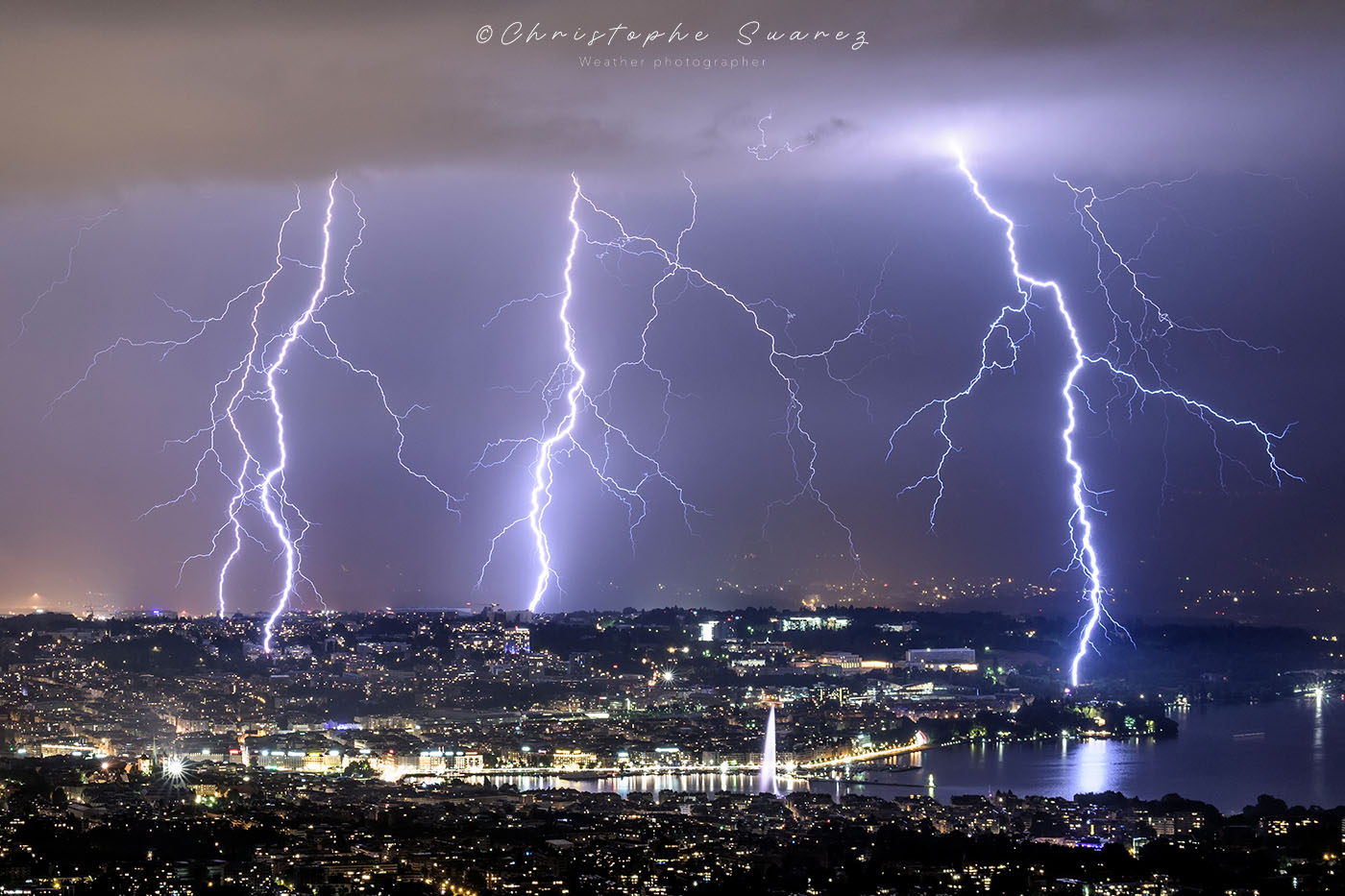
At its core, storm chasing is a selfish hobby, and I’ve been indulging myself for over 20 years. I’ve never felt like I was saving or changing the world with my images, just being a humble witness to the passage of time.
What’s the closest call you’ve ever had? Any dangerous moments you’ll never forget, and what did you learn from them?
There have been a few close calls. I’m especially wary of lightning and flooding. A few years ago, the only time I didn’t take my own car but my wife’s, we ended up in a tricky situation in southern France, and the water nearly immobilized the car. That’s exactly the kind of scenario I want to avoid at all costs.
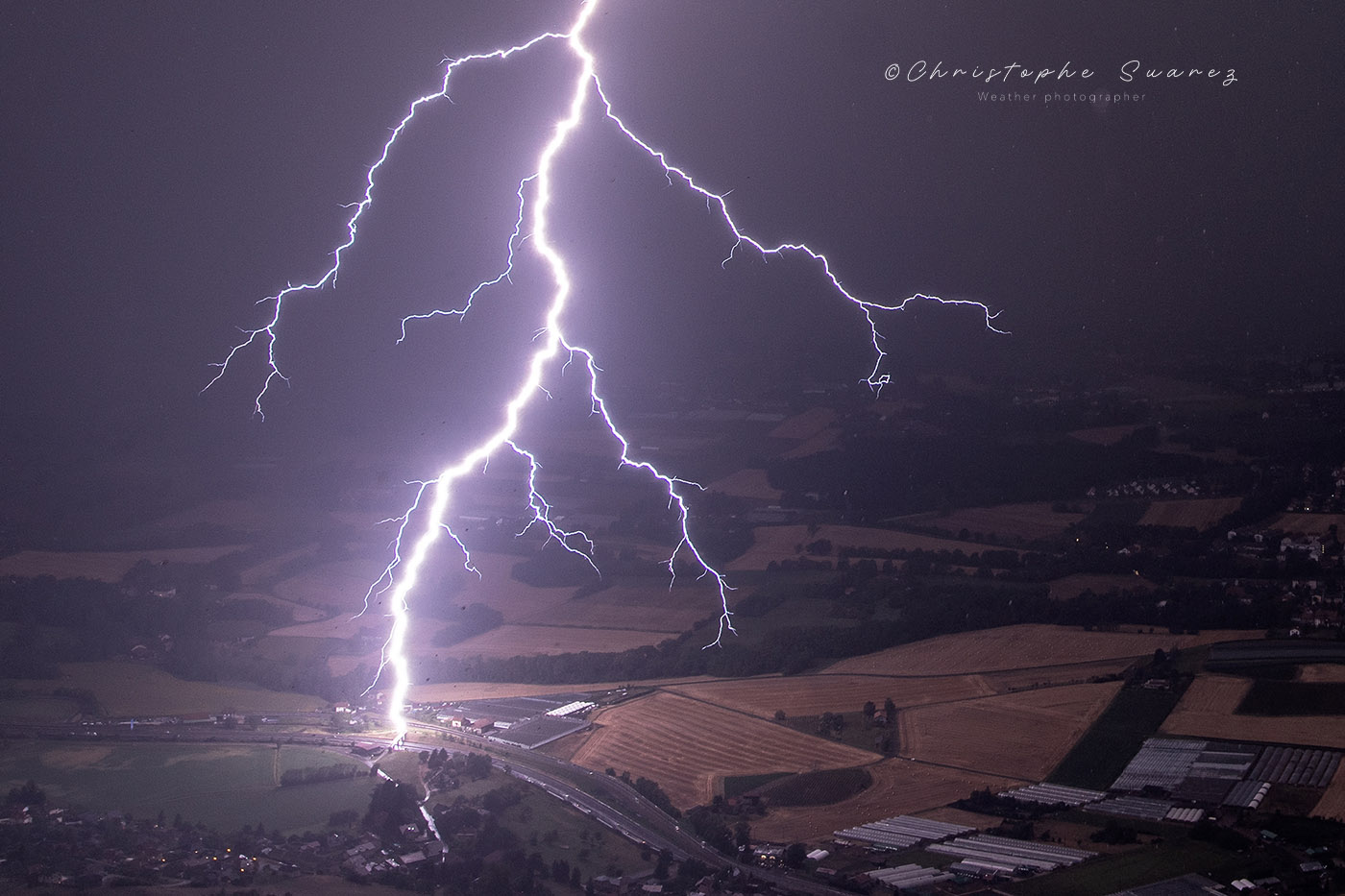
Like most of us, I’ve had lightning strike dangerously close during my chases. Often, you joke about it with fellow chasers: “Wow, that one was a little too close for comfort.” In the end, I’m still here, so I’ve never crossed that line.
One thing is certain: we sometimes chase extreme situations that claim lives. Faced with that reality, I try to give meaning to my reports, to avoid being indecent or sharing images that might distress victims. I’m only human, and I can make mistakes, but there’s always a little voice inside me saying: Be respectful.
Connect With Photographer’s Work
And finally, where can people follow your work and chase adventures online? (Facebook, Instagram, X, website, TikTok,…)
You can find my photos and adventures online at:
Final Note
Thank you, Christophe, for being part of the Pursuit of Power project!
Your story and visuals help showcase the strength, beauty, and diversity of European storm chasing.
The Calendar has 13 pages – a cover page plus 12 monthly pages.
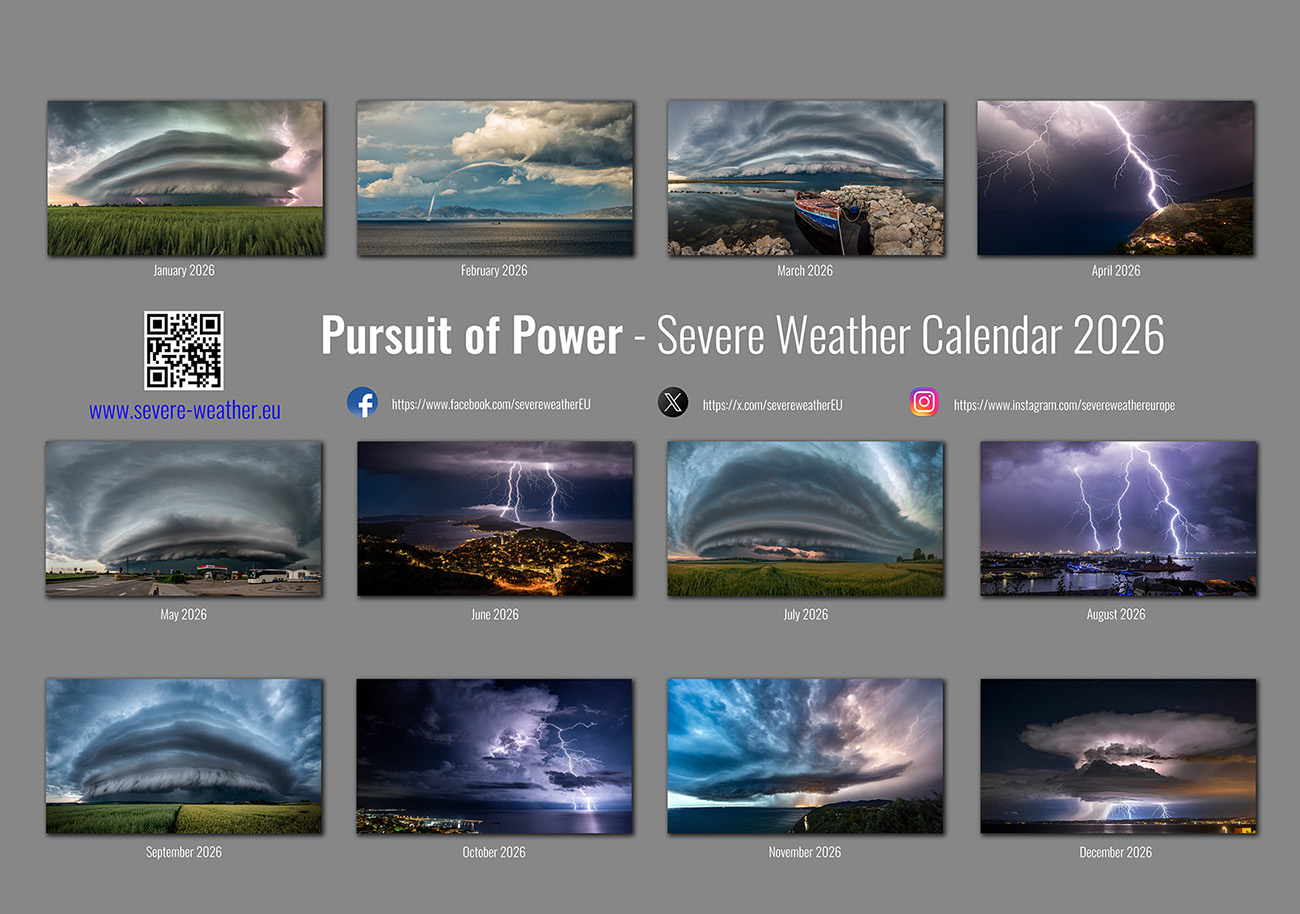
The calendar can be purchased here: Pursuit of Power – Weather Calendar 2026