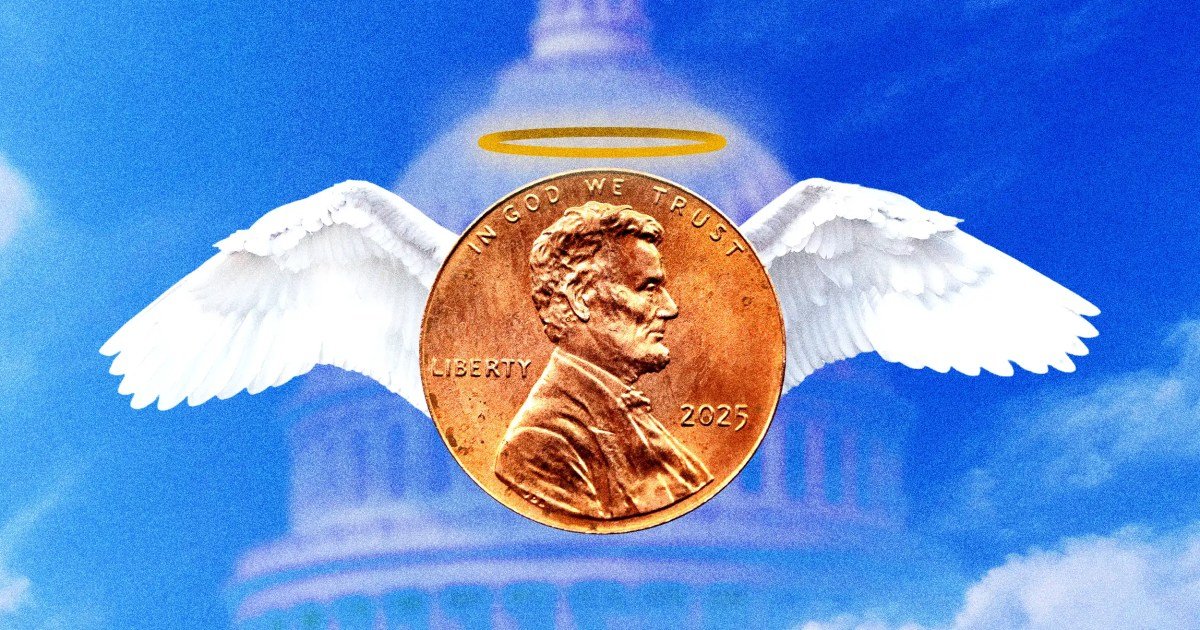

Congress has officially skipped town until after voters cast judgement on the GOP-controlled legislative branch on Nov. 3.
Lawmakers, however, did pull off an achievement that flew under the radar, sandwiched between higher-profile — and sometimes failed — votes on bills concerning data centers and college sports: They tackled government waste on a bipartisan basis. And in doing so, they changed how you’re paying with cash.
For nearly 20 years, the expense of creating a penny has exceeded its face value. In 2024, a penny cost 3.7 cents to produce.
On Monday, the Senate passed the Common Cents Act, which will formally end penny production after a 232-year run. The bill now goes to Trump for his signature, having passed the House two weeks earlier.
The Treasury Department had already stopped penny production last year under Trump’s directives and produced the last batch of the one-cent coins in November. But this bill cements the changes underway at the Treasury. The U.S. Mint estimates calling it quits with the penny will save the government $56 million annually. Countries such as Canada, Australia and New Zealand scrapped low-denomination coins years ago.
Pennies have long been a drag on the federal budget. For nearly 20 years, the expense of creating a penny has exceeded its face value. In 2024, a penny cost 3.7 cents to produce. Legislative attempts to kill the penny date back to the 1990s and former President Barack Obama once called the failure to do so “a good metaphor for some of the larger problems that we’ve got.”
As for the more than 114 billion pennies still in existence, they will retain their status as legal tender, and Americans can continue throwing them in coin jars, under sofa cushions or other desolate places that remove them from circulation.
With many Americans shunning cash in favor of paying electronically, retailers have increasingly complained about a penny shortage. Some states already permit rounding cash transactions to the nearest nickel when exact change isn’t possible, but the rules vary from state to state. This bill attempts to fix that with a federal framework that will supersede the conflicting state laws.
For the 119th Congress, this serves as an all-too-rare instance of the legislative branch functioning as intended.
In addition to giving last rites to the penny, the bill could give the nickel a physical makeover as well. In fiscal 2025, it cost 13 cents to produce one nickel — another example of government bloat that could attract more attention now that the penny is going the way of floppy disks and the Blackberry in becoming a relic. The bill authorizes the Treasury to test cheaper materials to remake the five-cent coin. However, Trump can’t simply kill the nickel on a whim like he did the penny. The legislation obligates the Treasury to notify Congress if it tries phasing out another coin, such as the nickel.
More articles

Joseph Zeballos-Roig
Joseph Zeballos-Roig is a reporter who has covered economic policy and politics for Semafor, Business Insider and Quartz, among other publications.