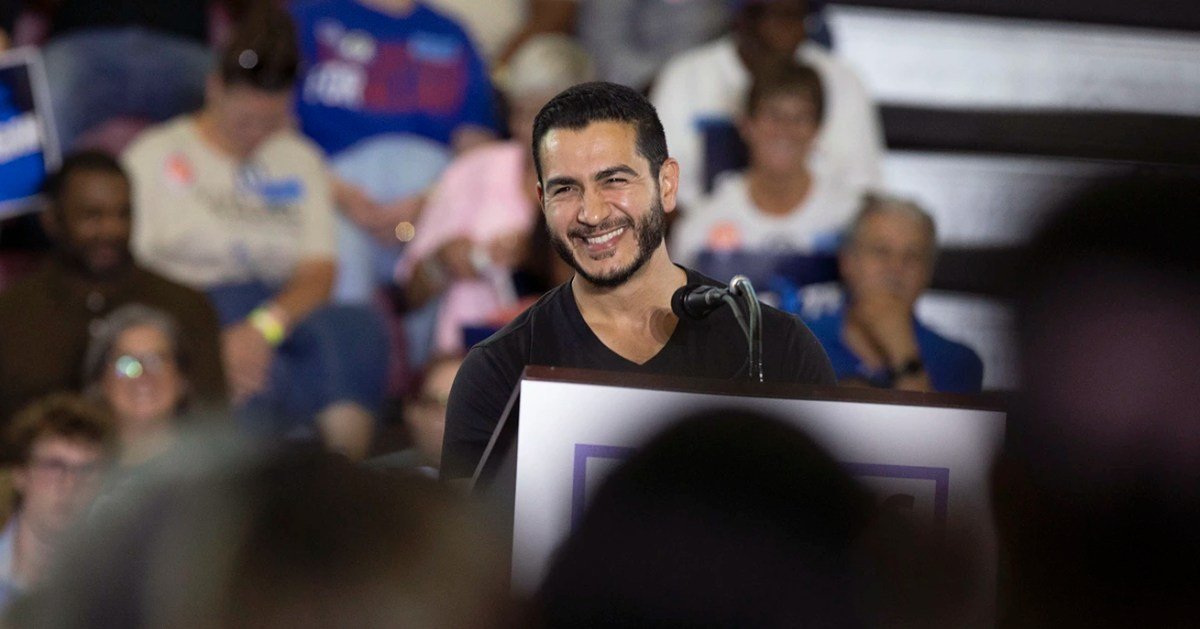

The Congressional Black Caucus PAC endorsed Abdul El-Sayed on Tuesday, giving Michigan’s Democratic Senate nominee an institutional show of support six weeks before his general-election matchup with Republican Mike Rogers.
The endorsement is an about-face for a group whose members largely lined up behind Rep. Haley Stevens in the state’s Democratic primary. It also underscores El-Sayed’s most urgent task: rebuilding a coalition that fell short with Black voters, at a moment when Republicans are working to peel off disaffected Democrats across Michigan.
Rep. Gregory Meeks, the New York Democrat who chairs the PAC, built the announcement around El-Sayed’s tenure leading the Detroit and Wayne County health departments — the same case the nominee has pressed on the trail.
“As head of the Detroit and Wayne County health departments, Dr. El-Sayed helped increase healthcare access and outcomes for thousands of Black Michiganders,” Meeks said in a statement. “CBCPAC will fight alongside Abdul to build a coalition to beat Mike Rogers and get a majority in the United States Senate that can bring down costs for all Michiganders.”
The vulnerability it is meant to address was on display in the primary. Black Michiganders broke heavily for the more moderate Stevens and El-Sayed lost Wayne County, home to Detroit, by roughly 17,000 votes. He has blamed the gap on Stevens’ advertising advantage — more than $60 million, by his account, much of it spent touting her ties to former president Barack Obama.
For now, the PAC’s backing is largely symbolic. The group had a little under $600,000 on hand, according to Federal Election Commission filings, and its leadership has no imminent plans to campaign in Michigan. Its value lies in the signal it sends from a bloc that was split just weeks ago: 14 Black members of Congress, including Meeks, endorsed Stevens in the primary.
Rep. Summer Lee, D-Pa., who campaigned with El-Sayed before the primary, said the caucus could help counter what she called negative narratives about the nominee and drive turnout in a race expected to be close — but only with an effort that goes beyond the traditional swing through predominantly Black churches.
“I would like to see a mobilization effort to the polls. I would like to see the Black Caucus communicating about not just what we’ve lost [during Trump’s second term], but what we actually have to gain,” Lee said. “I think that we can play a unique role in that.”
Rogers is already working that terrain. He has attended services at several predominantly Black churches in recent weeks, his campaign said, and launched a “Democrats for Rogers” coalition in a predominantly Black Detroit neighborhood alongside outgoing state Rep. Karen Whitsett, who left the Democratic Party this year over what she described as a misalignment of values.
About a week earlier, Rogers met with Detroit City Council member Mary Waters, who endorsed Stevens in the primary and has since argued that El-Sayed is an ideological mismatch for the city, even as he has distanced himself from the Democratic Socialists of America’s platform.
“There’s a disconnect,” Waters told MS NOW. “Democrats really don’t even understand Black people. They are allowing the socialists, the Democratic socialists, to run this party — to run it and to ruin it.”
Waters, the first Black woman to serve as Democratic floor leader in the Michigan Legislature, credited Rogers with focusing on issues she sees as central to Black residents: low literacy rates, housing costs and skilled-trades programs in schools. She said she has taken backlash from Michigan Democrats for meeting with him. Rogers promoted the sit-down on his campaign’s social media accounts.