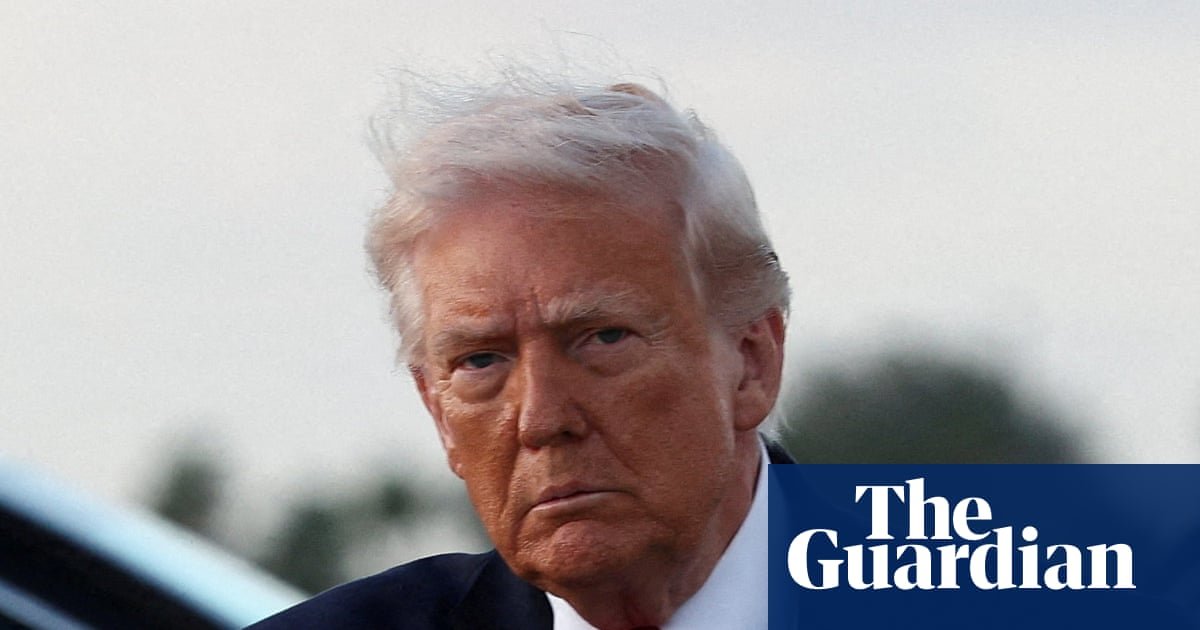

The UK will not be involved in any blockade of the strait of Hormuz, the Guardian understands, after claims by Donald Trump on Sunday that the US would be blockading the waterway with the assistance of Nato allies.
Speaking to Fox News, Trump said “it won’t take long to clean out the strait” and claimed “numerous countries are going to be helping us”, adding that the UK and other nations were sending minesweepers.
The UK has previously suggested it could play a role in making the strait of Hormuz safe to pass, and it has mine-hunting systems and anti-drone capabilities already in the region.
But there have been concerns in Whitehall that complying with Trump’s demand to send ships could escalate the crisis. The UK’s willingness to consider a role in mine-removal operations is seen as distinct from Trump’s blockade proposal.
A government spokesperson said the UK would continue to “support freedom of navigation and the opening of the strait of Hormuz, which is urgently needed to support the global economy and the cost of living back home”.
They added: “The strait of Hormuz must not be subject to tolling. We are urgently working with France and other partners to put together a wide coalition to protect freedom of navigation.”
Starmer has previously said talks were ongoing between allies in Europe, the Gulf partners and the US to create a “credible, viable plan” for reopening the strait after Iran blocked traffic.
Trump’s comments around a blockade of the strait of Hormuz came hours after Wes Streeting criticised his rhetoric on Iran as “incendiary, provocative and outrageous”. On Sunday Trump again hit out at the UK’s actions during the conflict and repeated a jibe that appeared to compare Starmer to Neville Chamberlain.
“Mr Starmer said we’ll send the equipment after the war is over,” Trump told Fox, saying those words were a “Neville Chamberlain-type statement”.
It is not the first time Trump has appeared to compare Starmer to Chamberlain, long criticised for following a policy of appeasement toward Adolf Hitler. Starmer has not responded to the US president’s jibes specifically. Before Trump’s comments on Sunday, Starmer had urged the US and Iran “to find a way through” after the failure of peace talks over the weekend.
The prime minister also called for the ceasefire to continue after having a conversation with the sultan of Oman, Haitham bin Tariq Al Said, on Sunday morning.
The fragile two-week truce announced last Tuesday was thrown into uncertainty after Washington and Tehran’s 21 hours of negotiations ended without agreement being reached in the early hours of Sunday. The US vice-president, JD Vance, who was in Pakistan for the talks, said Iran’s refusal to commit to not building a nuclear weapon was the reason for the lack of a deal.
Streeting called the failure of US-Iran peace talks disappointing and said the success of future negotiations was necessary “in all of our interests”.
“As ever in diplomacy, you’re failing until you succeed,” the health secretary told Sunday Morning With Trevor Phillips on Sky News. “So while these talks may not have ended in success, that doesn’t mean there isn’t merit in continuing to try.”
He acknowledged it had been a “difficult few months” for the relationship between the UK and the US. “On so many other things, our interests as the UK and the US are intertwined. We are old and close friends and we’ve got a shared outlook as democratic countries and we’ve got shared security interests,” he said.
Asked about the rhetoric used by Trump, who last week warned Iran that a “whole civilisation will die” if it did not meet his demands, Streeting said: “Over the course of the last week, President Trump has said some pretty bold – in Yes Minister language – incendiary, provocative, outrageous things on social media. I think we’ve all come to learn that you judge President Trump through what he does, not just what he says.”
Rachel Reeves said again on Sunday that the war in Iran would “come at a cost to British families and businesses”. Writing in the Sunday Times, the chancellor said: “These are not costs I wanted, but they are costs we will have to respond to. As chancellor, I have vowed that my economic approach to this crisis will be both responsive to a changing world and responsible in the national interest.”
Streeting praised Starmer’s “grit and guts” in declining to support initial US-Israeli strikes on Iran. “There are few former British prime ministers alive today who would have made the same judgment call that Keir made on not joining the war in Iran,” he said.