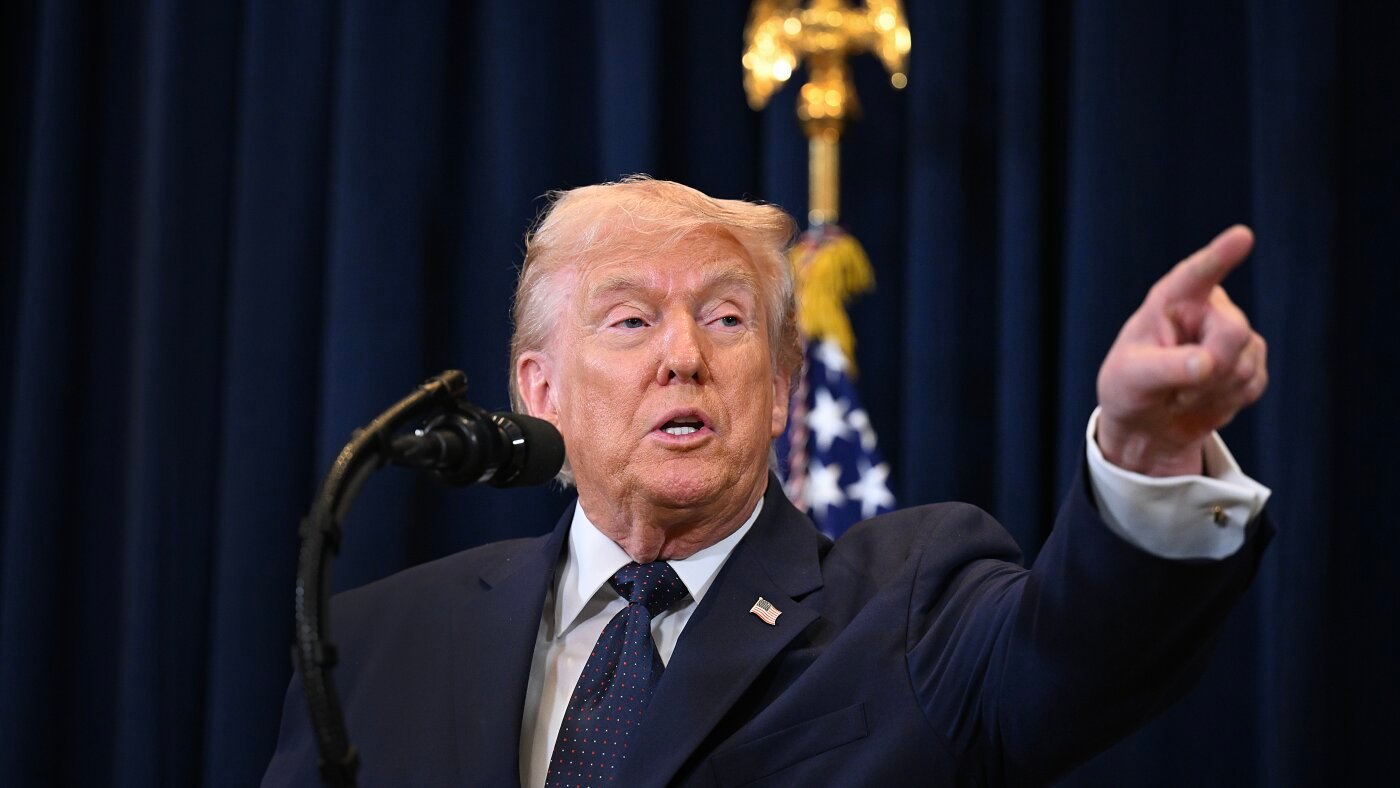

President Donald Trump refused to say Wednesday whether the United States would end its military campaign against Iran if the country retained possession of its stockpile of enriched uranium — a key justification the administration offered for launching military strikes.
“I’m not going to talk about that,” Trump told MS NOW before leaving the White House on Marine One. “But we have hit them harder than virtually any country in history has been hit, and we’re not finished yet.”
Trump, speaking later Wednesday in Kentucky, appeared to claim the strikes had already neutralized the threat. “They don’t have nuclear potential,” he said.
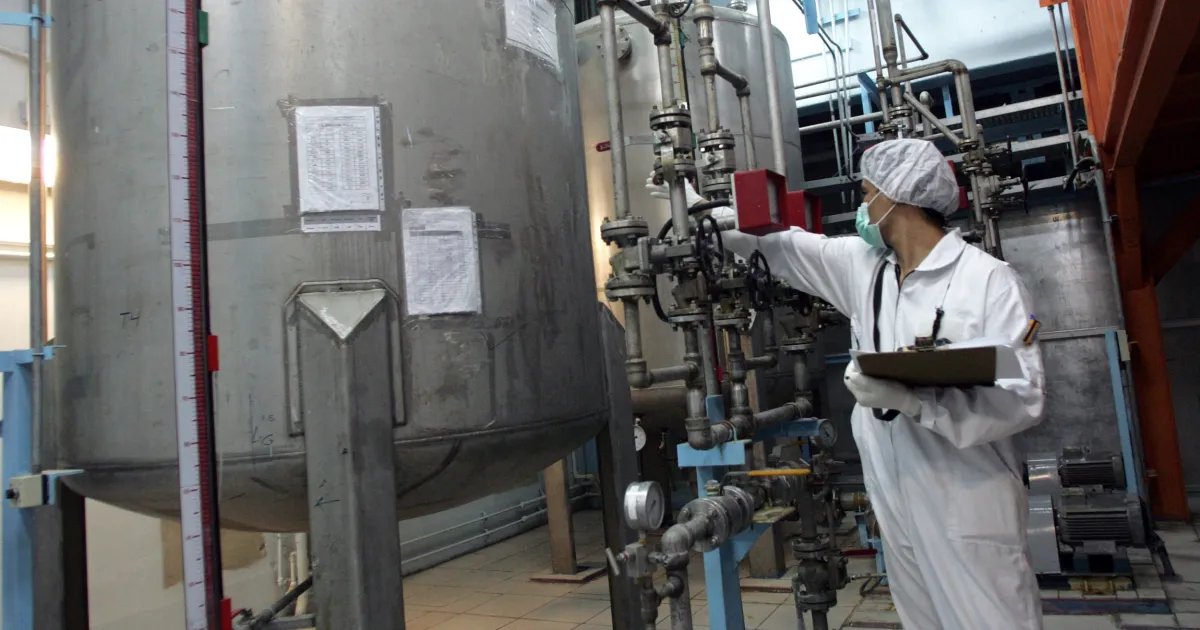
Iran, however, maintains a stockpile of 1,000 pounds of enriched uranium believed to be buried underground in tunnels beneath three sites targeted in last summer’s strikes, including sizable amounts at the Isfahan nuclear complex. The Trump administration has also claimed that Iran is using a civil nuclear facility in Tehran as a stockpiling facility, though officials have provided no evidence of that claim to the public or to Congress.
Days before the strikes, International Atomic Energy Agency Director General Rafael Grossi said his agency “has lost continuity of knowledge” and “cannot provide any information on the current size, composition or whereabouts of the stockpile of enriched uranium in Iran,” according to an internal report reviewed by the Associated Press, which MS NOW has not independently verified.
The Trump administration has not sought to reopen nuclear talks with Iran. But a senior Middle East diplomat with direct knowledge of the previous negotiations told MS NOW on Wednesday that options to resolve the standoff diplomatically — including downblending Iran’s uranium stockpiles (that is, the process of converting highly enriched uranium to low-enriched uranium by mixing it with natural or depleted uranium) or exporting them to a third country such as Russia, as was done under the 2015 nuclear deal — “still remain an option.”
The diplomat said that the U.S. has not contacted Iran or intermediaries to restart talks. Steve Witkoff, one of the two U.S. negotiators involved in the pre-war nuclear discussions, told CNBC on Tuesday that Trump “has said that he’s open to communication,” but asked whether Iran “actually want[s] to make a — have a diplomatic solution here? And so far, the evidence suggests, no.”
A senior White House official, asked whether the U.S. intends to engage in nuclear talks or seize Iran’s stockpiles by force, declined to answer directly. “President Trump said new potential leadership in Iran has indicated they want to talk and eventually will talk,” the official told MS NOW. “For now, Operation Epic Fury continues unabated.”
Iran had already offered to relinquish its stockpiles to the U.S. in the days before Trump effectively ended diplomatic talks and ordered the strikes alongside Israel, according to a Persian Gulf diplomat with direct knowledge of the talks who previously spoke to MS NOW.
The U.S.-Israeli military campaign has not yet resulted in a seizure of Iran’s stockpiles. Military experts say that doing so could require ground troops to physically occupy the sites and obtain the uranium.
“It is clear that this military operation will run its course at some point, and at the end of it, we will still have uranium at 60% [and] we will still have vast technical knowledge and capabilities in Iran,” IAEA’s Grossi told France 24 this week. “In any scenario, we will have to go back to a negotiating table.”
Eliminating Iran’s nuclear threat is among the three stated “objectives” of the war, according to multiple senior administration officials — including Defense Secretary Pete Hegseth, special envoy Witkoff and White House press secretary Karoline Leavitt.
Recommended

Vaughn Hillyard is a senior White House reporter for MS NOW.

Ian Sherwood is the director of international newsgathering for MS NOW, a former executive editor for NBC News and a former deputy Washington bureau chief for the BBC.

David Rohde
David Rohde is the senior national security reporter for MS NOW. Previously he was the senior executive editor for national security and law for NBC News.