
In the summer of 2014, I was living in Adelaide with my two young children in a very hot rental house with a low ceiling and a rat problem. It also had a slightly leaky pool, which was good for entertaining.
It was coming up to Australia Day, which I’ve always had mixed feelings about. I couldn’t stomach inviting people over for a plastic flag-fest, so I suggested my guests bring items to make a welcome package for refugees. As a first-generation Anglo Indian British Australian with Chinese siblings, and previously married to a Persian refugee, my family is full of the newly arrived.
It was a great party and, after driving around for a couple of weeks with a car full of tinned soup and bags of rice, I saw my local Uniting Church had a sign on the fence: “Jesus was a Refugee.”
The first person I met there, Audrey, explained that a group from the church community and volunteers were starting a cafe to help refugees arriving from Iran and Afghanistan.
I had spent time in Iran, experiencing the petrol uprising in 2007. My Farsi was then, and still is, at the level of a two-year-old. I can count to 10 and cook rice properly. I missed the company of Persian people.
Audrey invited me to a meeting a few days later, where I was introduced to the group. Straight across the table from me was Paul.
My first thought was not a thought, more a kind of instant recognition. He had style and kind eyes, and too much jewellery for church.
I know we were smiling at each other in a deranged way because my second thought was: “I wonder if everyone can see this?” I muttered, “Oh, you look very friendly” – not something you say to people in a serious meeting.
Over the weeks, as the group worked on opening the cafe, I got to know him. He was the minister of the church, one of those “cool ministers”, not the dad-joke, boring religious kind. He was a singing, poem-writing, bread-baking dreamboat. I vaguely wondered if he liked me but decided that, as a minister, he was just nice to everyone.
Hopes cafe opened in March and became the centre of the local refugee community. Retired teachers taught English, volunteers offered help with employment and admin, and we had a food pantry and hot meals. I loved being part of it.
When I’d stop at Paul’s table to talk, he would shut his laptop and give me his full attention. I’m an artist and he showed a lot of interest in my work, making intelligent comments about my paintings.
He was also infallibly kind. When my friend and her daughter died in a car crash in Queensland, he helped me book tickets interstate when I couldn’t function enough to type.
Even so, we rarely talked about anything personal. Most of our conversations were about the cafe and people who needed help. Yet being with him felt familiar and safe as well as exciting. Fridays at Hopes became the best day of my week.
One Friday, a couple of years after we first met, Paul mentioned he was going to the Womadelaide music festival. My friends and I have not missed a year since 2001. The next day at the festival, I texted him when I arrived and we spent most of the four days together, seeing as many gigs as possible, or hanging out at “base camp” with my children and friends.
He seemed to be changing his plans to hang around with me. I began to think his intentions might not only be about our mutual commitment to helping the displaced.
Over the next four years, our relationship solidified. We were very happy just being anywhere together.
Then, one day we were at the cafe closing up. As I walked out with Paul, he held my hand in the car park, under a tree that grows big white blossoms every year. He kissed me and said: “It might take us five years to get our lives together but I’m 100% in.” I remember going home and feeling I was standing on the edge of a whole new life. But at the same time, there wasn’t any rush to jump in.
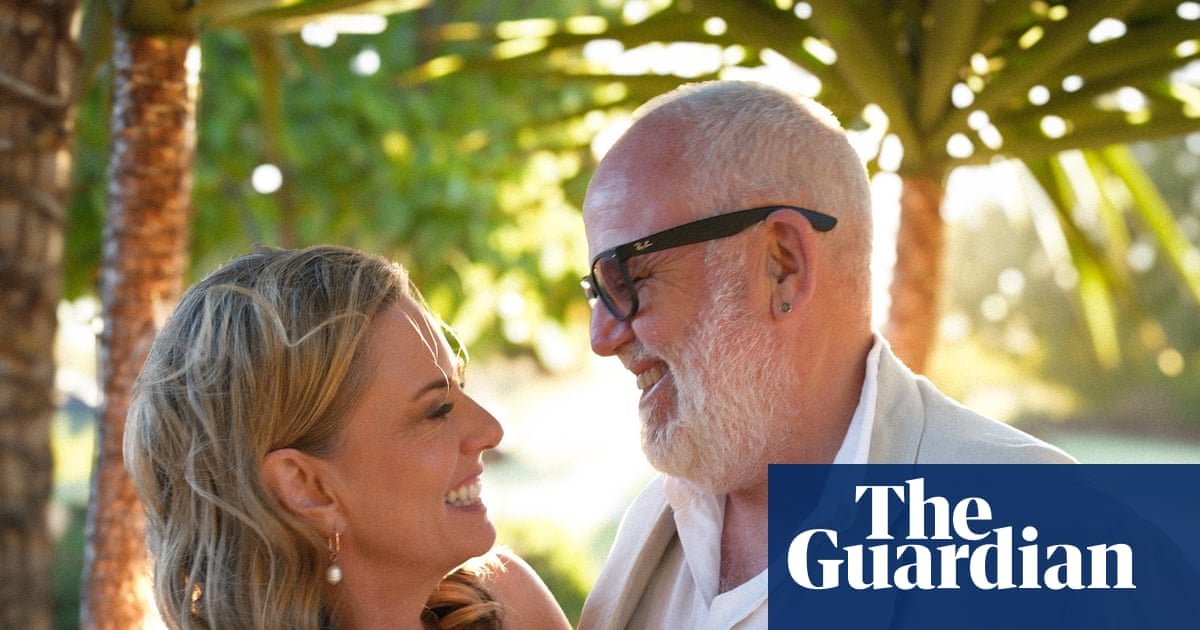
We were engaged in 2024 in Pushkar, Rajasthan – a town where my grandparents would holiday. We had a sunrise ceremony on the ghat where Gandhi’s ashes were immersed in the sacred lake. In January this year we got married, with our families and Paul’s granddaughters as flower girls.
Paul is now the minister at Scots Church Adelaide and we live in a home big enough for our five children and four grandchildren who visit us regularly. So far there has been no problem blending our families. Our daughters just tell us off for not making them sisters sooner.
Maybe our slow start is why it works so well. We spend all day texting each other sweet messages from work and have never had an argument. We still visit Hopes cafe regularly and go to Womadelaide every year with our growing family.
It has been 12 years since we met. But it feels like we’re just getting started.
-
Marisha Matthews’ exhibition, Retrograde, will show at the Art Images Gallery in Adelaide 24 April–24 May