
www.theguardian.com
Trump warns ‘all hell will rain down’ on Iran if Hormuz strait is not reopened by deadline
Donald Trump has threatened “all hell will reign down” on Iran if it does not open the strait of Hormuz by Monday.
In a post on his Truth Social app, he wrote:
Remember when I gave Iran ten days to MAKE A DEAL or OPEN UP THE HORMUZ STRAIT. Time is running out – 48 hours before all Hell will reign down on them. Glory be to GOD!
On 27 February, the US president extended his deadline for Iran to open the key shipping route by 10 days to 6 April.
Key events
Iran’s Khatam al-Anbiya joint military command said Iraq would be exempt from any restrictions on transit through the Strait of Hormuz, Iranian media reported on Saturday, signaling preferential treatment for Baghdad as Tehran tightens control over the strategic waterway.
The Slovak prime minister, Robert Fico, said on Saturday that the European Union should end sanctions on Russian oil and gas imports, take steps to restore Druzhba oil pipeline flows and end the war in Ukraine to tackle the energy crisis stemming from the war in Iran.
Fico said in a statement after a call with the Hungarian prime minister, Viktor Orbán, that the EU should renew dialogue with Russia and ensure conditions so member states can get missing gas and oil supplies from all sources, including Russia.
Hungary and Slovakia’s leaders are outliers in the EU for maintaining relations with Moscow.
Oil prices have surged since US and Israeli strikes on Iran started on 28 February, holding up shipments from the Gulf and creating what the International Energy Agency called the biggest oil supply disruption in history.
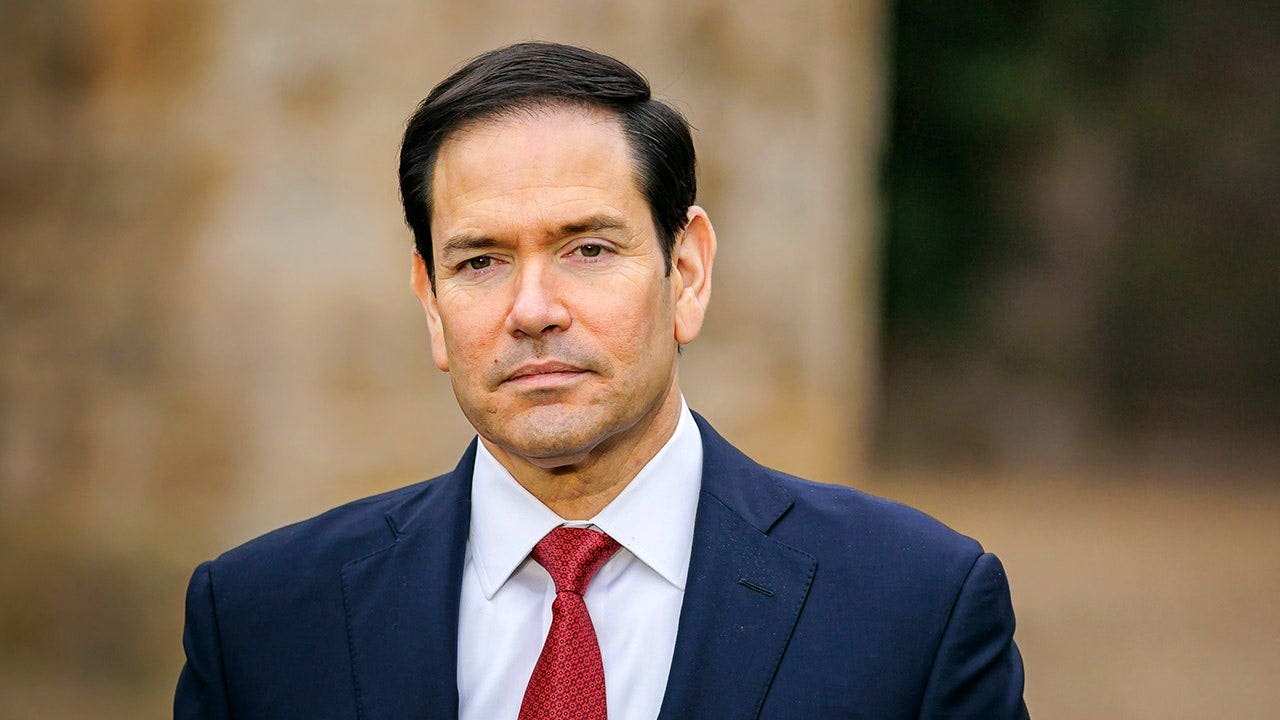
US federal agents have arrested the niece and grandniece of late Iranian military commander Qassem Suleimani after the US secretary of state, Marco Rubio, revoked their lawful permanent resident status, the state department said on Saturday.
“Hamideh Soleimani Afshar and her daughter are now in the custody of US Immigration and Customs Enforcement,” the state department said in a statement after Rubio revoked their green cards.
Officials allege that Soleimani Afshar celebrated military strikes against American personnel, praised Iran’s new supreme leader and labeled the US the “Great Satan”. The statement further claims she voiced “unflinching support” for the Islamic Revolutionary Guards Corps, all while maintaining a “lavish” lifestyle in Los Angeles, using her Instagram account as evidence.
In a statement on social media, Rubio confirmed that the mother-daughter pair are “pending removal” from the US, adding that “the Trump Administration will not allow our country to become a home for foreign nationals who support anti-American terrorist regimes”.
In addition to the revocation of legal permanent resident (LPR) status for Hamideh Soleimani Afshar and her daughter, Afshar’s husband has also been formally prohibited from entering the US.
This follows a separate move by Rubio earlier this month to terminate the legal status of Fatemeh Ardeshir-Larijani – daughter of Ali Larijani, the former secretary of Iran’s supreme national security council – and her husband, Seyed Kalantar Motamedi. Both Ardeshir-Larijani and Motamedi have since departed the US and are under a permanent entry ban, according to the state department.
Iran fired a barrage of ballistic missiles toward central Israel today, causing extensive damage to homes and wounding six people, Israeli media reported.
Sirens sounded in Ramat Gan, Givata’im, Bnei Brak, and Petah Tikvah, with images showing apartment buildings with blown out walls and windows.
Trump warns ‘all hell will rain down’ on Iran if Hormuz strait is not reopened by deadline
Donald Trump has threatened “all hell will reign down” on Iran if it does not open the strait of Hormuz by Monday.
In a post on his Truth Social app, he wrote:
Remember when I gave Iran ten days to MAKE A DEAL or OPEN UP THE HORMUZ STRAIT. Time is running out – 48 hours before all Hell will reign down on them. Glory be to GOD!
On 27 February, the US president extended his deadline for Iran to open the key shipping route by 10 days to 6 April.
Russia’s state nuclear company Rosatom has evacuated 198 staff members from the Bushehr nuclear power plant in Iran, which was reportedly targeted in an airstrike earlier today, according to the Russian Interfax news agency.
Rosatom chief executive Alexei Likhachev was quoted as saying:
As planned, we began the main wave of evacuation today, about 20 minutes after the ill-fated strike. Buses moved from the Bushehr station toward the Iranian-Armenian border. 198 people, to be precise, the largest wave of the evacuation, are on the buses.
Earlier today, Iranian media reported that one person was killed and a support building near the plant was damaged in the attack, which it blamed on the US and Israel. Likhachev said the person killed was believed to be an Iranian citizen who was part of the plant’s security.
Rosatom has been evacuating staff from the plant since the war broke out on 28 February.
Iraq has closed the Shalamcheh border crossing with Iran after airstrikes on the Iranian side killed an Iraqi citizen, security sources told Reuters news agency.
A further five Iraqis were injured in the strike, the sources said, adding that Iraqi police recovered the body of a man and the wounded were taken to hospital, most in critical condition.
The crossing, located in southern Iraq’s Basra province, serves as one of the main routes for imports of vegetables and other food supplies from Iran, Reuters reported.
Further to the Iranian foreign minister’s statement earlier about Pakistan’s efforts to end the war (see post at 12:34), the Pakistani foreign minister, Ishaq Dar, has welcomed Abbas Araghchi’s “clarification”.
Analysis: Trump is using unabashed viciousness in his language against Iran
Steven Poole
On 23 March, Donald Trump said that if things didn’t go to his liking in Iran, “we just keep bombing our little hearts out”. A week later the US president told journalists on Air Force One: “You never know with Iran because we negotiate with them and then we always have to blow them up.”
On 4 March, Pete Hegseth squirmed in pleasure as he described “death and destruction from the sky all day long”. Whatever happened to the subtle art of political euphemism?
The opposite of a euphemism is a dysphemism: a name for something that makes it sound maximally horrible. Politicians normally use dysphemisms for their opponents: people might be labelled “terrorists” or “fascists”, already engaged in “genocide” or threatening to nuke London within 15 minutes.
The Trump administration, however, revels in the use of dysphemism for its own actions. “This was never meant to be a fair fight, and it is not a fair fight,” Hegseth said on 4 March. “We are punching them while they’re down, which is exactly how it should be.”
Read the full piece here:
Indonesia has now received the bodies of three peacekeepers that were killed on deployment in Lebanon as it branded an explosion that injured three other of its blue helmets as “unacceptable”.
AFP reported that the soldiers’ coffins, draped in the Indonesian flag, were carried into a hall at the international airport on the shoulders of uniformed comrades for a ceremony attended by president Prabowo Subianto.
Family members of the men wept over the coffins, each fronted by a photograph of the dead soldier in a gold frame.
Prabowo saluted each portrait and held the hands of grieving loved ones, some weeping unconsolably.
The father of one of the two fallen soldiers, 33-year-old Zulmi Aditya Iskandar, said this week he was shocked that peacekeepers were losing their lives in the conflict.
“We were really sad and regretful, because this is a UN troop, a peacekeeping troop, not deployed for war,” 60-year-old Iskandarudin told reporters at his house in West Java province.

William Christou
In Lebanon, the dead are usually given one last glimpse of their home town before they are laid to rest. Hoisted high above the heads of the living, their casket is slowly marched through the streets where they grew up.
It is the hands of their loved ones that guide them into their final resting place, already dug, and gently sprinkle dirt on their body.
In south Lebanon, war has robbed the dead of their final goodbye. As Israel expands its ground invasion, families have been forced to abandon traditional funeral rites and bury their loved ones in temporary graveyards farther north.
In Tyre, 2-metre-wide ditches have been dug to house the dead. The epitaphs are brief: a number spray-painted in bright red on a thin wooden board to count the deceased.
You can read the full report here:
Meanwhile in Senegal, the government has banned all but essential foreign trips for ministers as part of cost-saving measures triggered by the energy crisis linked to the Iran war.
Senegal, like many African countries , imports most of the petroleum products it consumes, leaving its economy vulnerable to supply disruptions such as the closure of the strait of Hormuz, which has sent the price of crude soaring.
PM Ousmane Sonko said that his office was taking steps to limit public expenditure, pointing out that the country’s initial budget forecasts were based on an oil price of $62 per barrel, which is now almost double as a result of the Iran war.
The government-owned Le Soleil newspaper quoted Sonko as saying:
I have taken a number of drastic measures to restrict everything related to government spending, including the cancellation of all non-essential missions abroad.
Death, displacement and military duties: children plunged into crisis by the war
Millions of children have been plunged into crisis by the war in the Middle East, with reports of child soldiers in Iran, mass forced displacements in Lebanon and the killing of hundreds of minors.
According to the UN agency for children, Unicef, more than 340 children have been killed and thousands injured since the US and Israel launched their attacks on Iran, which has retaliated with bombings across the region.
The highest reported child casualty event occurred on the first day of the war when a US missile strike on a school in Iran killed at least 160 children and teachers.
Israel’s invasion of Lebanon – and its continued attacks in the occupied West Bank and Gaza – have compounded the bloodshed. Across the region, more than 1.2 million children have been displaced.
“Children in the region are being exposed to horrific violence, while the very systems and services meant to keep them safe are coming under attack,” said Unicef’s executive director, Catherine Russell.
My colleagues William Christou, Lorenzo Tondo and Oliver Holmes have this report on some of the ways the war has affected children:
In Iran, the country’s science minister has said US-Israeli strikes have hit more than 30 universities since the war broke out in late February.
“To date, more than 30 universities have been directly targeted,” Hossein Simai Sarraf told reporters during a visit to the Shahid Beheshti University in northern Tehran, which was struck on Friday.
…and speaking of Tyre, here are some of the latest images coming out of the city.
The Israel Defense Forces (IDF) issued another evacuation order for the southern Lebanese city of Tyre and surrounding areas, ahead of imminent attacks against what it described as Hezbollah targets.
“Urgent warning to the residents of the city of Tyre … Hezbollah’s terrorist activities are forcing the IDF to act against it forcefully. The IDF does not intend to harm you,” the IDF’s Arabic spokesperson, Col Avichay Adraee, wrote on X.
“For your own safety, we urge you to evacuate your homes immediately in accordance with the area shown on the map and move north of the Zahrani River,” he added, posting a map of the affected area that extends to Burj el-Shamali camp, the second-largest of the twelve Palestinian refugee camps in Lebanon.
‘We never refused to go to Islamabad’ for talks, says Iran foreign minister
The Iranian foreign minister, Abbas Araghchi, said his country “never refused” to attend talks in Pakistan aimed at ending the war.
He added that Iran wanted “conclusive and lasting” terms to end the conflict.
In recent weeks, Pakistan had put itself at the centre of efforts to bring about a ceasefire to end the war, with officials pushing for talks in the capital city of Islamabad.
In a post on X, Araghchi said:
Iran’s position is being misrepresented by US media.
We are deeply grateful to Pakistan for its efforts and have never refused to go to Islamabad. What we care about are the terms of a conclusive and lasting END to the illegal war that is imposed on us.
While Araghchi blames the US media for apparently misreporting Iran’s willingness to engage in negotiations, Iranian news agencies had reported that Tehran refused talks with Washington (as we reported here). Iranian officials previously accused the US of using talks as a ruse to launch more attacks.
The search continues for a missing US pilot in Iran after two US warplanes went down in separate incidents.
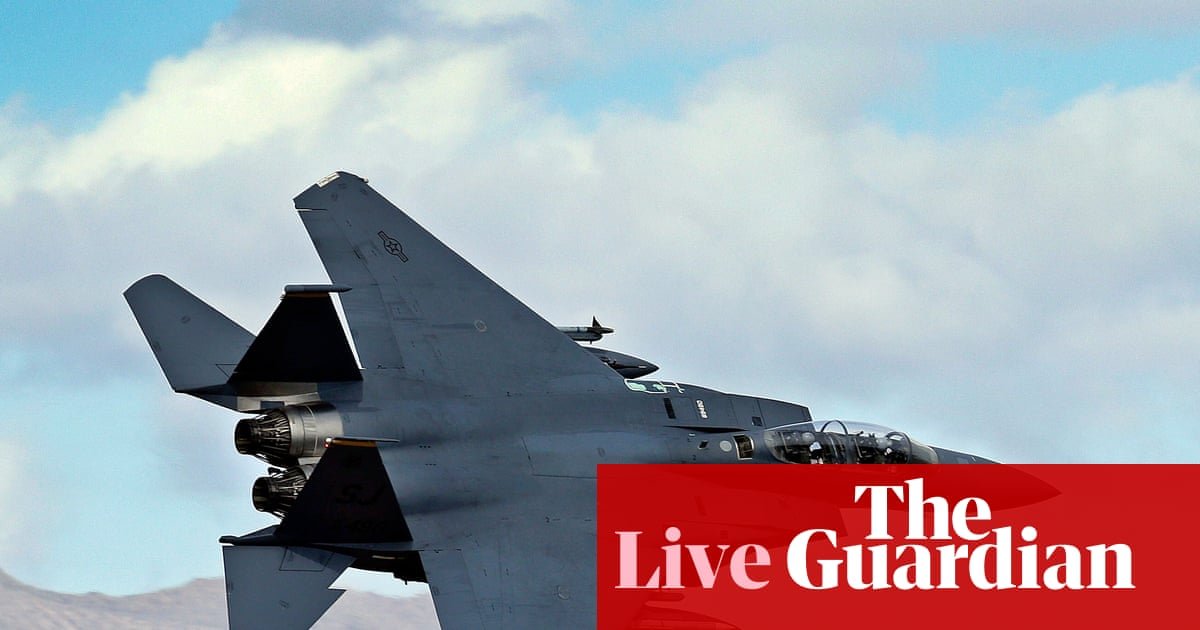
Iran said it had shot down an F-15 fighter jet over the southwestern part of the country on Friday. It marks the first time a US fighter jet has been shot down in Iran since the war began. US media reported American special forces had rescued one of its two crew members and the other was still missing, with a search operation under way. Iranian state media has urged people in the mountainous provinces of Kohgiluyeh and Boyer-Ahmad and Khuzestan to search for the jet’s crew.
Separately, Iranian state media said a US A-10 ground attack aircraft crashed in the Persian Gulf after being struck by Iranian defence forces. A US official told the Associated Press that it was not clear if the aircraft crashed or was shot down. US media reported that the pilot was rescued.
AFP news agency reported a hospital in the southern Lebanese town of Tyre was damaged after an Israeli strike hit nearby buildings.
The Lebanese health ministry said 11 people were wounded in the attack. The director of the Lebanese Italian Hospital told the state-run National News Agency (NNA) that the hospital would “remain open to provide the necessary medical care” despite the damage.
An AFP correspondent on the ground reported seeing strikes destroying two buildings near the hospital. The news agency reported other attacks in the Tyre region today, including one at a port that struck a small boat and damaged others moored nearby.
War returned to Lebanon on 2 March as Israel intensifies its attacks against Hezbollah militants across the southern Lebanese border. The Israel military has advanced through southern Lebanon in recent days, bombing bridges around Tyre, which lies 12 miles north of the Israeli border, and cutting it off from the rest of the country.