
On Jan. 14, 2026, in Minneapolis, Immigration and Customs Enforcement agent Christian J. Castro allegedly shot Julio C. Sosa-Celis in the leg as Castro and other ICE agents chased a different man. The Hennepin County District Attorney’s Office investigated, and in May, it indicted Castro on various assault and false-reporting charges. (The DA’s office also said federal officials had attempted to thwart the investigation.)
This was the second time since President Donald Trump returned to power that Hennepin’s DA, Mary Moriarty, indicted ICE agents for violence committed during the agency’s surge in Minneapolis, as the federal government continued to show indifference toward holding immigration officers to account. In the first case, the agent, Gregory Donald Morgan, Jr., turned himself in to the authorities in Minneapolis.
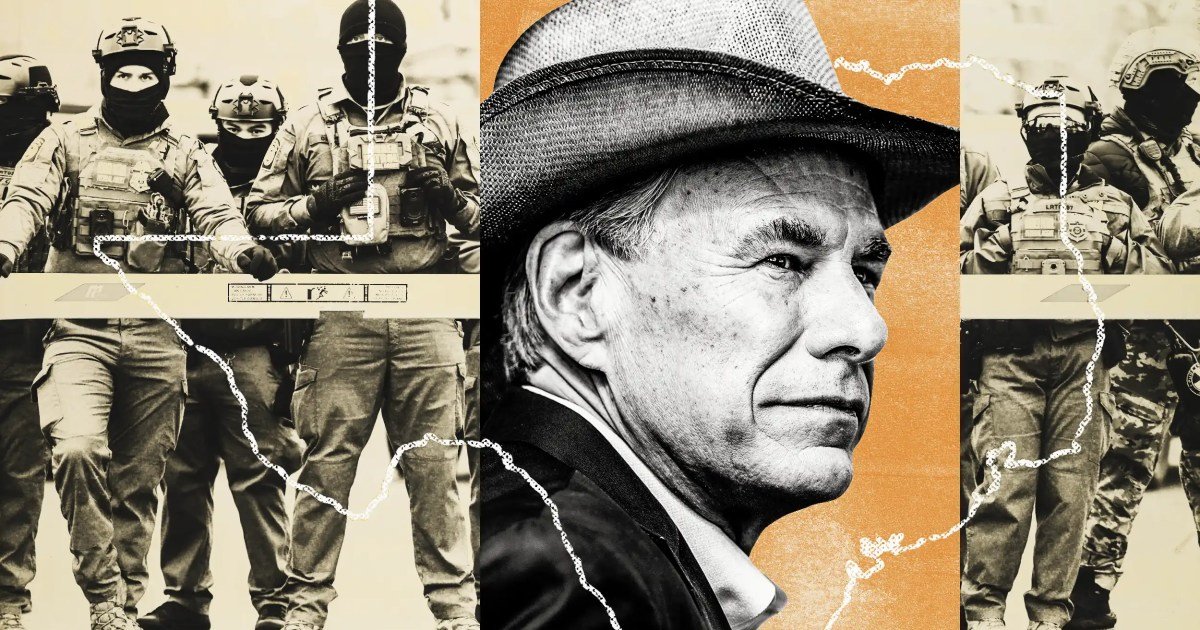
But this time, Moriarty faced what should have just been a minor wrinkle. In the months between Castro’s shooting of Sosa-Celis and the issuing of the warrant for his arrest in Minneapolis, the Department of Homeland Security transferred Castro to Texas. When the charges were filed in Minnesota, Castro refused to return from Texas, so Minnesota Gov. Tim Walz did what any governor would do in this situation: He sent a request to Texas Gov. Greg Abbott, asking him to arrest Castro and extradite him back to Minneapolis. And on May 29, police officers in Texas arrested Castro and confined him in the Cameron County jail, pending extradition.
Extradition between states is a straight-forward process. The Supreme Court has held that states have almost no discretion to deny a valid request, and that the only issues officials in the asylum state can consider are whether the extradition documents are proper, the person being sought has been charged with a crime, the person facing extradition is in fact the correct person, and whether the person is in fact a fugitive. These rules come directly from the U.S. Constitution, federal law and the Uniform Criminal Extradition Act, which Texas has adopted. All of these use the legally-magic word of “shall,” which generally eliminates almost all discretion.
As a result, extraditions between Texas and Minnesota are generally handled quite quickly. In fact, during this summer, Abbott extradited two people back to Minnesota, each within 10 days of getting the request.
But for Castro? Months of inaction and bureaucratic stalling.
Now, Abbott has not denied the extradition request. He just says he needs more time to investigate whether Castro counts as a “fugitive,” since Castro didn’t flee to Texas but was transferred there by DHS (a distinction the Supreme Court has made clear is irrelevant). Abbott has also publicly said he is resisting extradition because he doesn’t trust Minnesota authorities due to the ongoing investigations in Minnesota into Covid-19-era social-spending fraud (an issue that is also legally irrelevant).
More articles

John Pfaff is a professor of law at the Fordham University School of Law. He is the author of “Locked In: The True Causes of Mass Incarceration and How to Achieve Real Reform.”