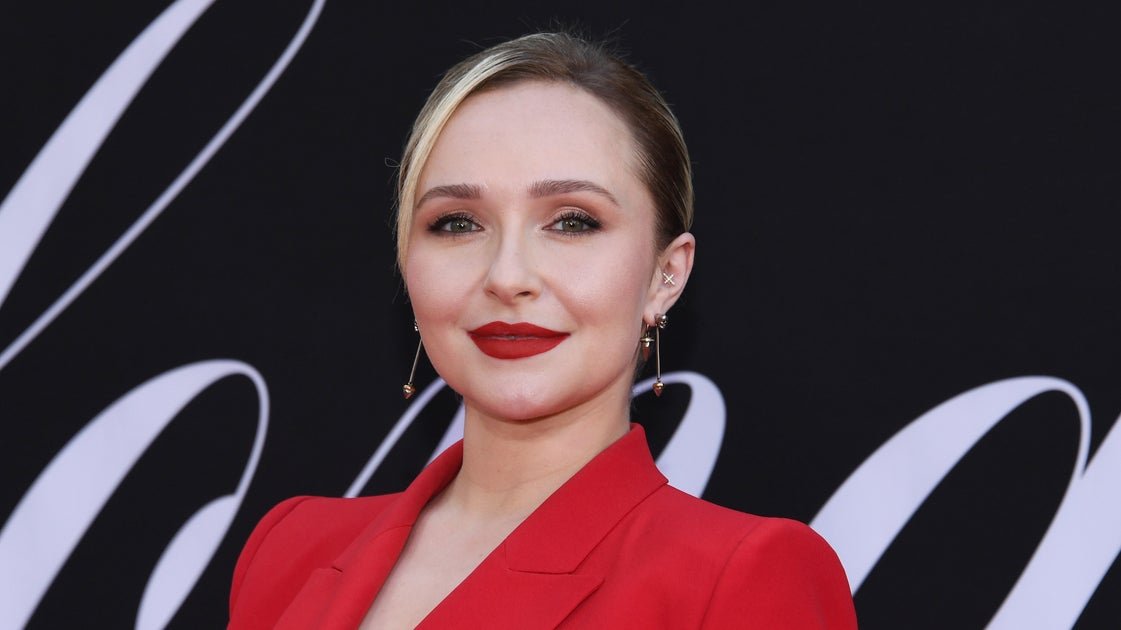

When a famous person dies unexpectedly, people who enjoyed their work often feel the loss deeply. The news of Hayden Panettiere’s death at 36 has particularly hit many millennials who grew up watching her performances in way that can be hard to articulate.
Therapists and mental health experts say that reaction is completely understandable, and it says something meaningful about the generation that grew up with her.
“I hear this from clients all the time ― that there is this confusion about why they’re crying over someone they’ve never even met,” Gina Moffa, a grief therapist and author of “Moving On Doesn’t Mean Letting Go: A Modern Guide to Navigating Loss,” told HuffPost. “We have all felt it at some point with a favorite public figure. And what I say is this: Your brain doesn’t actually care whether the relationship was mutual. It bonds with what’s familiar, what’s constant, what’s shown up for you again and again, even if that showing up only ever went one direction over a TV screen or a radio.”
The clinical term that helps explain what many people are feeling right now is a parasocial relationship ― a one-sided bond that the brain forms with a public figure through repeated exposure. But experts say the term doesn’t entirely capture what these connections actually feel like from the inside.
“If someone’s voice or presence has been an important or meaningful part of your life for years, through your breakups, your late nights trying to fall asleep, your growing up, your body doesn’t check whether they knew your name or were an actual part of your life in any reciprocal way,” Moffa said. “It only registers that this was steady, this was meaningful to me, and now it’s gone.”
Therapist Tychelle Graham-Moskowitz explained the neuroscience behind these bonds.
“Our brains process the familiar faces and voices of celebrities we come to know and love the same way they process real friends because we see them on our screens, often daily, in our own homes,” she said.
“This is partly rooted in mirror neurons, which fire when we observe someone else’s emotions and allow us to internally mimic or feel connected to what we see as we may be experiencing many of the same emotions and events in our own lives,” she continued. “When we watch a celebrity on TV, these mirror neurons let us resonate with their emotions, creating a bridge of identification.”
That’s why your brain doesn’t need a two-way relationship to form a meaningful attachment. Spending formative years with a pop culture figure creates a sense of familiarity, which can foster a genuine sense of companionship.
“Whether it is music, movies, sports, television or social media, we can feel like our paths have mirrored the path of the celebrity and we have ‘grown up with them’ or they represent a particular moment or time in our lives,” said Dr. Jessi Gold, a psychiatrist and chief wellness officer at the University of Tennessee System. “I think about this like, ‘Oh, that movie meant so much to me when…’ and we have feelings that associate with that movie, that time, that character, and those translate to the human who portrayed them.”
“
As we age as millennials, the death of celebrities shakes us out of our egocentric internal teenage feeling and forces us into the fragile reality that our own mortality is real.
– Tychelle Graham-Moskowitz, therapist
So when that celebrity dies, you might feel grief over who they were to you or that time in your life. For nostalgia-driven millennials, it can be a powerful gut punch.
“I do believe there is a special relationship with millennial grief of celebrities,” Moffa said. “With my millennial clients, what I notice is that the grief they experience is not really just about the person, but also about the version of themselves that existed the last time they watched them and how they felt about their own life and themselves in the world. These weren’t just actors and actresses ― they were sitting on the couch with us as kids, shaping what we thought friendship or relationships or love looked like. So when they’re gone, part of what’s actually being mourned is that chapter of your life feeling unreachable in a new way.”
Because Panettiere was a child actor as well, many millennials literally grew up alongside her and feel her death in a deeply personal way.
“As we age as millennials, the death of celebrities shakes us out of our egocentric internal teenage feeling and forces us into the fragile reality that our own mortality is real,” Graham-Moskowitz said.
Public figures remind us of the passage of time and our own place within it.
“When a person who represented those memories or versions of ourselves dies, it can feel like a piece of history lost, or it can make us confront our own age more and the idea that we are getting older, our friends are getting older, and we will have more loss as a result,” Gold said. “Death reminds us that time has passed ― even if part of us still feels like we were watching them on TV yesterday.”
Jon Kopaloff via Getty Images
Panettiere and other former child actors who have recently passed away ― like Michelle Trachtenberg and Daveigh Chase ― served as role models and influential peers in a sense.
“Celebrities who were present during your developmental years become part of your internal reference system,” said Chloë Bean, a licensed marriage and family therapist. “They model resilience, sexuality, independence and aspirational qualities when you’re just starting to figure out who you are. You looked up to them in your youth for guidance and self-direction. So you’re grieving that chapter, your childhood, and the part of you that felt so connected to them.”
She also pointed to the role cable TV played in cementing these bonds as well.
“For many millennials, the TV was the babysitter and an escape,” Bean said. “These actresses felt like friends because they were in your home multiple nights a week, sometimes for years. You weren’t just watching them on the screen, the experience felt like you lived and grew up alongside them. Millennials compare themselves to millennial celebrities in a way that no other generation has before. We aged with them, watching them getting married, struggling, hitting their 30s and 40s.”
Other technological advancements further deepened the connection and the sense of certain celebrities as a constant, stable presence in life.
“Millennials were the first generation to have access to the internet in our homes as a regular occurrence, so not only did we see our favorite celebrities in movies, on television, in magazines and so on, but we got a chance to search more about them on the internet and eventually in the palms of our hands,” Graham-Moskowitz noted.
It’s safe to assume Gen Z may feel celebrity losses even more intensely due to their lifelong parasocial access as well.
“The loss of a celebrity can also be a grief trigger to other grief ― other relationships we’ve lost or represent a loss of time, innocence and childhood, or even symbolize our own death or mortality,” Gold said. “And, the communal reaction on social media can also amplify the expression of it all. The grief is usually about more than just the person.”
Therapists pointed to another profound dimension in grieving Panettiere’s death.
“With Hayden specifically, I think what made this loss land so [personal] for so many people is that she wasn’t just a face we grew up watching ― she used her platform to speak openly about postpartum depression and trauma and battles with drug use, at a time when very few public figures are willing to say those things out loud and be this vulnerable,” Moffa explained.
Indeed, Panettiere’s recent memoir and interviews added to the depth of connection.
“Unlike many celebrities who have struggled with mental health or substance abuse, Hayden was extraordinarily open about her experiences, and that kind of vulnerability results in followers truly rooting for her and wanting her to overcome these obstacles, which makes her loss even more devastating,” said licensed marriage and family therapist Becky Stuempfig.
“When someone visible says ‘me too,’ it gives people permission to stop hiding their own pain,” Moffa added. “She didn’t just play characters we loved; she showed up as herself, in her own struggle, and that kind of honesty tells people watching from their own dark moments that they’re not alone in the struggle. That can be a whole other part of the grief experience we don’t talk enough about.”
Bean captured what makes this grief so uniquely hard to put into words.
“The millennial generation will feel every celebrity passing because we grew up believing we knew them,” she said. “Social media provides intimacy and daily access, but growing up watching these actresses on shows created a fantasy that felt real. We’re grieving them like we’d grieve a friend who turned out to be a stranger, someone we only knew from one direction. That’s where the grief hits hardest, and it’s what makes it so difficult to articulate.”
“
She didn’t just play characters we loved; she showed up as herself, in her own struggle.
– Gina Moffa, grief therapist and author
If you’re feeling blindsided by how much a celebrity death is affecting you, therapists have some guidance.
“Don’t let anyone talk you out of feeling the shock and grief, because the relationship wasn’t ‘real’ in any traditional sense, or because they were ‘just a celebrity,’” Moffa said. “Grief doesn’t require reciprocity to be legitimate. It only requires attachment and meaning. If someone shaped who you became, at any age, or time in your life, in any way, that grief deserves the same gentleness you’d give any other loss.”
She emphasized that you don’t need permission to feel deep sadness and loss.
“When a death is sudden and shocking, the unanswered questions and uncertainty about the death being accidental or intentional [exacerbate] the complicated nature of the grief process,” Stuempfig said. “This is very different than an anticipated dying process from a medical illness or aging. Our brains and bodies have a harder time processing emotions when there are unanswered questions.”
Talk about those feelings with a trusted friend or family member, ideally even someone who was also a fan or can help identify these emotions.
“The concept of ‘name it to tame it’ can be helpful with grief as it is critically important to identify the various feelings that arise so they can be validated,” Stuempfig said.
Be mindful of social media consumption, too.
“You don’t need to read every tribute, every post, and every statement if you feel impacted,” Gold said. “You can still care about an event or person and their death, and detach and take time away from the news, if needed. You also should not feel like you have to post or comment if you don’t know what to say. You can take time to figure out your feelings about something or grieve alone, that is OK, too. You don’t have to say something to show you care.”
Remember that grief, as painful as it can be, may also be a source of social connection.
“As we mourn the deaths of our favorite celebrities, know that we collectively mourn together, much like to do when we mourn in our own family members,” Graham-Moskowitz said. “The connected space that the internet creates can bring us a sense of comfort and togetherness, where we feel seen. This can be helpful. Also, go call a friend!”
And when these experiences bring up heavier feelings around your own mental health, Gold encouraged reaching out.
“If any of these deaths make you think more about your own mental health, I hope you reach out and ask for help,” she said. “There are hotlines, local therapists and everything in between. You can also start with a trusted family member or friend. Just start somewhere.”
Need help with substance use disorder or mental health issues? In the U.S., call 800-662-HELP (4357) for the SAMHSA National Helpline.