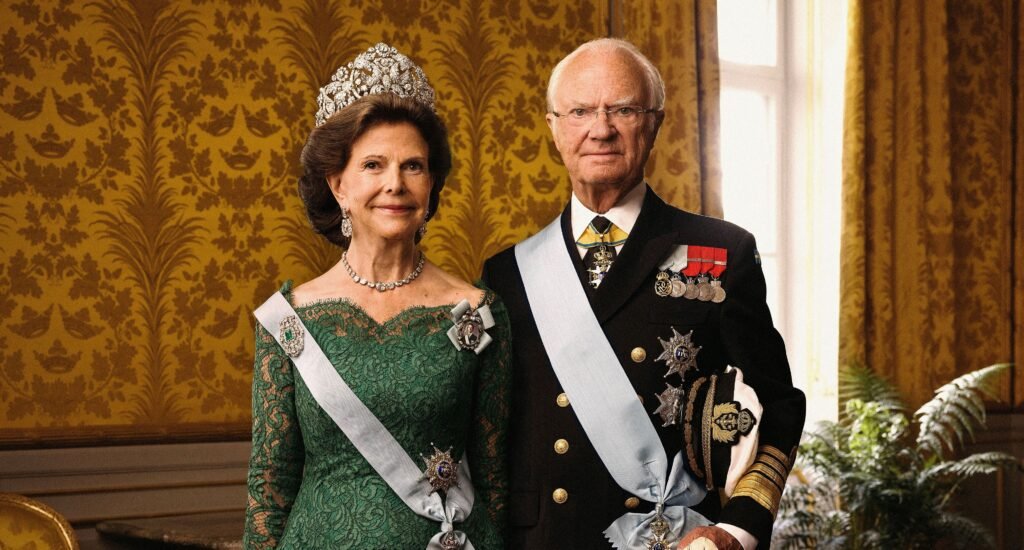

King Carl XVI Gustaf and Queen
Silvia 2026 Foto: Elisabeth Toll/Kungl. Hovstaterna
Liechstenstein’s royals have announced they are changing their
succession laws to allow women and men to have the same rights. It
means that most countries in Europe no long prefer princes to
princesses when it comes to heirs to the throne. However, that’s
only a recent change. Old fashioned rules always tried to get kings
instead of queens. And that’s not just in the history books. The
monarchies of Europe today contain some interesting stories that
have allowed kings to rule ahead of strings of potential
queens.
Sweden
The current King of Sweden was a long way down the birth order
in his own royal family but still ended up with a crown. Carl XVI
Gustaf is now the longest reigning monarch in Europe and is about
to mark 53 years on the throne. When he was born, women couldn’t
even succeed to the throne. Which is lucky for Carl Gustaf as he
had four sisters ahead of him.
Princess Margaretha, the eldest of those four, is still alive
and is now 92 years old. Under current Swedish laws, as the first
born, she would have become Queen Margaretha. Instead, she married
an English businessman and went to live in Oxfordshire. She still
visits Sweden and attends big events like royal weddings.
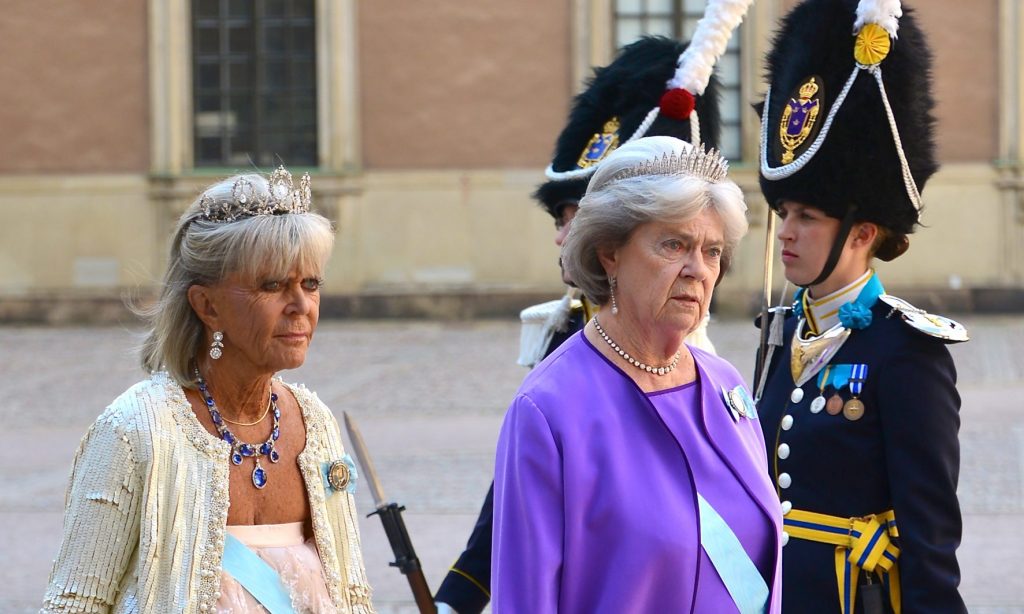
Sweden, Margaretha, wore regal purple to a royal
wedding
Princess Christina is the closest sister in age to Carl Gustaf.
Now 82, she remains close to the little brother who could enter the
succession at a time when she was still barred.
There were two other sisters born before Carl Gustaf. Princess
Birgitta was nine years older than the brother who became king and
was always one of his greatest supporters. She died in 2024.
Princess Desiree was also a constant at the side of her younger
brother who was eight years her junior. Princess Desiree died
earlier this year.
We’re not done with Sweden yet. King Carl Gustaf oversaw changes
to succession laws that not only gave women the right to enter the
line to the throne but made them equal with men. It happened long
before similar changes in other countries. However, he has made
several complaints about it. The law change began soon after he
welcomed his first child with Queen Silvia. Their daughter,
Victoria, was born a year after their marriage. Moves to later the
succession started soon after that. However, in between the start
and the end of the change, the King and Queen of Sweden had a son
who became Crown Prince at birth. Seven months later, he was
demoted to second and Victoria became Crown Princess. King Carl
Gustaf has said, more than once, that his son lost his birthright,
comments that haven’t been without controversy.
Norway
Sticking with Scandinavia, another modern monarchy was actually
governed by old fashioned ruled until recently meaning a very
popular king got his throne despite being the youngest in his
family.
King Harald V is loved at home and abroad for his wisdom, and
still has massively high popularity ratings despite a bumpy time
for his royal family. However, he was the third of three children
of the equally popular King Olav.
Before Olav became king, he married his true love who became
Crown Princess Martha of Norway and the couple had two daughters.
Princess Ragnhild was born in 1930 but was barred from the
succession as was her sister, Princess Astrid, who was born in
1932. Five years after that, Harald arrived and instantly became
second in line.

could never succeed to the throne which went to her younger
brother, now King Harald ( Liv Anette Luane, The Royal
Court)
Ragnhild, who would have succeeded under absolute primogeniture,
instead married a businessman and moved to Brazil. She died in
2012. Astrid was ‘first lady’ of Norway for the first years of her
father’s reign as her mother died before Olav became king. She
wound down her duties after Harald married Sonja Haraldsen. Astrid
was married to Johan Martin Ferner and now, at the age of 94, she
continues to carry out duties.
Harald and Sonja, who have been King and Queen of Norway since
1991, have two children and the eldest is a girl. However,
succession laws onl allowed women to enter the line to the throne
in 1990 and it was decided that absolute primogeniture would start
then. So the heir to the throne is King Harald and Queen Sonja’s
son, Haakon, while his older sister, Martha Louisa, is now fourth
in line.
Spain
King Felipe of Span is another male monarch who would never have
seen a throne if absolute primogniture reigned in his country. In
fact, Spain is just one of two European monarchies that still allow
men to outrank women when it comes to the line to the throne.
Felipe is the third child of King Juan Carlos and Queen Sofia.
He has two older sisters. The first of them is Infanta Elena who is
currently third in line to the throne. She was born five years
before Felipe but when the new Spanish constitution brought in
three years after their father became king said succession was
governed by male primogeniture.

queen of Spain, with her father, King Juan Carlos
It meant that Felipe was first in line ahead of Elena and his
other sister, Cristina, who is almost three years his senior.
In fact, Spain still has male primogeniture and needs a
complicated process to change that with both the dissolution of
parliament and a referendum required. it doesn’t matter for Felipe
as he has two daughters with his wife, Queen Letizia. Their eldest,
Princess Leonor, 20, is now heir with her sister, 19 year old
Infanta Sofia, as number two.
Monaco
Monaco is another European monarchy that still has male
primogeniture and without it, the current ruler wouldn’t have had a
throne.
Albert II has reigned the tiny principality for over 20 years
but he has an older sister who would have succeeded under absolute
primogeniture. Princess Caroline is the first child of Prince
Rainier III and Princess Grace, born a year before the little
brother who ended up with the throne. Caroline was heir until
Albert’s birth and became heir again when he succeeded as the
Prince was unmarried at the time and had no legitimate
descendants.

second in line despite being born first
(You Tube still/ fair use)
That changed in 2014, when Albert and his wife, Princess
Charlene, welcomed twins but Monaco’s royal rules were about to
demote another princess. The first of the twins to be born was
Albert and Charlene’s daughter, Princess Gabriella, who arrived
minutes before a younger brother, Prince Jacques. However, male
primogeniture meant it was Jacques who became heir to the
throne.