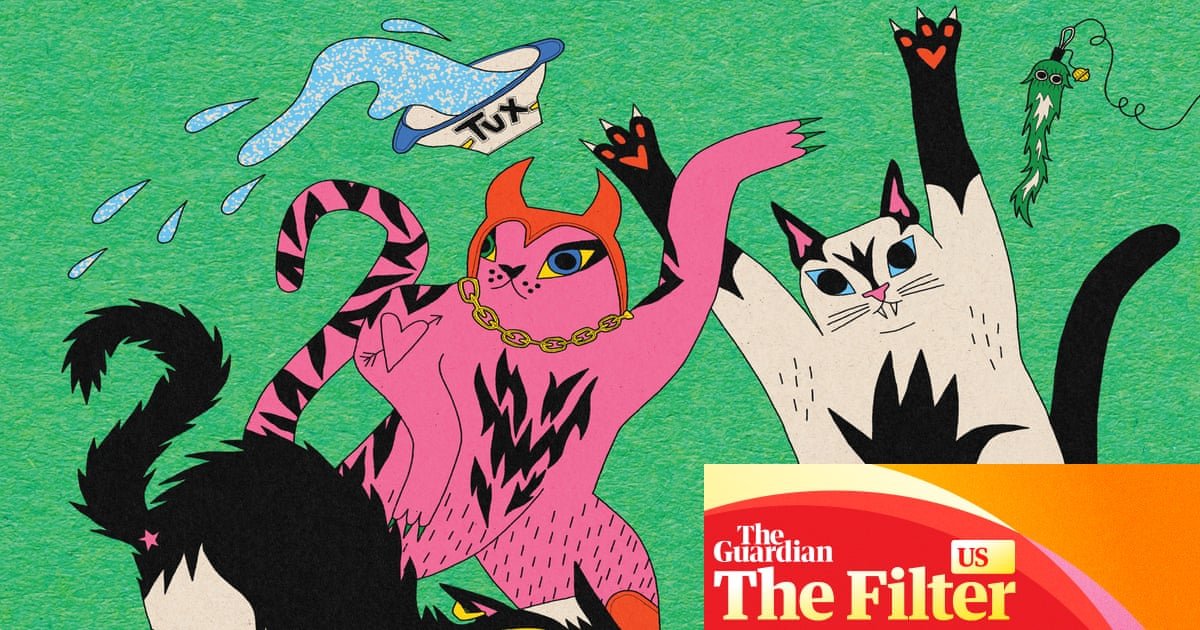

If you’ve ever watched your cat spend a day wreaking havoc in your home, you already know indoor cats face a battle with boredom. I remember one instance in which my cat, Tux, caused a Zoom meeting to be abruptly cut short when he discovered a new pastime: hooking his paw through the handles of coffee mugs that sat in an open cabinet and shattering them on the countertop below.
“Things like knocking items off tables, scratching furniture, chewing on objects, or persistently seeking attention can all be a cat’s way of saying, ‘I’m bored and I need more to do,’” said Stephanie Merlin, certified cat behavior specialist and founder of The Fulfilled Feline, a private practice offering behavioral consultations for cat owners. Excessive sleeping, she adds, is just as telling: “We have a lot of preconceived ideas about cats being low-energy, aloof or independent, and those assumptions can lead us to misread what’s really going on.”
The stakes are higher than most owners realize. “Cats can develop health issues such as obesity that can lead to diabetes if not getting the proper amount of exercise through enrichment and play,” said Dr Amy Smith, a veterinarian at Bentley Veterinary Services in Franklin, Tennessee. The studies back it up: according to a paper published in Preventive Veterinary Medicine in 2025, 40% of cats seen at primary practices in the US had overweight or obese body condition as young adults.
I’ve written elsewhere about helping Tux learn to enjoy the outdoors, but outdoor access isn’t an option for everyone. To find out what else actually works, we asked a panel of 11 cat experts for their advice on bringing more excitement to cats’ lives.
At a glance: how to enrich your cat’s life
Improve their indoor environment
Bring the outdoors in
For cats who must remain indoors, Moss suggested finding simple ways to introduce outdoor elements: “Bring in items like sticks and leaves and dirt – even your junkmail – to let them sniff and explore.” Tux confirmed this: a stick was an excellent supplement when his other toys weren’t piquing his interest.
Five of our experts recommended setting up a window perch or cat tower with a view of an outdoor bird feeder, giving your cat a front-row seat to live wildlife. “If you put a cat-friendly element in all of the windows in your home … the end result is enrichment of their lives,” said Galaxy.

PETEPELA
61” Cat Tree for Indoor Cats
$79.99
Tux’s Pick: PETEPELA 61” Cat Tree for Indoor Cats. The six levels allow him to pick the perfect vantage point, and the top perch features a removable cover for easy cleaning during shedding season.
Mimic the wild with water …

Petlibro
Cat Water Fountain
from $35.52

Petlibro
Cat Water Fountain
from $35.52
Setting your cat up with a hydration station is a worthwhile investment. “Cats are drawn to moving water because it’s less likely to be contaminated,” said Campbell, who recommends choosing a fountain made from stainless steel or ceramic.
…. and food

Nina Ottosson by Outward Hound
Melon Madness Puzzle & Play Cat Toy
from $16.69
Puzzle feeders are a natural companion to the water fountain. Merlin likes them because they “tap into both movement and problem-solving”, which is “something a lot of cats are missing when food is just placed in a bowl”. For dry food, her top picks are Cat Amazing, a cardboard puzzle with cutouts that cats can paw through to fish out food pellets, and Melon Madness, a plastic puzzle with flippers they can nudge and swivel to uncover treats. For wet food, she recommends The Lickimat, a BPA-free rubber mat with a textured surface that encourages slow feeding. As a sustainable alternative, Moss suggests DIY puzzle feeders made from paper towel rolls, egg cartons, or paper bags.
For cats who spend long stretches alone, Merlin also recommends creating a scavenger hunt by hiding Doc and Phoebe’s Hunting Mice around the house so cats can discover them throughout the day.

Doc and Phoebe’s
Indoor Hunting Cat Feeder Kit
from $17.08
Tux’s Picks: PetSafe Slimcat Feeder Ball paired with Temptations Cat Treats. This feeder ball features an adjustable size opening, allowing an easier or more difficult game depending on his mood.
Set them up for solo success
Screen time was a surprisingly common recommendation from our panel. YouTube offers hours of videos made specifically for cats, which feature birds, squirrels and fish moving across the screen. Ashraf particularly recommends it for senior cats and cats with respiratory issues, for whom it provides meaningful mental enrichment without physical exertion. (Based on my experience with a broken TV, I think anti-tip straps and a screen protector are worth the five minutes they take to install, in case your cat gets too invested in the show.)
For solo playtime, the Bergan Turbo Scratcher, is our top pick: Smith describes its movement and repetition as “hypnotic”, and Marvets reported that many of the 350+ residents of Furball Farm will spend hours on circular track toys just like it.

Bergan
Turbo Scratcher
$28.80

Catstage
Tower of Tracks
from $14.99
Tux’s Picks: Catstage’s Tower of Tracks and Grass Patch Hunting Box. Structured with heavy cardboard, the hunting box is sturdy enough to support the full weight of his 15lb frame.
For playtime, prey toys are top picks
Wand toys
“Cats need to express their hunting instinct,” said Galaxy, emphasizing that it is indeed a need rather than a luxury. Nagelschneider is partial to GoCat’s Da Bird. “It really looks and sounds like a bird flapping its wings. I can’t imagine a cat owner not having this toy,” she said. Da Bird also sells a range of interchangeable attachments, so there’s no need to toss the whole thing after a string of successful hunts.

Tux’s Picks: MeoHui Retractable Wand Toy. The fuzzy worm attachments move just like a type of lizard he likes to watch through the window, making this toy a consistent source of excitement.
Tunnels and rugs
For cats who enjoy a surprise attack, Merlin recommends two products that can transform any room into a new hunting ground. Sheer Fun for Cats, a durable polyester fabric with sewn-in crinkle paper, can either be draped over furniture to create exciting new hiding places for cats, or laid flat with its velcro-attached wiffle ball for pouncing opportunities. Merlin also recommends the versatile Ripple Rug, which can be reshaped into different tunnel formations to allow highly active cats to burn off energy through attacking and burrowing. “It gives them options, which is a big part of engagement,” said Merlin. Bonus: these fold flat for easy storage when your cat is tuckered out.


Tux’s Pick: iCAGY Cat Tunnel, which he enjoys hiding in while a wand toy is dragged across the top.
Kickers
Most cat owners will be familiar with bunny-kicking: a cat latching on to something with its front paws and kicking its hind legs in rapid succession, which Campbell said is a natural behavior cats use to subdue their prey. Kicker toys are designed specifically to trigger this response.
“I’ve had cats completely ignore other toys but immediately latch onto a good kicker and go full bunny kick mode,” said Campbell, who recommends Second Wind Send, made from recycled fabric and filled with organic catnip, silvervine and valerian root.

Second Wind Send
Cat Kicker Toy
$13

Second Wind Send
Cat Kicker Toy
$13
Tux’s Pick: Potaroma Cat Toy Pillows for its extra crinkly interior and soft, fluffy covering.
Enhance toys with catnip or silvervine
A small pinch of catnip can breathe life back into a toy your cat has grown bored of, and for cats who don’t respond strongly to it, silvervine, a similar plant that more cats react to, is worth trying. Moss recommends Dezi & Roo’s Cloud Nine Silvervine.
For a catnip toy that delivers an immersive play session, Merlin recommends Yeowww’s line, stuffed generously with catnip and made with sturdy, vegetable-dyed cotton twill.

Dezi & Roo
Cloud Nine Silvervine
$12.99

Tux’s Pick: Cat Crack sprinkled over his hunting box, and Potaroma Silvervine Sticks when he wants something to chew on.
The way you play matters
Determine prey preferences
Every cat has a preferred prey type, and it’s worth identifying your cat’s taste before giving up on a toy entirely. “Some cats prefer ‘hunting’ prey that crawls along the ground, some prefer jumping for prey flying through the air, and some prefer zig-zagging bugs,” said Bell. Try all three types of movement with the same toy before deciding it isn’t a match.
Make movements believable
“Most of the time, it’s not about needing a completely different toy, it’s about changing how the toy is being used,” said Merlin. Campbell agreed: “Cats are ambush hunters, so if we’re just waving a toy in their face, it doesn’t feel enticing to them.” Both recommend using motions that mimic natural prey: darting, fluttering, pausing, jumping.
It also helps to understand what’s happening inside your cat’s brain during play. Nagelschneider explains that cats are wired to experience the hunt as a reward in itself: “cats will purposely half-kill their prey so that it runs away and hides.” Moving toys around corners or under a blanket can help activate what she describes as the “seeking circuit” in the reward area of a cat’s brain. “[It’s] the best feeling they can experience. It’s even much better than when they catch the prey or eat it.”

Cat Dancer
Interactive Toy
from $3.84
Don’t give up
If your cat isn’t attacking the toy, don’t assume you’re doing something wrong. “Play doesn’t always have to look like constant chasing or attacking. That buildup of watching, waiting, and timing is a really important part of how cats naturally interact with prey,” said Merlin. She adds that allowing a cat to quietly watch is especially important for timid and newly adopted cats, who may be building confidence in their surroundings. Signs your cat is watching with intention include crouching, chirping, whiskers curling forward, and a low tail with a slow twitch.
How playtime ends matters
“Let them catch the toy and kick it and bite it,” said Moss, “if you never won a game, you probably wouldn’t want to keep playing either.” Campbell recommends tapering movements as if the toy is losing the fight, then following with a treat or meal, mimicking the hunt-kill-eat sequence she considers a cat’s natural life rhythm.
Keep a toy rotation
Rotating toys regularly helps maintain interest. Campbell has worked with cats who need multiple toy changes within a single play session. Galaxy recommends keeping toys out of sight when not in use so each reappearance feels fresh.
Age isn’t just a number
The way you play with your cat should evolve with its age and physical abilities. “Kittens don’t need fancy, just motion,” said Smith.
For the high-energy kitten stage, Morris, who has interviewed over 400 cat owners during his tenure as co-host of The Purrrcast, swears by a basic fishing type rod for the jumping and leaping opportunities it provides. Ashraf’s pick is the Cat Dancer, a simple piece of semi-rigid wire with crinkly cardboard at the end, which she describes as resembling a winged insect in motion.
For older cats, slower ground-based play is the method of choice. “For senior cats, you might drag the toy a little slower along the ground,” said Bell. “You just really want to tap into the hunter at any age.” As Merlin notes, you rarely need to buy something new as your cat ages: most of the time it’s about changing how the toy is being used, not replacing it.
What about laser pointers?
On the question of laser pointers, our experts were divided. Marvets would ban them outright: “It is a no-win for the cat.”
Those who gave laser pointers the okay specified that cats should be rewarded when they “catch” the laser to avoid feelings of frustration. “I always make sure to end playtime by giving them something they can actually capture so they don’t feel frustrated,” said Bell. You can point the laser on a treat so they eat that treat, and then, whoa, they got the red dot!”
For cats who have become overly fixated on laser pointers and won’t engage in other forms of play, Campbell suggests a weaning period that combines a laser pointer and a tactile toy used in the same play session.
The magic of cardboard boxes
Cardboard boxes, by contrast, drew praise across the board, valued for their comfort as an enclosed space that holds a cat’s scent. Merlin suggested turning them into foraging opportunities by adding ping pong balls, crumpled paper, or catnip inside.
“How often do we buy our cats something pricey, only for them to ignore it and sit in the box it came in instead?” said Campbell. “Cats don’t need luxury; they need opportunities to feel like cats.”
Outdoor time can help, done carefully
Catios
Cat enclosures, or “catios”, have been gaining traction in recent years, and Smith considers them the best way to allow a cat to spend time outside without the risk of anxiety, trauma, or disease.
Tux’s Pick: Tux will happily spend hours in his Aivituvin catio, which I set up with a window cat door so he can come and go while I’m working.

Aivituvin
Catio
from $222.99

Cat Flap Fever
Window Cat Door
from $149
Leashes, backpacks, strollers
For those without space for a catio, a stroller beats a backpack, but both come with risks, and neither should be pushed on a cat who does not seem to tolerate it well. “Strollers can be less scary for some cats,” said Smith. However, “they have a higher chance of getting loose”. To minimize the risk of escape, Ashraf recommends using a stroller with a harness attachment, and suggests cat owners seek out low-stress outdoor spaces free of loud noise and street traffic, such as a park or a yard.
Our experts generally considered backpacks to be more problematic than strollers due to a lack of structural support and sufficient space for a cat to move around. Plastic backpacks were among the most concerning, as inadequate ventilation can cause overheating.
The success of leash walking depends on an owner’s risk tolerance and a cat’s personal preferences. “The key is gradual acclimation and making sure the cat feels safe and comfortable, not rushed into it,” said Merlin. Burns recommends a harness with a snug fit – tight enough that you can fit one finger beneath the straps, but not two – and advises staying on top of monthly flea, tick, and heartworm preventative medications.
A note on safety: our experts agreed that a breakaway collar is non-negotiable for any cat who goes outside. Campbell recommends one equipped with an Airtag holder to more easily locate a cat who may escape.


RabbitGoo
Cat Harness and Leash
from $14.38
Tux’s Picks: RabbitGoo Cat Harness and Leash; Aivituvin XL Walk-in Cat Enclosure AIR52
Meet our cat experts
-
Jackson Galaxy, cat behaviorist, host of My Cat From Hell
-
Laura Moss, founder of Adventure Cats, co-author of Indoor Cat: How to Enrich Their Lives and Expand Their World
-
Mieshelle Nagelschneider, founder of the Cat Behavior Clinic, author of The Cat Whisperer
-
Steven Ray Morris, co-creator and co-host of the Purrrcast
-
Dr Wasi Ashraf, veterinarian and medical director, VEG ER for Pets Williamsburg
-
Shani Campbell, certified feline training and behavior specialist, founder of Wild at Heart Cats
-
Stephanie Merlin, certified cat behavior specialist, founder of the Fulfilled Feline
-
Dr Amy Smith, veterinarian, Bentley Veterinary Services
-
Julie Marvets, executive director, Furball Farm Cat Sanctuary
-
Dr Erin Burns, veterinarian, VEG ER for Pets H Street
Other pieces you might enjoy from the Filter, the Guardian’s guide to buying fewer, better things: