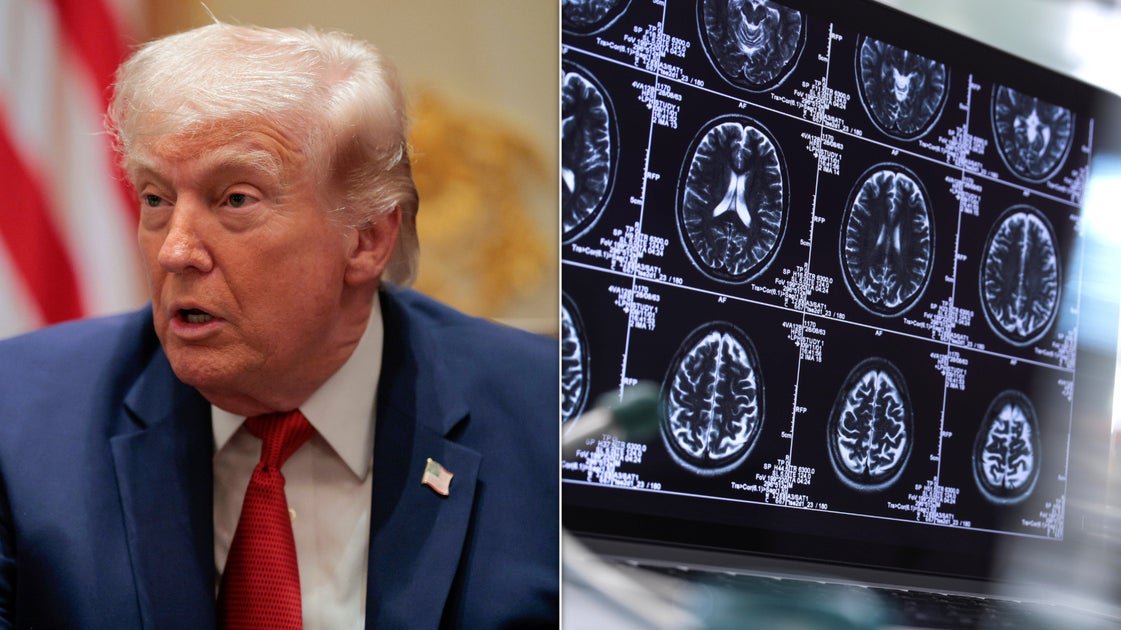

Iran’s recent attack on Qatar’s helium production facility has raised concerns about whether a supply disruption will impact medical imaging access in the United States.
Users on social media, including some who work in the medical field, sounded the alarm about a potential shortage of helium and a possibility of issues with MRIs or other medical necessities. Liquid helium is used to cool down the superconducting magnets in MRI scanners, which must be kept at a temperature close to absolute zero so that electricity can flow without resistance, creating a stable magnetic field.
But while some medical professionals expressed concern online, industry experts monitoring the situation do not think Americans should worry just yet.
Qatar supplies about a third of the world’s helium, with the gas produced at QatarEnergy’s Ras Laffan Industrial City as a byproduct of liquified natural gas extraction. But the country stopped producing helium earlier this month because of the war in Iran. And the damage from Iran’s strikes on Qatar’s energy infrastructure last week has added to supply worries. The country’s state-owned gas company, QatarEnergy, told Reuters that the most recent strikes could cut helium output by 14%.
QatarEnergy has since declared force majeure on its liquefied natural gas exports, meaning it can not supply its contracted customers due to extraordinary events beyond its control.
But helium industry experts told HuffPost that the move will not severely impact the helium supply needed for medical equipment like MRI machines, in part because very little helium from Qatar ends up in the U.S., the world’s largest producer of the gas.
“We have more than enough supply here in the U.S.,” said helium industry consultant Maura Garvey. The U.S. has about 8.49 billion cubic meters of recoverable helium, excluding helium in storage facilities, according to the United States Geological Survey.
Garvey added that the U.S. consumes about 67% of the helium it produces and exports the extra.
Premier Inc., a North Carolina- and California-based company that works with helium suppliers on behalf of more than 4,000 hospitals, is not currently concerned about a supply disruption affecting the MRI machines its clients use. Mark Hendrickson, director of supply chain policy at Premier, said that the current supply of medical-grade helium used at the facilities they work with is stable, even if Qatar’s remains “offline” for some time.
Most of Qatar’s helium is shipped to Europe and Asia, according to Garvey, and those parts of the world are more at risk of needing to figure out how to supplement their helium supplies.
And because there has been an oversupply of helium for the last two years, the helium supply shortage is actually about 15% and not the 30% Qatar produces, according to Phil Kornbluth, president of Kornbluth Helium Consulting.
Helium suppliers are also allowed to ration the gas if need be and prioritize the needs of clients that they deem the most critical, Kornbluth added.
“So, MRIs or any other medical application, that’s at the front of the line,” Kornbluth said. “They are going to get 100% of their historical requirements for helium or something very close.”
Helium industry experts warned that while the supply of helium is not at risk in the U.S., gas prices will likely increase. And it already has. Kornbluth noted that the spot market price of helium had roughly doubled due to the Iran war.
“But the spot market only accounts for 2% of the market in normal times and maybe 4% now because it’s a contract business. It’s not a spot business,” he said. “Contract prices will go up; they will probably go up double-digits. But they aren’t going to double overnight.”
Kornbluth explained that if helium suppliers are unable to fully supply their customers, they could declare force majeure and implement surcharges. One leading supplier of industrial and medical gases, Airgas, has done this.
The company sent letters to its customers on March 17 stating that because of supply chain issues caused by the Iran war, specifically the closure of the Strait of Hormuz, its clients with “up to 50%” of their normal allocated product that it would implement a temporary surcharge on its products of $13.50 per hundred cubic feet above the contracted price, according to a copy of the letter obtained by HuffPost.
Both Kornbluth and Garvey noted that Airgas is owned by the French industrial gas group Air Liquide, which is the largest buyer of helium from Qatar. A spokesperson for Airgas did not respond to HuffPost’s request for comment on the force majeure or the price surge.
Americans undergo about 40 million MRI scans every year, but even if helium prices doubled in the long term, it’s unlikely that patients would end up paying more for imaging services, according to Nicolas Bloch, professor of radiology and chief of MRI at Columbia University Irving Medical Center.
Bloch said most newer MRI machines released in the last two years do not need their helium replaced very often. Many medium-aged scanners need about 1,000 litres of liquid helium during their lifetime, which lasts between 10 and 15 years. Older scanners require more liquid helium, about 2,000 litres during their lifetime, and they are more prone to losing the gas through leakage, Bloch noted.
MRI machines are expensive, typically costing between $1 million and $3 million. Maintaining them is also costly, with the price of liquid helium accounting for a relatively small portion of the cost to run the machines.
“Considering the expenses, the hospital expenses for the normal maintenance and service, even if the helium price doubles,” Bloch said about hospitals, “we might feel it a little bit, but not really.”