
Starmer suggests tighter rules for teens on social media could include restrictions on ‘doomscrolling’
At his event this morning Keir Starmer made it clear that the laws on how teens access social media will definitely be tightened. But he said he was “open-minded” about whether this would include a full, Austalian-style ban.
Starmer suggested that one option will be to limit the technology that allows “doomscrolling”. He said:
We’ve taken the powers to make sure we can act within months, not years.
We also need to act very quickly, not just of the age concern, but on the devices and applications that make the sort of auto-scrolling, the constant glueing to the machine that you can never stop scrolling.
In a post on his Substack account, Starmer said out in more details the options that could be implemented as a result of the consultation being carried out. He said:
We will be going to parliament for new government powers, enabling us to act on the findings of the social media consultation where the evidence suggests we need to. This could include:
-Setting a minimum age limit for social media: unlike the Tories, who took years to pass the Online Safety Act, we will take powers that would allow us to implement a minimum age for social media in a matter of months to prevent kids from accessing harmful social media.
-Restricting specific functionalities: that are detrimental to kids’ wellbeing and keep them hooked to their screens like endless scroll or autoplay
-Limiting VPN access for kids:
to make it harder for kids to get around age limits of services or certain functionalities.This is all designed to put the wellbeing of children first.
Key events
Vine starts by asking about social media and children.
Starmer starts by repeating the points that he made at this event earlier; that he knows parents have concerns; that the government intends to act, and act, quickly once its three-month consultation is over; and that this could lead to a ban on under-16s accessing social media, but that this is not the only option, because other, more specific restrictions, might be preferable.
Q: Lisa Nandy used to say you were not considering a ban. So is this another U-turn?
Starmer says he does not accept that.
He says a ban is “a possibility”.
But it is not the only option, he says.
He quotes the concerns of the NSPCC about a total ban. (See 12.05pm.)
Starmer interviewed by Jeremy Vine on Radio 2
Keir Starmer is now being interview on Radio 2 by Jeremy Vine.
You can listen here.
Starmer says social media has become something ‘harming our children’
Keir Starmer’s new post on his Substack account also contains an explicit statement staying saying social media is harming our children. This is not surprising; the government would not be tightening the rules on teenagers and young children accessing social media it did not accept it is causing problems. But this is not something that ministers normally express this bluntly.
Starmer said:
When Facebook first launched in 2004, it was a pretty simple concept. Make a profile, post updates that people could look at in the order they were posted, like and comment on what your friends had to say.
That is a world away from the algorithms, endless scrolling, For You pages and private chats that make up the modern world of social media. In the past 20+ years, social media has evolved to become something completely different from the simple, stripped-back pages it was in its conception.
And in that evolution, it has become something that is quietly harming our children. A harm that, due to the inaction of previous Tory governments, we are allowing to happen.
(While Starmer is right to say that this is a problem that developed while the Conservatives were in power – the iPhone had only just been invented when the last Labour government left office, teenagers did not have smartphones and Instagram and TikTok did not even exist – it is probaby unfair of him to blame “Tory inaction”. The Labour party was not warning about the risks of social media at the time either.)
In her interviews this morning Liz Kendall, the technology secretary, said that organisations like the NSPCC were among those saying that specific restrictions on teens using social media might be more helpful than a blanket ban on under-16s using it, as has been implemented in Australia. (See 9.32am.) Keir Starmer subsequently adopted this line at his event this morning, saying the government’s consultation would not necessarily lead to a full ban. (See 10.40am and 11.55am.)
In its news release today, the government quotes Chris Sherwood, the CEO of the NSPCC, making this point. Sherwood said;
We welcome the prime minister’s promise to act quickly and decisively to hold tech companies to account and make the online world safer for children. The status quo can’t continue, and without real change the pressure for an under‑16 social media ban will only increase.
Much of what is being proposed mirrors what we have been pressing for: proper age‑limit enforcement, an end to addictive design, and stronger action from platforms, devices, and AI tools to stop harmful content at the source. Delivered swiftly, these measures would offer far better protection than a blanket ban.
Starmer suggests tighter rules for teens on social media could include restrictions on ‘doomscrolling’
At his event this morning Keir Starmer made it clear that the laws on how teens access social media will definitely be tightened. But he said he was “open-minded” about whether this would include a full, Austalian-style ban.
Starmer suggested that one option will be to limit the technology that allows “doomscrolling”. He said:
We’ve taken the powers to make sure we can act within months, not years.
We also need to act very quickly, not just of the age concern, but on the devices and applications that make the sort of auto-scrolling, the constant glueing to the machine that you can never stop scrolling.
In a post on his Substack account, Starmer said out in more details the options that could be implemented as a result of the consultation being carried out. He said:
We will be going to parliament for new government powers, enabling us to act on the findings of the social media consultation where the evidence suggests we need to. This could include:
-Setting a minimum age limit for social media: unlike the Tories, who took years to pass the Online Safety Act, we will take powers that would allow us to implement a minimum age for social media in a matter of months to prevent kids from accessing harmful social media.
-Restricting specific functionalities: that are detrimental to kids’ wellbeing and keep them hooked to their screens like endless scroll or autoplay
-Limiting VPN access for kids:
to make it harder for kids to get around age limits of services or certain functionalities.This is all designed to put the wellbeing of children first.
Starmer says he wants to ‘go faster’ on raising defence spending, in response to report saying he wants it at 3% of GDP by 2029
In his Q&A with journalists, Keir Starmer was also asked to respond to a report by the BBC’s James Landale saying he is looking at plans to raise defence spending to 3% of GDP by the end of this parliament. In the past Starmer has just said that he would like to do this at some point in the next parliament.
In his reply, Starmer said that at the Munich Security Conference over the weekend he was arguing that the UK, and Europe as a whole, needs to “step up”.
He said the threat from Russia was “obvious”. He went on:
We want a just and lasting peace, but that will not extinguish the Russian threat, and we need to be alert to that, because that’s going to affect every single person in this room, every single person in this country, so we need to step up.
That means, on defence spending, we need to go faster.
We’ve obviously made commitments already in relation to that. But it goes beyond just how much you spend, it’s also whether you coordinate and collaborate with other like-minded countries, particularly in Europe.
Starmer did not directly address the report saying he is looking at raising defence spending to 3% of GDP by 2029 – even though he was specifically asked to by the reporter asking his question. But he did say he wanted to “go faster” on defence spending, which implied that the BBC report is on the right track.
Starmer ended his reply saying that, on improving Nato’s defence capability, he was “absolutely determined the United Kingdom will show the leadership that’s necessary”.
Starmer says Labour Together probe into journalists ‘absolutely needs to be looked into’
Q: Do you support in inquiry into Labour Together commissioning an investigation into journalists?
Starmer says there will be a Cabinet Office investigation into this. “And quite right too,” he adds.
He says he did not know anything about this. It “absolutely needs to be looked into”, he says.
Starmer says government will tighten rules on teens and social-media, but is ‘open-minded’ about case for Australian-style ban
Starmer is now taking questions from the media.
Q: What is your gut view on a ban on social media for under-16s? At one point it seemed unlikely.
Starmer says the government needs to move “at speed”.
The Online Safety Act is good legislation, but it took eight years.
He won’t wait that long.
He says the consultation will definitely lead to action. And it will be introduced quickly.
He says he is “open-minded”. He can see the argument for a ban, and the argument for a more restrictive, content-based approach, that would allow teenagers to carry on seeing some content, like news.
But there will be action.
Starmer denounces Grok for allowing its users to create images digitally undressing people.
When the government first complained, Grok just made that a premium service.
The government fought them on that, he says.
Starmer says whatever consultation on social media ban for under-16s decides should be implemented quickly
Q: How will young people be involved in the consultation on social media?
Starmer says young people will be involved in this. That is important.
He says there are strong views on a social media ban for under-16s. Some people want a ban; some people have concerns about it.
But he says the government has to take some action quickly. It cannot let this go on for years and years, he says.
Starmer went on to highlight the social media proposals announced today. (See 9.32am.) He says this is an issue that worries all parents.
He is now taking questions from member of the public and professonals invited to the event.
Q: Given you are giving 16-year-olds the vote, what provisions will you put in place to ensure teenagers have the information they need.
Starmer says he is a “big advocate” of votes at 16. He says young people should have a say in politics.
Firstly, I’m a big advocate of votes at 16 and 17. At 16 and 17, you are old enough, mature enough to make a decision about a government that you want to be. We do need to make sure the citizenship is part of what we look at. We’ve broadened the curriculum in schools because I think children and young people ought to learn about citizenship and how we operate the society more generally, very important skills they need to learn.
I’m acutely aware of your point about news, because in politics, there’s always been a heavy sort of focus on newspapers, but frankly, I don’t think many people and young people certainly ever read newspapers any more, or even sit down as a family and watch the six or 10 o’clock news it’s much more likely to be through social media.
He asks the questioner, who is 17, where he gets his news. The young man says he is an anomaly; he does watch the news on TV at 10pm. But his friends get news from TikTok, he says.
UPDATE: Starmer said:
I have two teenage children, my boy is 17 and my girl is 15. So I see this in the way many, many parents do, with a real sense of concern about the time that’s spent on social media, the content that’s available on social media, the addictive nature of a lot of what’s happening on social media, the way it draws children in and takes away other aspects of their growing up …
I don’t think there’s a parent in the country who isn’t worried about this, by the way, I really don’t.”
We as a government need to be up there alongside parents, providing leadership and support for them when it comes to social media, and we will now. We’ve already announced that we’re going to do a consultation on banning social media for under-16s, and that will start very soon.
But I’m really clear the status quo, things as they are now, is not good enough. Nobody can make the argument that things can be left as they are. They can’t, they’re not protective of children, and we intend to act.
Starmer restates call for apprenticeships to be more respected, saying ministers shouldn’t just prioritise high achievers
Keir Starmer is speaking at an event this morning in south-west London. Sky News has live footage.
He says he wants every child to go as far as their talent will take them.
But it does not always work like that, he says.
He says he was the first person in his family to go to university.
But the system did not work for his brother, who had difficulties learning, he says.
He says the government will fight for these people. It needs to show that it is on their side.
He was fast-tracked throught the system to get to university. He went from a village on the Surrey-Kent border and went to university in Leeds, which set him up for a career in the law.
But the system did not work for his brother. He had to fight every day to get what he needed.
He says his dad used to tell Starmer that he was doing no better than his brother, Nick. He wanted to instill in Starmer the belief that he and his brother were of equal worth.
Starmer says the government is promoting apprenticeships.
But he says that, although people claim that apprentices are of equal value to degrees, people don’t really believe that.
He says he wants to change that.
Kendall suggests having annual debates in parliament updating internet safety laws because ‘technology changing so fast’
In her interviews this morning Liz Kendall, the technology secretary, said that parliament should find a way of updating internet safety legislation much more quickly than happens now.
She said MPs first started discussing the Online Safety Act in 2017, six years before it finally became law. “That process is way too long, because the technology is changing so quickly,” she told the Today programme.
She said, just as MPs debate a finance bill every year after the budget to update tax laws, “I think we’ve got to think much more like that with technology because it is changing so fast.”
Cabinet Office ‘looking into’ how Labour thinktank commissioned investigation into journalists, Kendall says
In her interviews this morning Liz Kendall, the technology secretary, was also asked about the controversy about the Labour Together thinktank that commissioned a report that made “baseless claims” about journalists who were invesigating it.
Kendall told Times Radio that the Cabinet Office was “looking into” this. She said:
The Cabinet Office is looking into the facts of this issue. And I think that’s right because the freedom of the press to ask difficult questions, including of cabinet ministers, is absolutely essential. And the journalists in question, I know, are extremely good. They make our lives difficult, but that is their job.
The report was commissioned by Josh Simons, who was running Labour Together when the party was in opposition. He is now a junior minister, working in the Cabinet Office and in Kendall’s Department for Science, Innovation and Technology.
Asked if it was “tenable” for him to carry on as a minister, Kendall told the Today programme: “He has welcomed the investigation, rightly so, by the regulatory body, the body responsible for regulating public affairs.”
Liz Kendall stresses consultation launch does not mean full social media ban for under-16s is inevitable
Good morning. Parliament is in recess this week, but politics goes on, and the government an announcement about social media. The Online Safety Act, a vast piece of legislation that was first proposed in the last decade and passed in 2023, is only now fully coming into force. But already there are claims that it is out of date and, under pressure from campaigners – and particularly the Conservative party – the government last month announced that it will consult on the case for banning under-16s from social media. Australia has introduced a ban of this kind, and in countries around the world governments are under growing pressure to do the same. The Tories are fully committed to a ban for under-16s, and recently won a vote on this in the Lords.
Today’s government “announcement” on social media is actually three announcements. There are explained in this news release from No 10. They are:
-
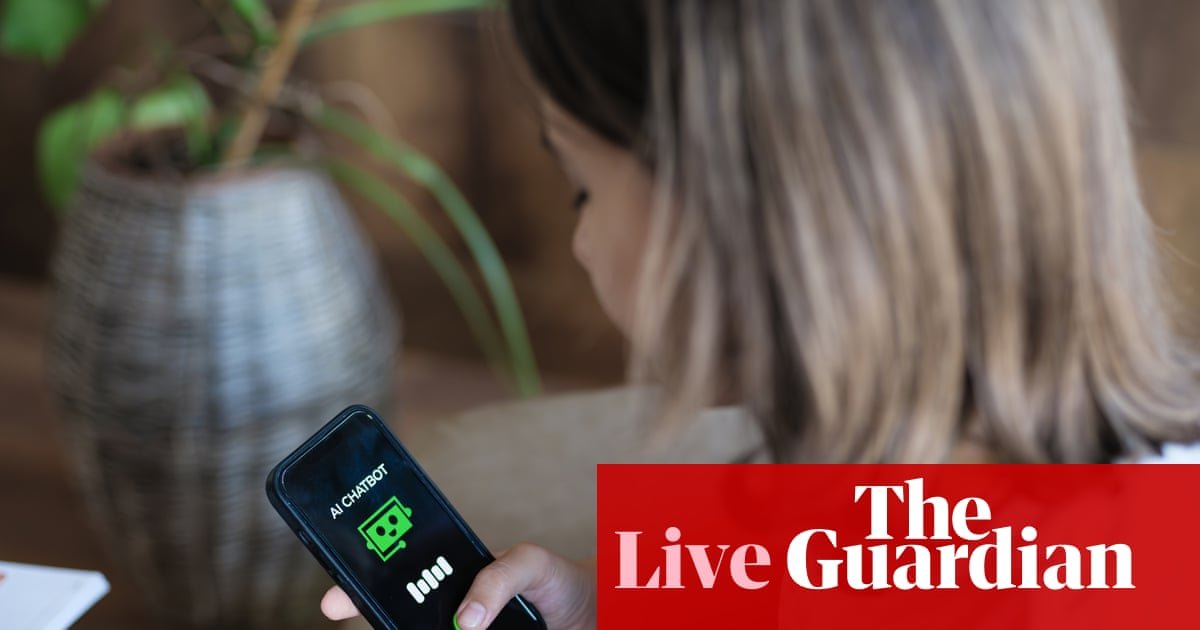
A loophole is being closed to ensure that material produced by AI chatbots is covered by Online Safety Act rules. When the act was being passed, AI chatbots weren’t widely available. Robert Booth has focused on this in is overnight Guardian story.
-
The government is committing to legislating now so that, when its three-month consultation on a social media ban for under-16s wraps up later, if it decides it wants to change the law, it will be able to do so via secondary legislation (ie quickly), without having to wait for a new bill. (This is broadly what the Labour MP Fred Thomas, who is pushing for a ban on under-16s using social media, was arguing for after the government lost the vote on this in the Lords last month.)
-
The government is also promising legislation to ensure that, if a child dies and social media is deemed relevant, that content gets preserved, not wiped. Campaigners refer to this as Jool’s law.
Anyone following the way this debate has developed at Westminster over the past year may think that a social media ban for under-16s is inevitable. Within months, the government has gone from saying a ban would be unworkable to sounding on the verge of implementing one.
But, in interviews this morning, Liz Kendall, the technology secretary, stressed that this was not a done deal. She told the Today programme:
We do think it’s right to have a consultation on whether or not to ban social media for the under-16s
Lots of people have made up their minds, Lord Nash (the Tory peer who tabled the amendment that led to the government defeat in January) included.
But let me just say this. There are organisations, including the NSPCC and the Molly Rose Foundation and the Internet Watch Foundation, who are worried that a ban wouldn’t solve the problem because it would just force some of this stuff deeper [into the dark web], that the children would try and get around it, that it would create a cliff edge at 16.
So I think it is the right and responsible thing to do to have a consultation.
I will post more from Kendall’s interviews soon.
Because of recess, there is not much in the diary for today. These are the events we know about.
Morning: Keir Starmer is expected to record a clip for broadcasters.
11.30am: Downing Street holds a lobby briefing.
4pm: Nigel Farage, the Reform UK leader, holds a press event in Romford, ahead of a rally later in the evening. Farage will be with Andrew Rosindell MP and “special guests”.
If you want to contact me, please post a message below the line when comments are open (between 10am and 3pm), or message me on social media. I can’t read all the messages BTL, but if you put “Andrew” in a message aimed at me, I am more likely to see it because I search for posts containing that word.
If you want to flag something up urgently, it is best to use social media. You can reach me on Bluesky at @andrewsparrowgdn.bsky.social. The Guardian has given up posting from its official accounts on X, but individual Guardian journalists are there, I still have my account, and if you message me there at @AndrewSparrow, I will see it and respond if necessary.
I find it very helpful when readers point out mistakes, even minor typos. No error is too small to correct. And I find your questions very interesting too. I can’t promise to reply to them all, but I will try to reply to as many as I can, either BTL or sometimes in the blog.