
Whether you’re renting or simply a homeowner on a tight budget, it’s common to feel stuck with whatever clunker of a dryer lurks in your closet or basement. That’s why upgrades like dryer balls can be a tempting purchase: an inexpensive bag of tennis-ball-sized spheres promise faster drying, less energy use, softer clothes, and even less static cling – just by tossing them in with every load.
But is any of that true? I’ve been a professional product reviewer for over a decade with a focus on laundry: testing washers, dryers, detergents and gadgets like sonic cleaners and color catchers. I decided to put the claims of dryer balls to the test. And while they don’t live up to every promise, they’re still well worth adding to your laundry routine.
At a glance
How do dryer balls work?
In the early days of electric dryers, people used to toss tennis balls in the dryer to help ensure a comforter came out sans any wet spots. In theory, dryer balls can reduce cycle times by increasing the space between items in the laundry. That space allows for more air flow to carry moisture away.
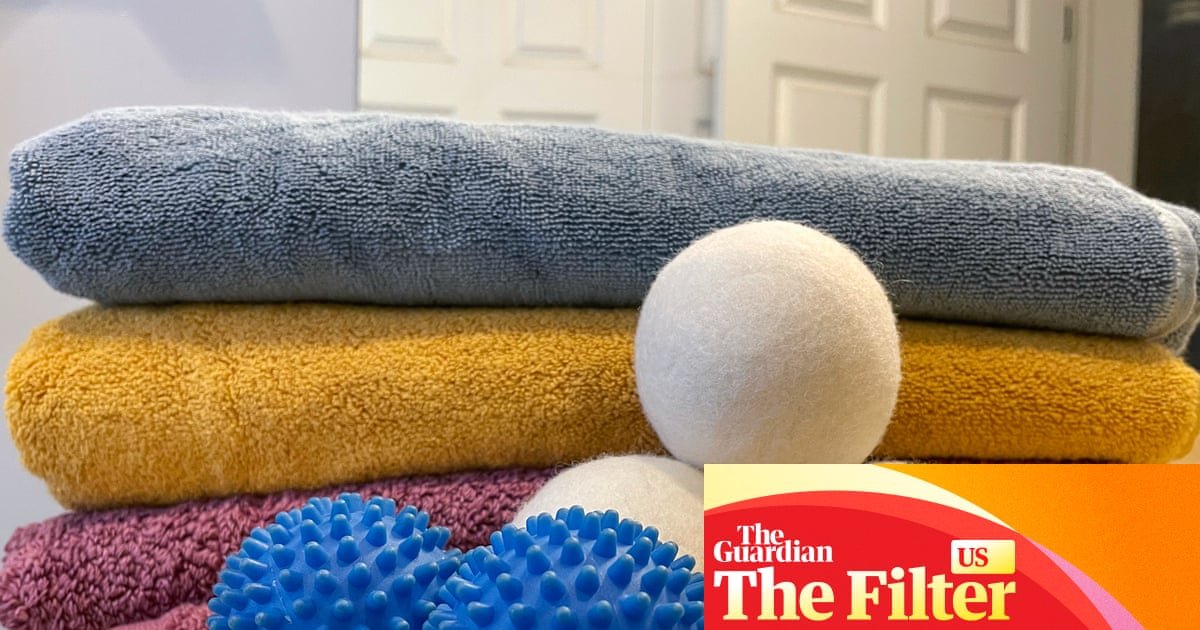
Dryer balls are an evolution of that simple technique. You’ll find them made of wool, plastic and rubber. In my experience, the wool versions tend to be denser and heavier, because the plastic and rubber variants can be hollow. Plastic and rubber dryer balls tend to be lighter, so they can’t soften clothing fabrics or do as much damage.
Do dryer balls actually dry clothes better?
My approach to testing this claim was simple: I soaked two T-shirts, two towels, and a hoodie in 2lbs of water and tossed that load in the dryer with and without Handy Wool Dryer Balls. After the cycles were completed, I weighed the clothes to see if there was a difference in the amount of water extracted.
I’ll spare you a bar chart: there was not. I’ve done a variation of this a dozen times before for a number of different outlets. The results are always the same: a negligible difference between the two loads.
Here’s why – and why I still use them anyway.
Why dryer balls probably won’t save you a lot on your energy bill
The US Department of Energy estimates that the average dryer uses about 782 kilowatt-hours a year, while a large fridge is closer to 500kwh. The main reason a dryer is such an energy hog is that it takes relatively cool air, then heats it, blows it out the window, and repeats the process. This constant process of reheating is what uses all that electricity, and while they might help distribute that heat more, dryer balls don’t change the physics of how much energy it takes to evaporate water.
Beyond that, a number of other factors can also impair the action of dryer balls. If you stuff your laundry machine to capacity, the dryer balls won’t have room to create air pockets. This encourages running smaller-sized loads, which paradoxically means running more cycles overall.
There’s also the potential that the dryer balls increase the cycle times. Modern dryers often use contact sensors to determine if a load is completely dry. Since dryer balls go in dry, when bouncing around inside the drum, they can give false positives and end the cycle prematurely. When you find damp clothes, you’ll run an entire second cycle.
There is one scenario where I think dryer balls do help reduce cycles and save energy: They can help prevent the dreaded “laundry sausage”. This phenomenon occurs when large items, like sheets and towels, twist around smaller ones, encapsulating them. Dryer balls knock these items apart, allowing them to dry more flatly, reducing wrinkles.
There are ways to avoid this, too. Experts I interviewed to learn about the best way to launder towels suggested shaking them out before tossing them into the dryer.
What dryer balls can do
Despite their dubious money-saving claims, I use dryer balls for three other reasons:
-
Dryer balls can help soften fabrics like linen or high-density cotton. As the dryer balls bounce around the drum and strike the fabric, they loosen the fibers. This process is why fabrics get softer with washing, and dryer balls speed it up.
-
Dryer balls reduce static by preventing clothing from rubbing against each other.
-
Finally, wool dryer balls can impart scent if you spray them with essential oils.
In other words, they’re a reusable alternative to dryer sheets. In fact, they’re even better in two crucial ways:
-
If you’re worried about the chemicals used in fragrances, you can control what you spray on your wool dryer balls and how much. I use Positive Essence spray because it’s designed to come in contact with human skin.
-
Unlike dryer sheets, dryer balls also have the advantage of being safe to use with towels. This is because dryer sheets work by imparting an oil (usually silicone-based) to fabric, which can ruin any fabric that’s meant to be absorbent. This will also happen if you use your dryer balls with essential oils, but to a lesser extent because of the amounts added. However, dryer balls are often sold in bags of six or more, so you can have one set with oil and another without.
Dryer balls I recommend
I use the Handy Wool Dryer Balls. I like the size and the weight. I also picked them because they’re made from 100% New Zealand wool. New Zealand has very strict welfare laws, especially around sheep. For a more affordable alternative, I also occasionally use S&T plastic dryer balls.
How to save energy when drying laundry
While the experiments I’ve run show dryer balls probably won’t save you a significant amount on your energy bill, there are other things you can do.
Upgrading your washer and dryer will do more than any other approach. Modern front-load washers with direct-drive motors can easily remove 50% of excess moisture before it even reaches the dryer. Modern dryers also run hotter: 15 years ago, a dryer typically reached 150F inside; now they commonly hit 170F using a similar amount of electricity by using more efficient motors, heating elements, and some dryers even recirculate the hot air to save energy. If you really want to go green, there are technologies like condenser dryers and heat-pump dryers, which are very energy efficient, and are even ventless.
If any upgrade is out of the question, check to see if your washer has an eco-dry cycle that uses less energy, but increases the cycle time. Use it. Slinging water out of laundry with centrifugal force is much more efficient than heating it out.
You can also favor fabrics like merino wool, polyester and nylon, which dry very quickly.
Finally, for a totally free option, you can partially air-dry your clothes before tossing them into your dryer by putting them on a laundry rack or line.